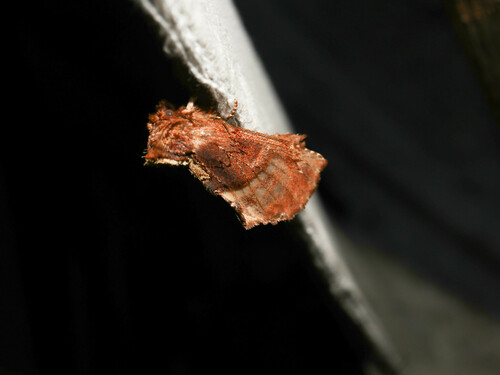
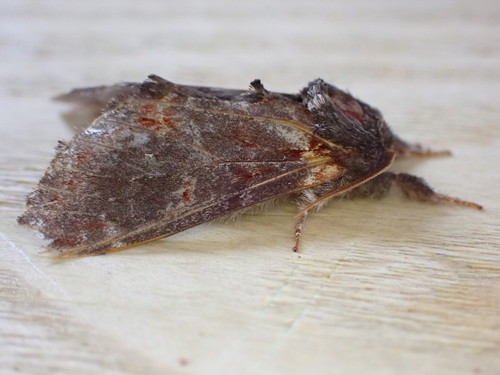
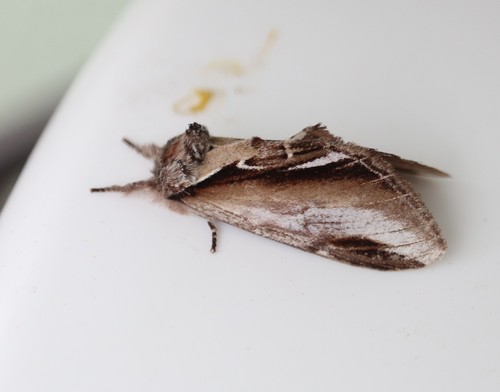
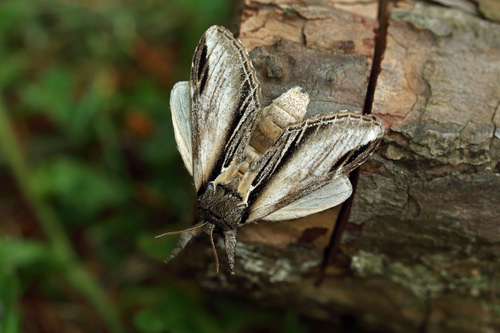
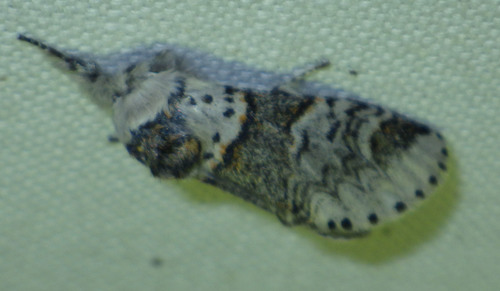
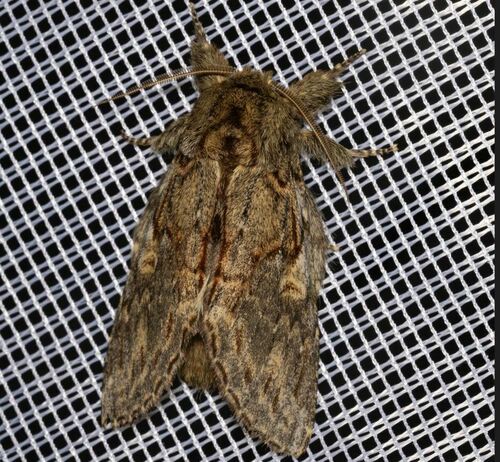
Dusky Marbled Brown

Dusky Marbled Brown

Gluphisia crenata

Daily sighting probability <5% · Rare
at Wadden Sea National Park

In 3 days ~10% in a week ~20%

6 Verified sightings at Wadden Sea National Park From 2019 to 2026
17 In all 2 parks
July Best month
🌙 Nocturnal When it's spotted

About the Dusky Marbled Brown

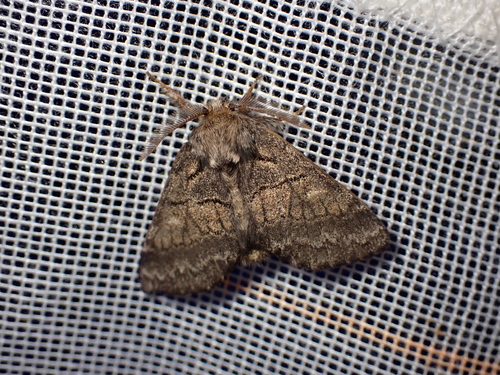
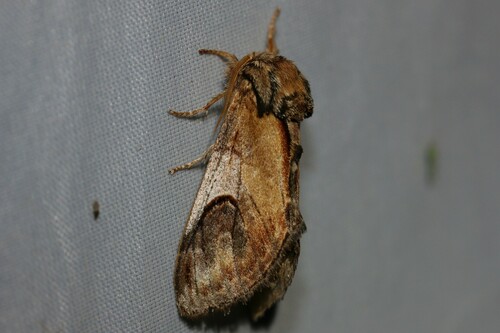
Gluphisia crenata, the dusky marbled brown, is a moth of the family Notodontidae. The species was first described by Eugenius Johann Christoph Esper in 1785. It is found in Europe, east over parts of Russia and China up to Japan. It is also found in North America, where it was traditionally treated as a separate species, Gluphisia septentrionis.

The wingspan is 28–34 mm. The moth flies from April to August in two generations depending on the location. The larvae feed on Populus species, such as P. nigra, P. balsamifera and P. tremula, but also on Salix purpurea.

Gluphisia crenata exhibit a puddling behavior, sucking up fluid from puddles, pumping it through the digestive tract, and excreting it at 3 second intervals. Gluphisia crenata crenata Gluphisia crenosa crenosa (Hubner, 1796)

Retrieved July 31, 2019. Taxonomy Fauna Europaea Lepiforum... Wikipedia →

Global Distribution

Parks Where Found

# Park Country Daily sighting probability
1 Pyrénées National Park 🇫🇷 France
<5%
2 Wadden Sea National Park 🇩🇪 Germany
<5%

Cities Where Found

# City Country Daily sighting probability
1 Paris 🇫🇷 France
<5%

Before you go

What are the chances of seeing a Dusky Marbled Brown in Wadden Sea National Park?

Rare

Under 5% of wildlife watchers report a Dusky Marbled Brown sighting in Wadden Sea National Park on a given day, based on 6 verified sightings from GBIF citizen-science data from 2019 to 2026. It is the 630th most-seen of the 818 insects we can rate there. Over three days the chance rises to about 10%, and over a week to about 20%, if each day is a fresh chance.

When is the best time to see a Dusky Marbled Brown in Wadden Sea National Park?

July

In that month about 10% of wildlife watchers report a Dusky Marbled Brown in Wadden Sea National Park on a given day, against under 5% in August to June, the lowest months.

What time of day is best to see a Dusky Marbled Brown?

Between 11 pm and 2 am

Across all the parks we cover, that three-hour window holds the most Dusky Marbled Brown sightings with a recorded time, and about 8 in 10 of them come between 6 pm and 6 am: it is mostly seen at night.

Is Wadden Sea National Park the best place to see a Dusky Marbled Brown?

Among the best

Of the 2 parks where we can rate Dusky Marbled Brown sightings, Wadden Sea National Park ranks 2nd at under 5%, level with the leaders once rounded. The best odds are in Pyrénées National Park (France, under 5%).

Which relatives of the Dusky Marbled Brown live in Wadden Sea National Park?

Same family: Notodontidae

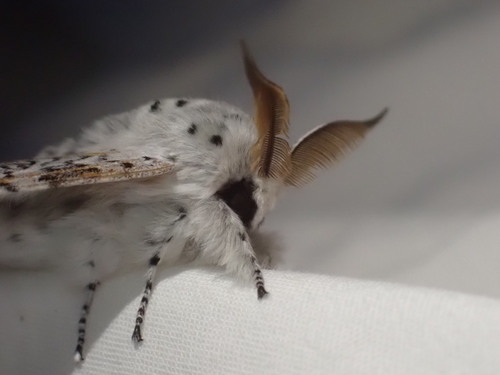
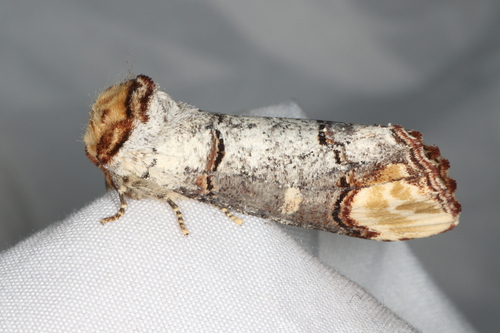
The closest relatives of the Dusky Marbled Brown that you can see in Wadden Sea National Park (family Notodontidae, Prominent Moths) are Puss Moth (about 10%), Buff-Tip (about 10%) and Pebble Prominent (about 10%), with each one's daily chance of a sighting.

Where does the Dusky Marbled Brown sighting chance come from?

GBIF citizen-science records

It is estimated from how often the Dusky Marbled Brown is recorded against all the insects logged in Wadden Sea National Park (6 verified sightings from 2019 to 2026), calibrated against known sighting rates. Figures are rounded to the nearest 10% because citizen-science data supports honest approximations, not decimals, and months with records from fewer than five people show "—". How it works.

← Back to Wadden Sea National Park