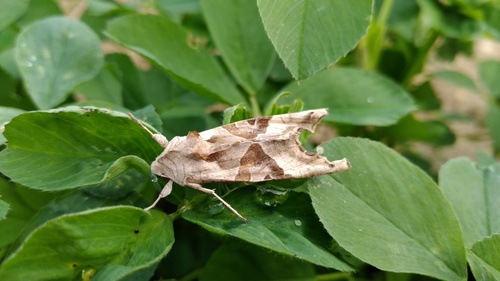
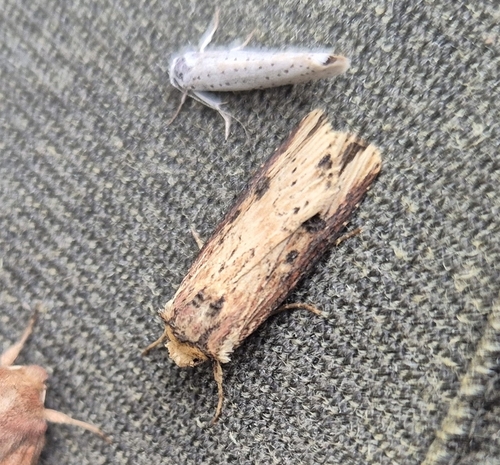
Feathered Brindle

Feathered Brindle

Aporophyla australis

Daily sighting probability <5% · Rare
at Wadden Sea National Park

In 3 days ~10% in a week ~20%

5 Verified sightings at Wadden Sea National Park From 2019 to 2026
5 In 1 park
September Best month
☀️ Diurnal When it's spotted

About the Feathered Brindle

Aporophyla australis, the feathered brindle, is a moth in the family Noctuidae. The species was first described by Jean Baptiste Boisduval in 1829. It is found in western and southern Europe, North Africa and the Middle East.

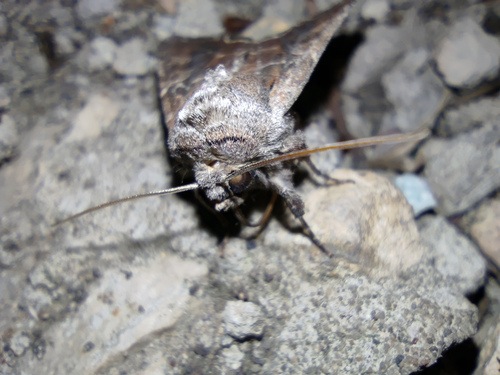
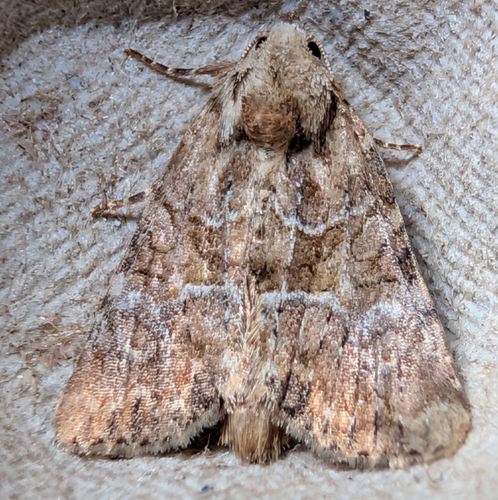
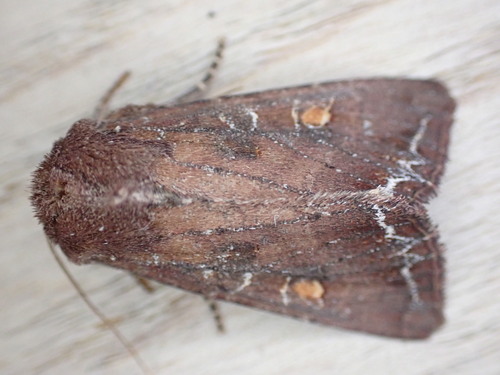
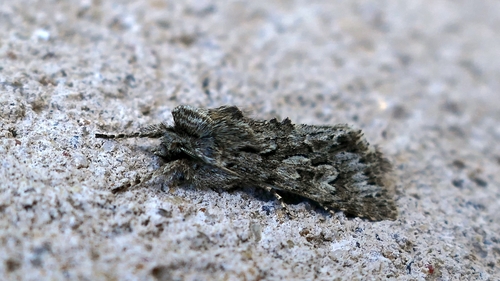
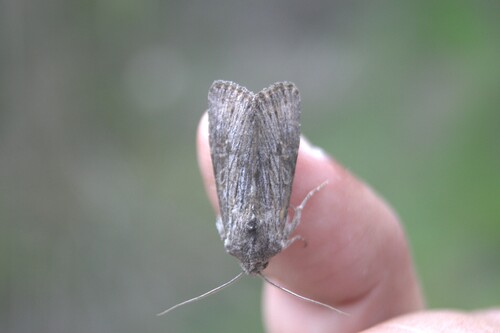
The adult has a pattern which ranges from pale grey to light and dark brown, the wingspan is 36-42 mm. It may be confused with the Northern deep-brown dart. Forewing whitish grey with a slight lilac tinge; the veins darker, the costa, inner margin narrowly, a median shade between the stigmata, some wedge-shaped subterminal blotches in the interspaces before subterminal line, and the dark chequering of the fringe brown; inner and outer lines both strongly dentate, but rarely plain, except as streaks on inner margin; stigmata finely outlined with black, the orbicular narrow, oblique, the reniform broader, both, when clear, with a dark centre; the streak from base on submedian fold brown and indistinct; a brown shade often visible on submedian fold between claviform stigma and outer line; hindwing in male white, in female slightly flushed with brown; for this type form Guenée gives Provence and Corsica... Wikipedia →

Global Distribution

Parks Where Found

# Park Country Daily sighting probability
1 Wadden Sea National Park 🇩🇪 Germany
<5%

More parks will be added in future updates.

Before you go

What are the chances of seeing a Feathered Brindle in Wadden Sea National Park?

Rare

Under 5% of wildlife watchers report a Feathered Brindle sighting in Wadden Sea National Park on a given day, based on 5 verified sightings from GBIF citizen-science data from 2019 to 2026. It is the 699th most-seen of the 818 insects we can rate there. Over three days the chance rises to about 10%, and over a week to about 20%, if each day is a fresh chance.

When is the best time to see a Feathered Brindle in Wadden Sea National Park?

September

In that month about 10% of wildlife watchers report a Feathered Brindle in Wadden Sea National Park on a given day, against under 5% in October to August, the lowest months.

What time of day is best to see a Feathered Brindle?

Between 6 and 9 am

Across all the parks we cover, that three-hour window holds the most Feathered Brindle sightings with a recorded time, and about 8 in 10 of them come between 6 am and 6 pm: it is a daytime animal.

Where else can you see a Feathered Brindle?

Only Wadden Sea National Park, in our data

Wadden Sea National Park is the only park on Wallace's Line with enough records to rate Feathered Brindle sightings: under 5% of wildlife watchers there report one on a given day.

Which relatives of the Feathered Brindle live in Wadden Sea National Park?

Same family: Noctuidae

The closest relatives of the Feathered Brindle that you can see in Wadden Sea National Park (family Noctuidae, Cutworm Moths and Allies) are Large Yellow Underwing (about 20%), Silver Υ (about 20%) and Flame Shoulder Moth (about 10%), with each one's daily chance of a sighting.

Where does the Feathered Brindle sighting chance come from?

GBIF citizen-science records

It is estimated from how often the Feathered Brindle is recorded against all the insects logged in Wadden Sea National Park (5 verified sightings from 2019 to 2026), calibrated against known sighting rates. Figures are rounded to the nearest 10% because citizen-science data supports honest approximations, not decimals, and months with records from fewer than five people show "—". How it works.

← Back to Wadden Sea National Park