Holly Tortrix

Holly Tortrix

Rhopobota naevana

Daily sighting probability <5% · Rare
at Wadden Sea National Park

In 3 days ~10% in a week ~30%

11 Verified sightings at Wadden Sea National Park From 2019 to 2026
11 In 1 park
July Best month
🌅 Crepuscular When it's spotted

About the Holly Tortrix

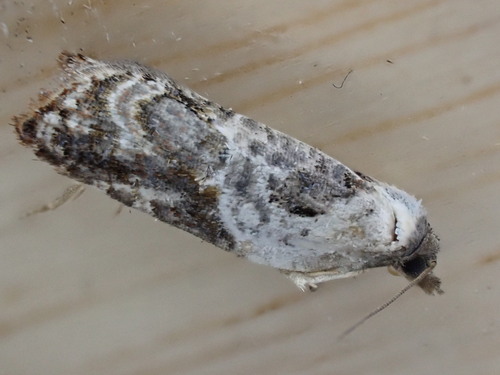
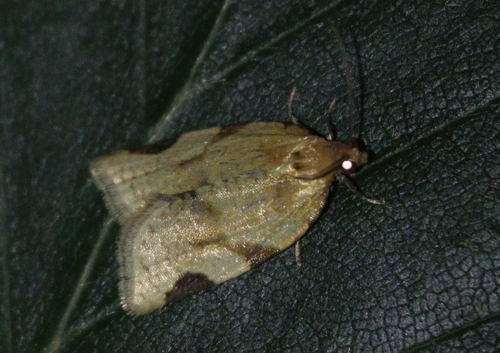
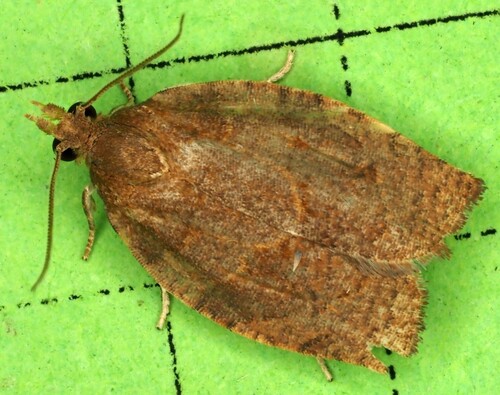
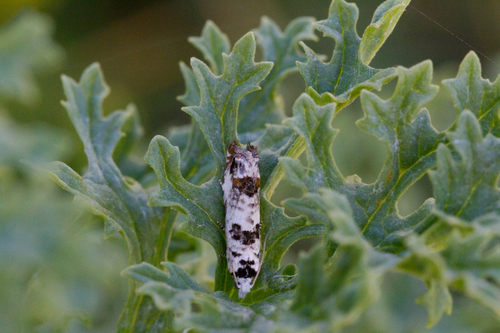
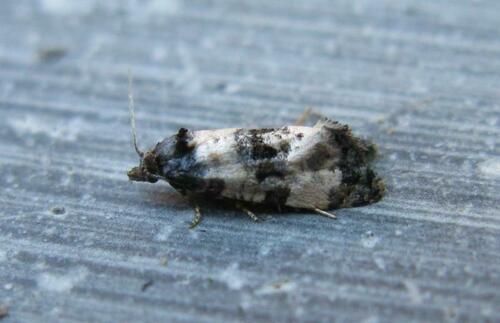
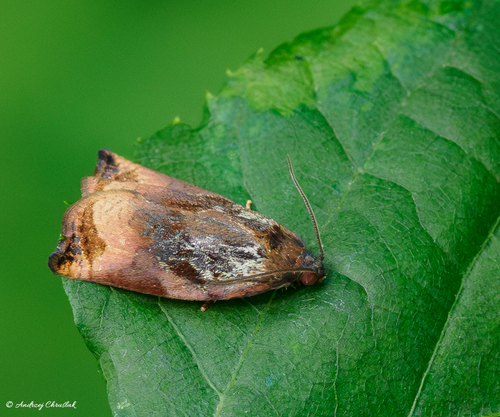
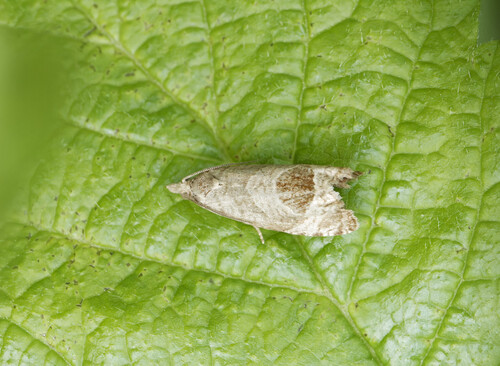
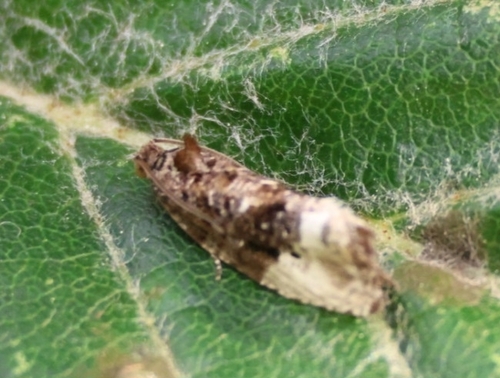
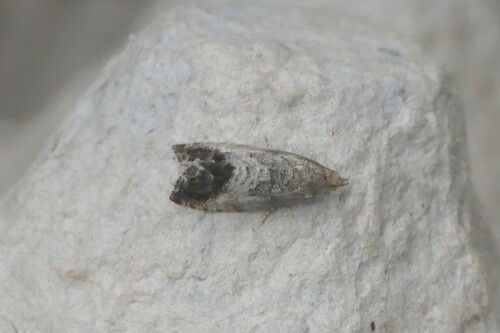
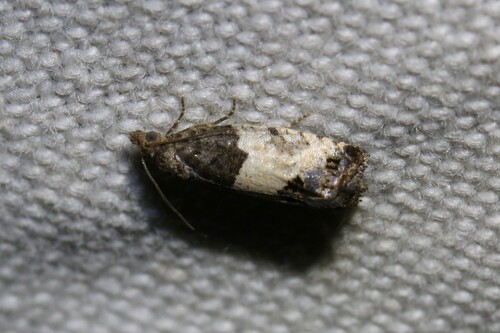
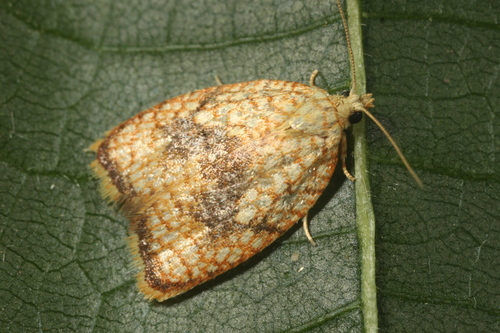
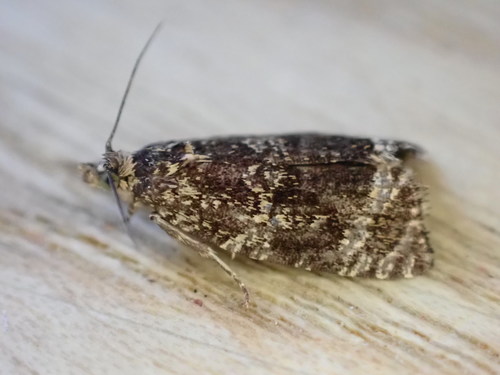
Rhopobota naevana, the holly tortrix moth, holly leaf tier or blackheaded fireworm, is a moth of the family Tortricidae. It is found from Europe (including the British Isles) to eastern Russia, China (Tianjin, Hebei, Inner Mongolia, Liaoning, Jilin, Heilongjiang, Zhejiang, Anhui, Fujian, Jiangxi, Henan, Hubei, Hunan, Guangdong, Sichuan, Guizhou, Yunnan, Tibet, Shaanxi, Gansu), Taiwan, Mongolia, Korea and Japan. It is also present in India, Sri Lanka and North America.

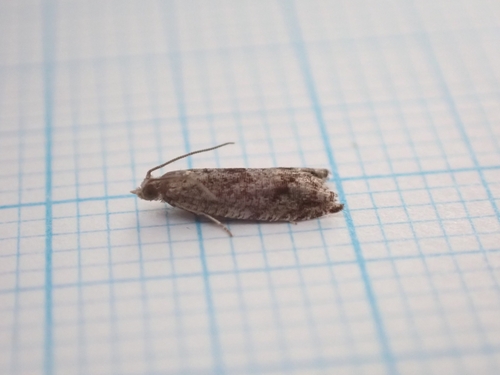
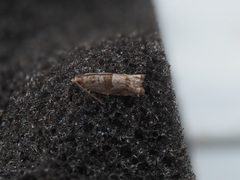
The wingspan is 12–16 mm. The forewings are grey, often obscurely striated or suffused with whitish. The large basal patch has an angulated edge, and is anteriorly suffused. The central fascia has a posterior median projection and is suffusedly dark fuscous, sometimes blackmarked. There are some small dark fuscous spots on costa posteriorly, and a suffused streak beneath them from the apex. The ocellus is broadly edged with light metallic-grey. The hindwings are grey; in male beneath suffused with black towards the costa.

The larva is light grey-green, sides more yellowish; head black or blackish - brown; plate of 2 black Adults are on wing from late June to early September. The larvae feed on Vaccinium, Erica carnea, Ilex, Malus, Crataegus, Sorbus, Prunus, Pyrus and Rhamnus. Wikipedia →
Global Distribution

Parks Where Found

# Park Country Daily sighting probability
1 Wadden Sea National Park 🇩🇪 Germany
<5%

More parks will be added in future updates.

Cities Where Found

# City Country Daily sighting probability
1 Helsinki 🇫🇮 Finland
<5%
2 London 🇬🇧 United Kingdom
<5%
3 Moscow 🇷🇺 Russia
<5%

Before you go

What are the chances of seeing a Holly Tortrix in Wadden Sea National Park?

Rare

Under 5% of wildlife watchers report a Holly Tortrix sighting in Wadden Sea National Park on a given day, based on 11 verified sightings from GBIF citizen-science data from 2019 to 2026. It is the 486th most-seen of the 818 insects we can rate there. Over three days the chance rises to about 10%, and over a week to about 30%, if each day is a fresh chance.

When is the best time to see a Holly Tortrix in Wadden Sea National Park?

July and August

In those months about 10% of wildlife watchers report a Holly Tortrix in Wadden Sea National Park on a given day, against under 5% in September to June, the lowest months.

What time of day is best to see a Holly Tortrix?

Between 10 pm and 1 am

Across all the parks we cover, that three-hour window holds the most Holly Tortrix sightings with a recorded time, and about half of them come between 6 pm and 6 am: it is most active around dawn and dusk.

Where else can you see a Holly Tortrix?

Only Wadden Sea National Park, in our data

Wadden Sea National Park is the only park on Wallace's Line with enough records to rate Holly Tortrix sightings: under 5% of wildlife watchers there report one on a given day.

Which relatives of the Holly Tortrix live in Wadden Sea National Park?

Same family: Tortricidae

The closest relatives of the Holly Tortrix that you can see in Wadden Sea National Park (family Tortricidae, Tortricid Leafroller Moths) are Garden Rose Tortrix (about 10%), Small Straw Twist (about 10%) and Dark Fruit-Tree Tortrix (about 10%), with each one's daily chance of a sighting.

Where does the Holly Tortrix sighting chance come from?

GBIF citizen-science records

It is estimated from how often the Holly Tortrix is recorded against all the insects logged in Wadden Sea National Park (11 verified sightings from 2019 to 2026), calibrated against known sighting rates. Figures are rounded to the nearest 10% because citizen-science data supports honest approximations, not decimals, and months with records from fewer than five people show "—". How it works.

← Back to Wadden Sea National Park