Large Fruit-Tree Tortrix

Large Fruit-Tree Tortrix

Archips podana

Daily sighting probability ~10% · With luck
at Wadden Sea National Park

In 3 days ~20% in a week ~40%

61 Verified sightings at Wadden Sea National Park From 2019 to 2026
83 In all 3 parks
July Best month
☀️🌙 Day & Night When it's spotted

About the Large Fruit-Tree Tortrix

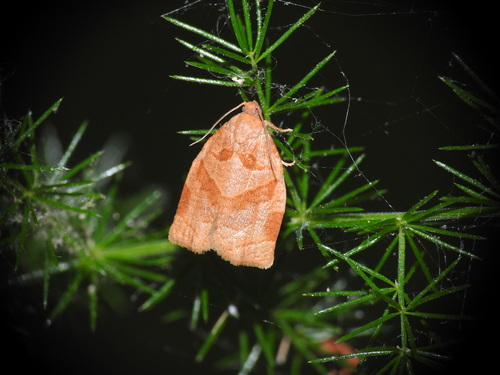
Archips podana, the large fruit-tree tortrix, is a moth of the family Tortricidae. The species was first described by Giovanni Antonio Scopoli in his 1763 Entomologia Carniolica. It is found in Europe, Asia from Anatolia to Japan and is an introduced species in North America.

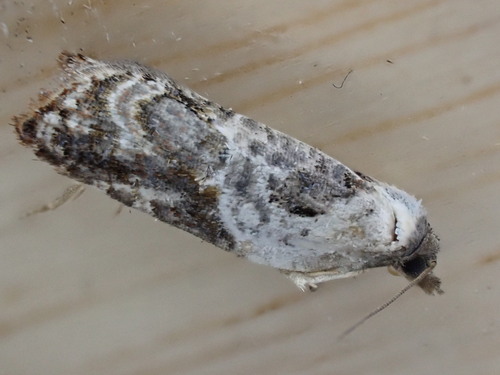
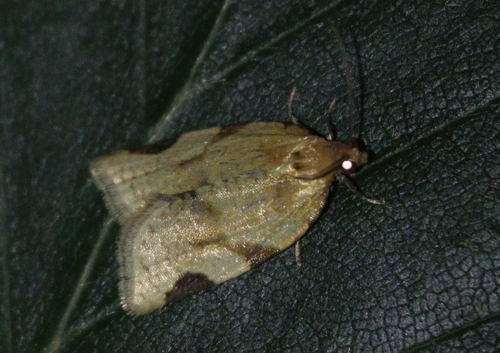
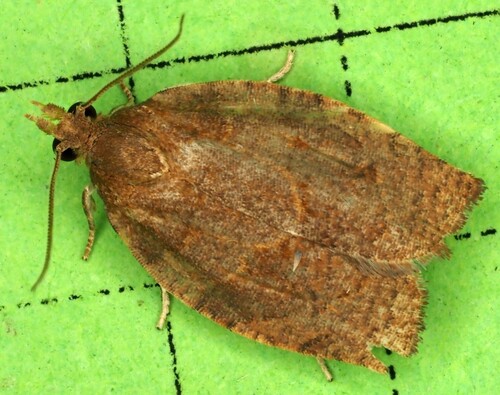
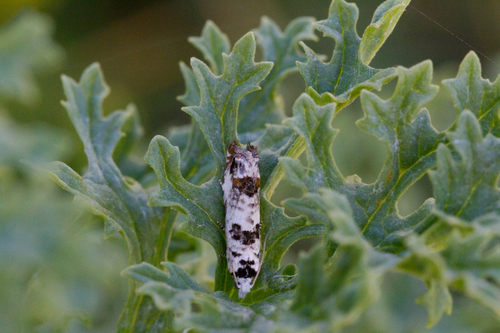
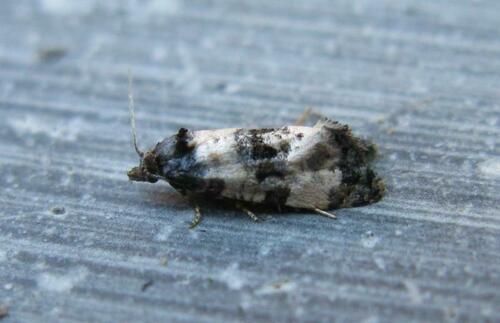
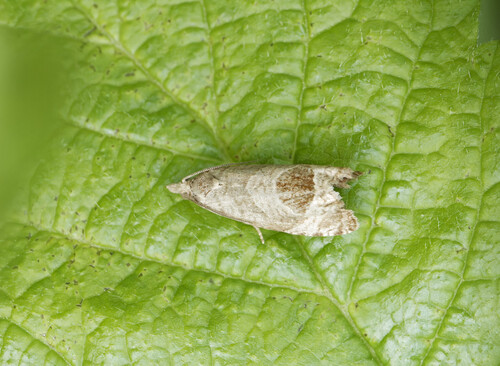
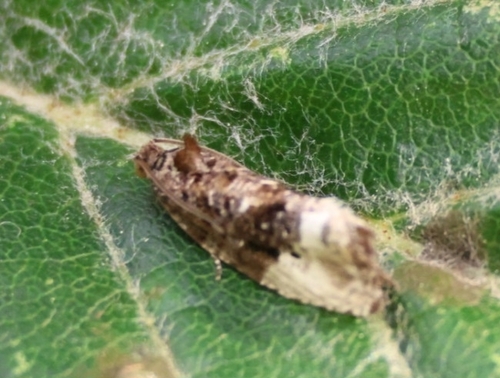
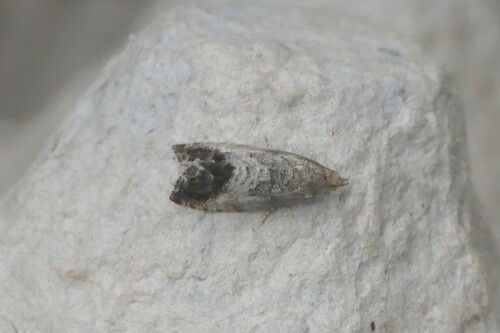
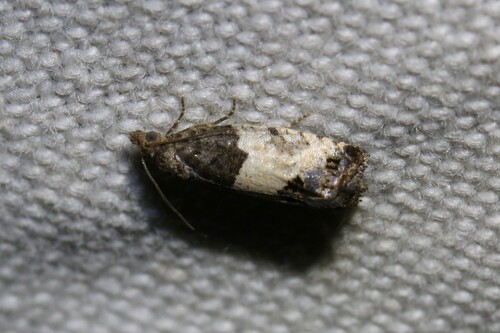
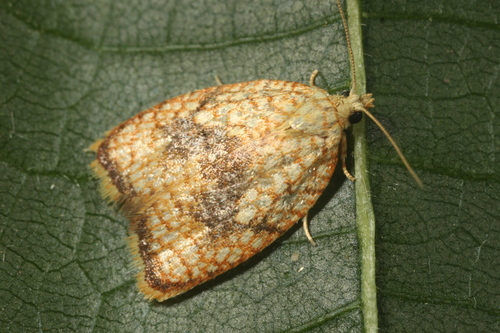
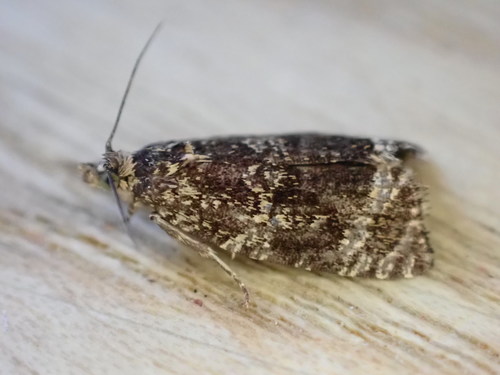
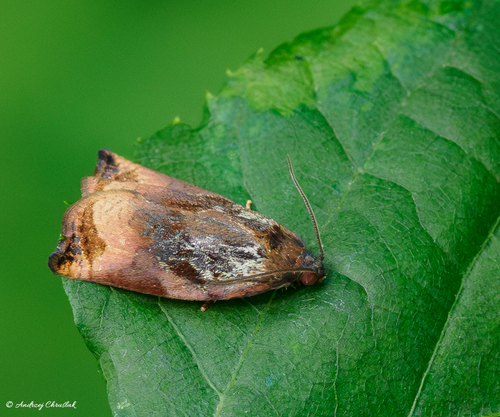
The wingspan is 18–26 mm. The thorax is crested. The forewings have a sinuate vertical termen. The costal fold is short, basal and red-brownish or ochreous, in female strigulated with dark brown. In the male there is a dark red-brown dorsal spot near base, above which is a grey and whitish suffusion. The central fascia in males is dark red -brown, in females brownish or outlined only, anterior edge nearly straight. The costal patch, an apical terminal mark, and a stria (in male thickened) from tornus are all dark red-brown. The hindwings are grey, the apex broadly orange. The larva is green; dorsal line sometimes darker; head and plate of 2 brown or black: Julius von Kennel provides a full description.

The moth flies in one generation from May to September in western Europe. Flies in the late afternoon and comes to light. Eggs are laid in several batches of 50 to 100 on the upper surface of a... Wikipedia →
Global Distribution

Parks Where Found

# Park Country Daily sighting probability
1 Wadden Sea National Park 🇩🇪 Germany
~10%
2 Bavarian Forest National Park 🇩🇪 Germany
~10%
3 Pyrénées National Park 🇫🇷 France
<5%

Cities Where Found

# City Country Daily sighting probability
1 London 🇬🇧 United Kingdom
~10%
2 Nizhny Novgorod 🇷🇺 Russia
<5%
3 Helsinki 🇫🇮 Finland
<5%
4 Kyiv 🇺🇦 Ukraine
<5%
5 Porto 🇵🇹 Portugal
<5%
6 Berlin 🇩🇪 Germany
<5%
7 Copenhagen 🇩🇰 Denmark
<5%
8 Birmingham 🇬🇧 United Kingdom
<5%
9 Vienna 🇦🇹 Austria
<5%
10 Moscow 🇷🇺 Russia
<5%

Before you go

What are the chances of seeing a Large Fruit-Tree Tortrix in Wadden Sea National Park?

With luck

About 10% of wildlife watchers report a Large Fruit-Tree Tortrix sighting in Wadden Sea National Park on a given day, based on 61 verified sightings from GBIF citizen-science data from 2019 to 2026. It is the 156th most-seen of the 818 insects we can rate there. Over three days the chance rises to about 20%, and over a week to about 40%, if each day is a fresh chance.

When is the best time to see a Large Fruit-Tree Tortrix in Wadden Sea National Park?

July

In that month about 20% of wildlife watchers report a Large Fruit-Tree Tortrix in Wadden Sea National Park on a given day, against under 5% in October to May, the lowest months.

What time of day is best to see a Large Fruit-Tree Tortrix?

Between 6 and 9 am

Across all the parks we cover, that three-hour window holds the most Large Fruit-Tree Tortrix sightings with a recorded time, and about 6 in 10 of them come between 6 pm and 6 am: it is seen both by day and at night.

Is Wadden Sea National Park the best place to see a Large Fruit-Tree Tortrix?

Yes

Of the 3 parks where we can rate Large Fruit-Tree Tortrix sightings, Wadden Sea National Park has the highest daily chance: about 10%. Next come Bavarian Forest National Park (Germany, about 10%) and Pyrénées National Park (France, under 5%).

Where does the Large Fruit-Tree Tortrix sighting chance come from?

GBIF citizen-science records

It is estimated from how often the Large Fruit-Tree Tortrix is recorded against all the insects logged in Wadden Sea National Park (61 verified sightings from 2019 to 2026), calibrated against known sighting rates. Figures are rounded to the nearest 10% because citizen-science data supports honest approximations, not decimals, and months with records from fewer than five people show "—". How it works.

← Back to Wadden Sea National Park