Narrow-Winged Pug

Narrow-Winged Pug

Eupithecia nanata

Daily sighting probability <5% · Rare
at Wadden Sea National Park

In 3 days ~10% in a week ~20%

8 Verified sightings at Wadden Sea National Park From 2019 to 2026
8 In 1 park
June Best month
🌙 Nocturnal When it's spotted

About the Narrow-Winged Pug

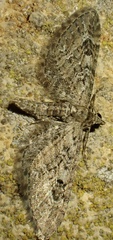
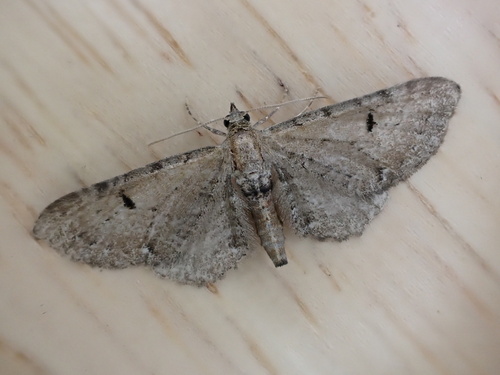
Eupithecia nanata, the narrow-winged pug, is a moth of the family Geometridae. The species was first described by Jacob Hübner in 1813. It can be found all over Europe including Russia (north to Kola Peninsula) and Ukraine. In the Alps it occurs up to 2,200 metres (7,200 ft) above sea level and in the Pyrenees to 2400 meters. The species prefers dry or boggy heathlands.

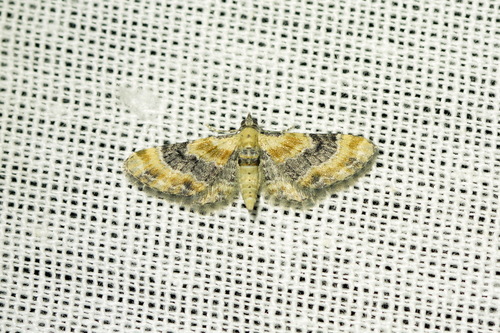
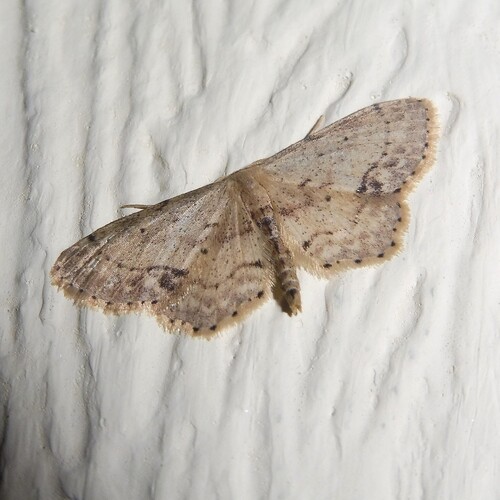
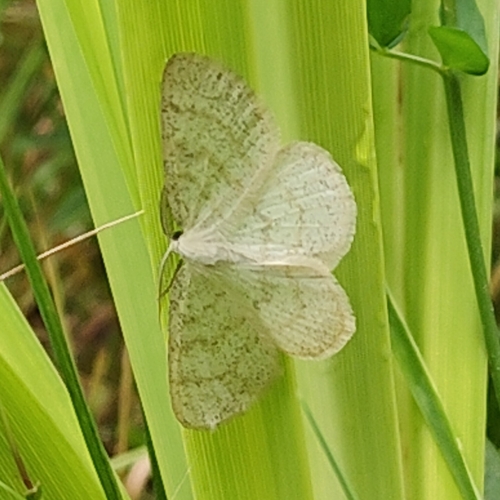
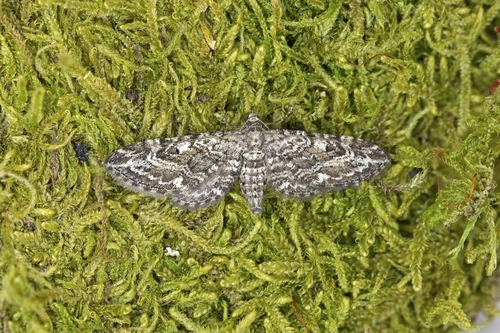
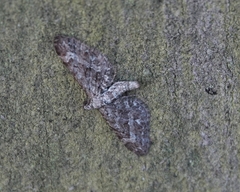
The wingspan is 13–17 millimetres (0.51–0.67 in). Eupithecia nanata is a variable species. The forewings are pointed. The ground colour of the forewings ranges from gray to brown to yellowish brown. In the midfield a contrasting dark lateral band sets itself apart: it initially runs at right angles from the costa. The black discal spot is sometimes unclear. There is a marginal white wavy line, which continues on the hindwings. These are partially paler than the forewings and have a small black discal spot. The fringes are brindled grey or brown and white. See also Prout.

The caterpillars appear in two colour variations: at the beginning of the flowering of the food plant they have an alternating greenish and reddish colour with distinct reddish diamond-like spots on the back. The lateral stripes are white and interrupted. At the main flowering time of the food plants, the caterpillars show only a reddish and violet colour spectrum and are thus visually excellently protected from predators.

The moths fly from March to September depending on the location. The larvae feed on Calluna species and sometimes Achillea millefolium. Wikipedia →
Global Distribution

Parks Where Found

# Park Country Daily sighting probability
1 Wadden Sea National Park 🇩🇪 Germany
<5%

More parks will be added in future updates.

Before you go

What are the chances of seeing a Narrow-Winged Pug in Wadden Sea National Park?

Rare

Under 5% of wildlife watchers report a Narrow-Winged Pug sighting in Wadden Sea National Park on a given day, based on 8 verified sightings from GBIF citizen-science data from 2019 to 2026. It is the 536th most-seen of the 818 insects we can rate there. Over three days the chance rises to about 10%, and over a week to about 20%, if each day is a fresh chance.

When is the best time to see a Narrow-Winged Pug in Wadden Sea National Park?

June

In that month about 10% of wildlife watchers report a Narrow-Winged Pug in Wadden Sea National Park on a given day, against under 5% in July to May, the lowest months.

What time of day is best to see a Narrow-Winged Pug?

Between 5 and 8 am

Across all the parks we cover, that three-hour window holds the most Narrow-Winged Pug sightings with a recorded time, and about 8 in 10 of them come between 6 pm and 6 am: it is mostly seen at night.

Where else can you see a Narrow-Winged Pug?

Only Wadden Sea National Park, in our data

Wadden Sea National Park is the only park on Wallace's Line with enough records to rate Narrow-Winged Pug sightings: under 5% of wildlife watchers there report one on a given day.

Which relatives of the Narrow-Winged Pug live in Wadden Sea National Park?

Same genus: Eupithecia

The closest relatives of the Narrow-Winged Pug that you can see in Wadden Sea National Park (genus Eupithecia, Pug Moths) are Lime-Speck Pug (about 10%) and Toadflax Pug (about 10%), with each one's daily chance of a sighting.

Where does the Narrow-Winged Pug sighting chance come from?

GBIF citizen-science records

It is estimated from how often the Narrow-Winged Pug is recorded against all the insects logged in Wadden Sea National Park (8 verified sightings from 2019 to 2026), calibrated against known sighting rates. Figures are rounded to the nearest 10% because citizen-science data supports honest approximations, not decimals, and months with records from fewer than five people show "—". How it works.

← Back to Wadden Sea National Park