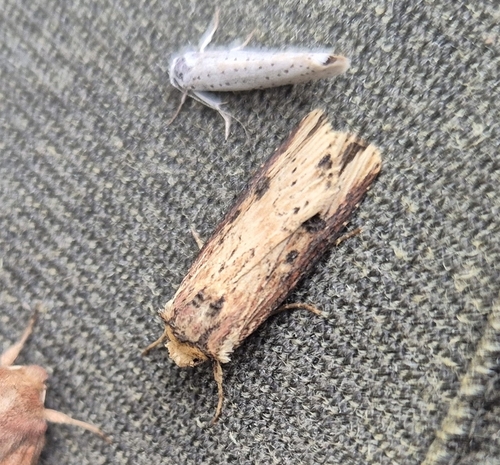
The Crescent

The Crescent

Helotropha leucostigma

Daily sighting probability <5% · Rare
at Wadden Sea National Park

In 3 days ~10% in a week ~30%

11 Verified sightings at Wadden Sea National Park From 2019 to 2026
11 In 1 park
July Best month
🌅 Crepuscular When it's spotted

About the The Crescent

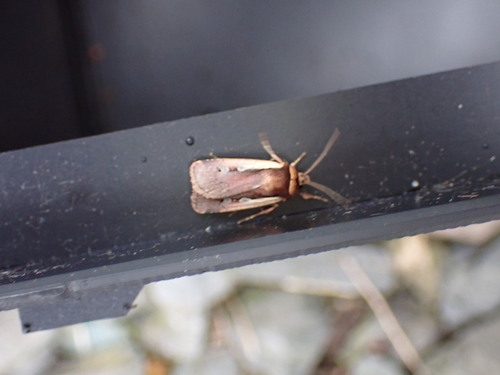
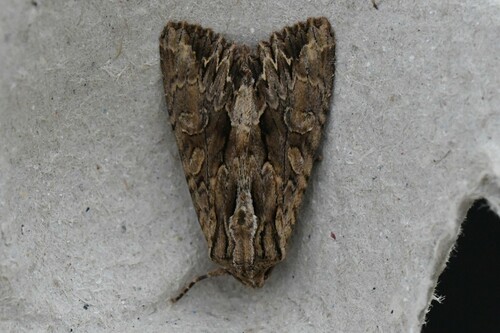
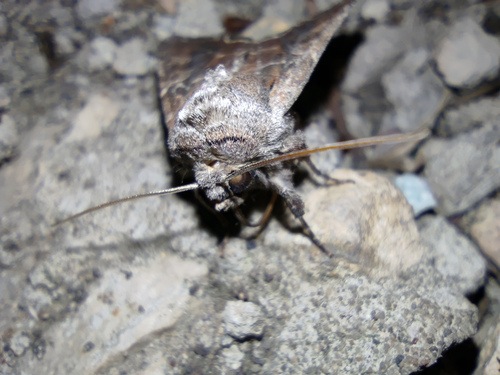
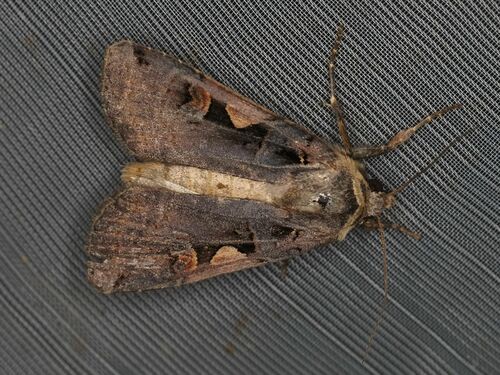
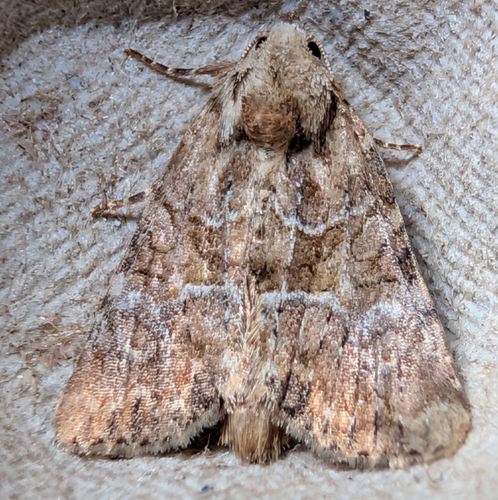
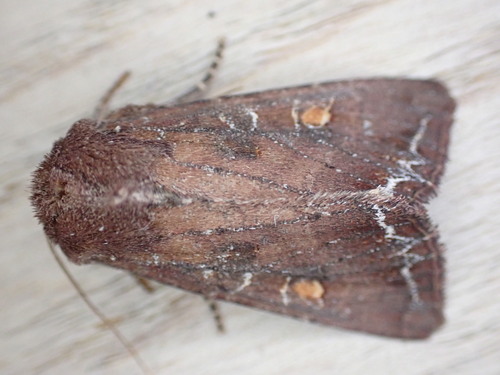
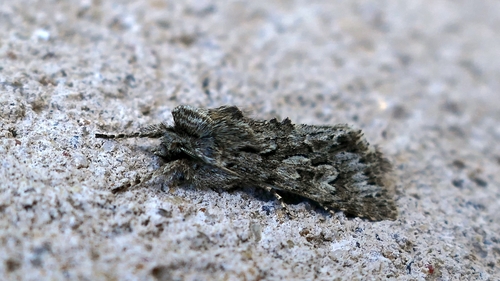
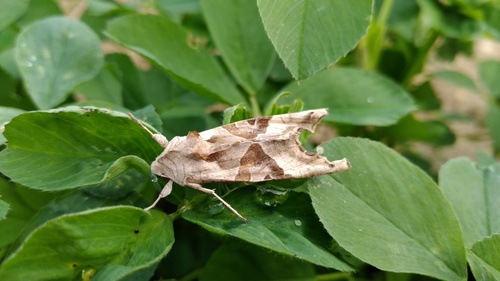
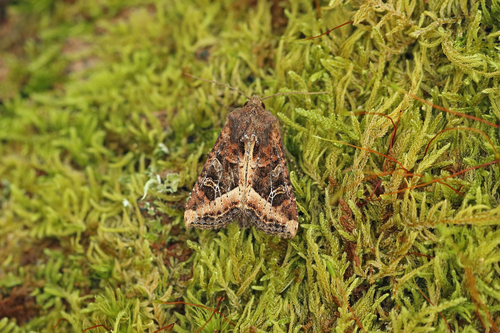
Helotropha leucostigma, the crescent, formerly Celaena leucostigma is a moth of the family Noctuidae. It is found in the Palearctic realm (Europe, Russia, Armenia, Turkestan, Siberia, Russian Far East, Mongolia, Amur, Korea, Japan, and northeastern China).

The wingspan is 37–44 millimetres (1.5–1.7 in). Forewing dull dark brown, faintly reddish- tinged; the veins powdered with grey scales; the terminal area beyond subterminal line black-brown, except at apex: median area between subcostal vein and vein 1 somewhat darker than the rest of wing; inner and outer lines indistinctly double: the inner outwardly oblique, the outer bent on vein 5; claviform stigma hardly visible; orbicular stigma oblique, elliptical, of the ground colour, with paler annulus; the reniform white or dull yellow, containing a double dark lunule with pale centre; the outer edge of this dark inner lunule is sometimes obsolete, in which case the stigma appears more solidly yellowish or white; the space between outer and subterminal lines is always slightly, often visibly, paler than the ground colour; hindwing fuscous grey; — in the ab. lunina Haw. the outer fascia is conspicuously... Wikipedia →

Global Distribution

Parks Where Found

# Park Country Daily sighting probability
1 Wadden Sea National Park 🇩🇪 Germany
<5%

More parks will be added in future updates.

Before you go

What are the chances of seeing a The Crescent in Wadden Sea National Park?

Rare

Under 5% of wildlife watchers report a The Crescent sighting in Wadden Sea National Park on a given day, based on 11 verified sightings from GBIF citizen-science data from 2019 to 2026. It is the 486th most-seen of the 818 insects we can rate there. Over three days the chance rises to about 10%, and over a week to about 30%, if each day is a fresh chance.

When is the best time to see a The Crescent in Wadden Sea National Park?

July and August

In those months about 10% of wildlife watchers report a The Crescent in Wadden Sea National Park on a given day, against under 5% in September to June, the lowest months.

What time of day is best to see a The Crescent?

Between midnight and 3 am

Across all the parks we cover, that three-hour window holds the most The Crescent sightings with a recorded time, and about half of them come between 6 am and 6 pm: it is most active around dawn and dusk.

Where else can you see a The Crescent?

Only Wadden Sea National Park, in our data

Wadden Sea National Park is the only park on Wallace's Line with enough records to rate The Crescent sightings: under 5% of wildlife watchers there report one on a given day.

Which relatives of the The Crescent live in Wadden Sea National Park?

Same family: Noctuidae

The closest relatives of the The Crescent that you can see in Wadden Sea National Park (family Noctuidae, Cutworm Moths and Allies) are Large Yellow Underwing (about 20%), Silver Υ (about 20%) and Flame Shoulder Moth (about 10%), with each one's daily chance of a sighting.

Where does the The Crescent sighting chance come from?

GBIF citizen-science records

It is estimated from how often the The Crescent is recorded against all the insects logged in Wadden Sea National Park (11 verified sightings from 2019 to 2026), calibrated against known sighting rates. Figures are rounded to the nearest 10% because citizen-science data supports honest approximations, not decimals, and months with records from fewer than five people show "—". How it works.

← Back to Wadden Sea National Park