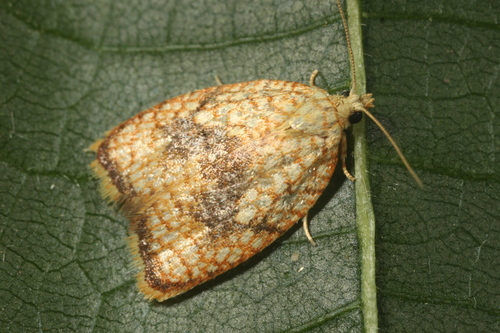
Yellow-Headed Aspen Leaftier

Yellow-Headed Aspen Leaftier

Epinotia nisella

Daily sighting probability <5% · Rare
at Wadden Sea National Park

In 3 days ~10% in a week ~20%

7 Verified sightings at Wadden Sea National Park From 2019 to 2026
25 In all 2 parks
August Best month
☀️🌙 Day & Night When it's spotted

About the Yellow-Headed Aspen Leaftier

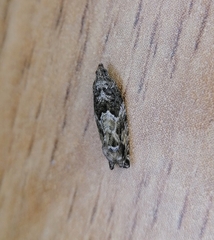
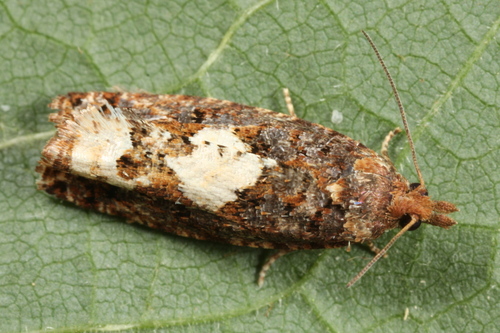
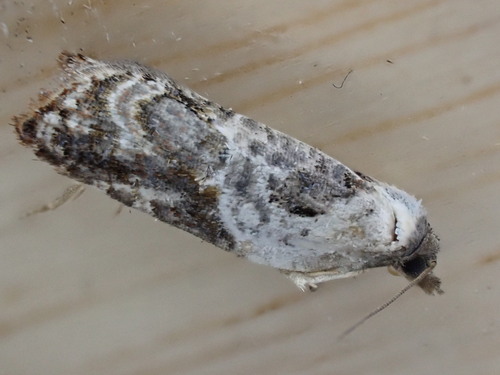
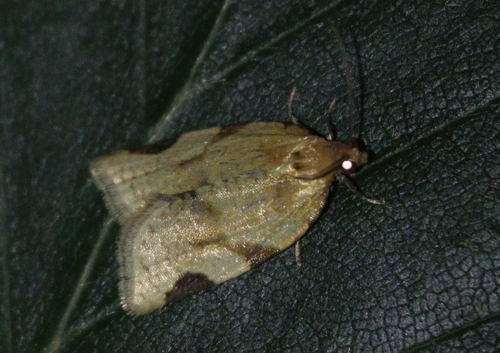
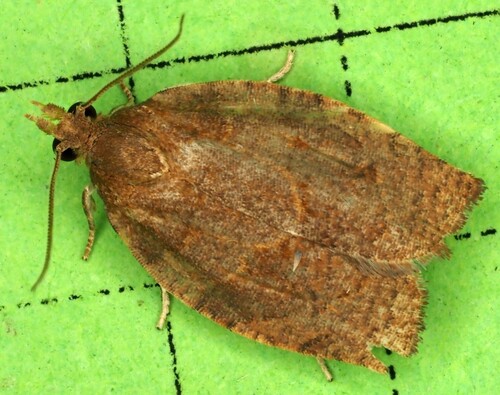
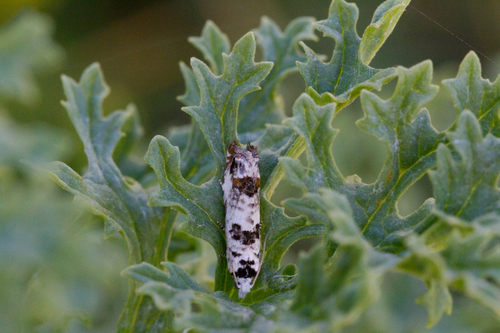
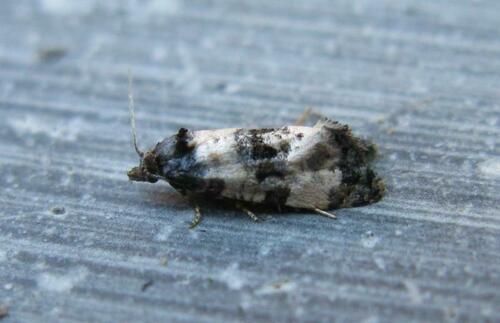
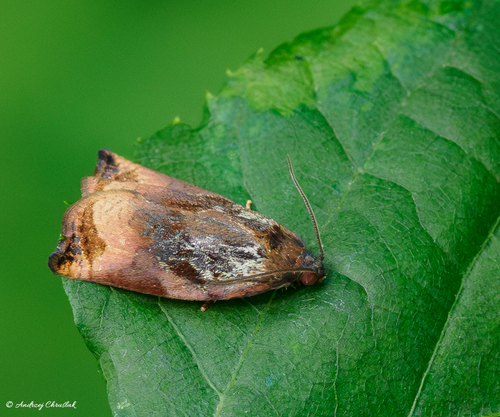
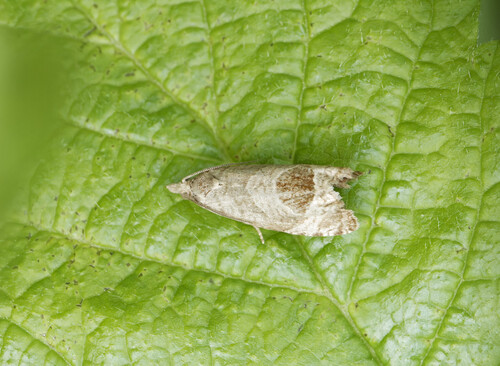
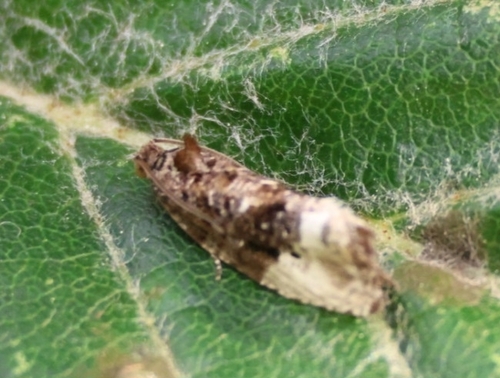
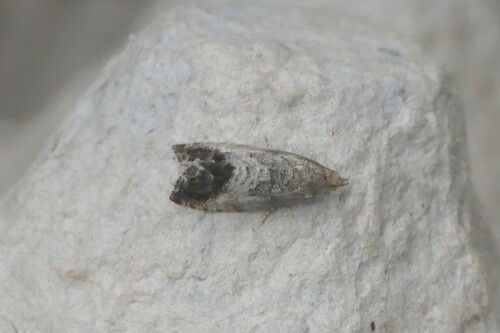
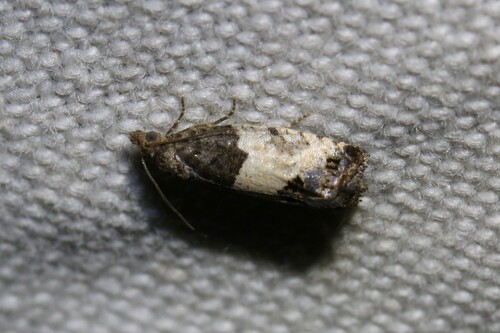
Epinotia nisella is a moth of the family Tortricidae which is found in the Palearctic, Europe and North America. It was first described by Carl Alexander Clerck in 1759. The wingspan is about 12–17 mm. The forewings are grey, more or less mixed with white, slightly ferruginous-tinged, irregularly strigulated with blackish-grey. The basal patch is darker, its edge more blackish and acutely angulated in the middle. There often is a ferruginous or red-brown flattened-triangular dorsal blotch distal to this. The central fascia is slender, irregular, again somewhat darker. The edges of the ocellus, and sometimes a stria above them leaden-metallic. Sometimes the whole forewing is suffused with ferruginous except the basal and terminal patches; termen sinuate. The hindwings are light fuscous, terminally dark fuscous. The larva is pale green; head dark brown.

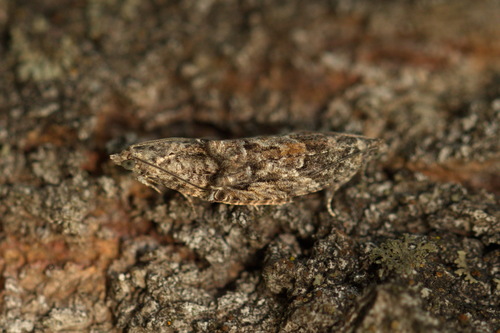
Adults are on wing in July and August and during the day can be found on the foliage or amongst lichen on the tree trunks of the larval foodplants. When disturbed it flies erratically to another resting place and in the evening comes to light.

Eggs are laid on poplars (Populus species) and willows (Salix species... Wikipedia →
Global Distribution

Parks Where Found

# Park Country Daily sighting probability
1 Bavarian Forest National Park 🇩🇪 Germany
~10%
2 Wadden Sea National Park 🇩🇪 Germany
<5%

Cities Where Found

# City Country Daily sighting probability
1 Liverpool 🇬🇧 United Kingdom
<5%
2 Edmonton 🇨🇦 Canada
<5%
3 Saint Petersburg 🇷🇺 Russia
<5%
4 Moscow 🇷🇺 Russia
<5%
5 Toronto 🇨🇦 Canada
<5%

Before you go

What are the chances of seeing a Yellow-Headed Aspen Leaftier in Wadden Sea National Park?

Rare

Under 5% of wildlife watchers report a Yellow-Headed Aspen Leaftier sighting in Wadden Sea National Park on a given day, based on 7 verified sightings from GBIF citizen-science data from 2019 to 2026. It is the 699th most-seen of the 818 insects we can rate there. Over three days the chance rises to about 10%, and over a week to about 20%, if each day is a fresh chance.

When is the best time to see a Yellow-Headed Aspen Leaftier in Wadden Sea National Park?

August

In that month about 10% of wildlife watchers report a Yellow-Headed Aspen Leaftier in Wadden Sea National Park on a given day, against under 5% in September to July, the lowest months.

What time of day is best to see a Yellow-Headed Aspen Leaftier?

Between 11 pm and 2 am

Across all the parks we cover, that three-hour window holds the most Yellow-Headed Aspen Leaftier sightings with a recorded time, and about 7 in 10 of them come between 6 pm and 6 am: it is seen both by day and at night.

Is Wadden Sea National Park the best place to see a Yellow-Headed Aspen Leaftier?

2nd of 2

Of the 2 parks where we can rate Yellow-Headed Aspen Leaftier sightings, Wadden Sea National Park ranks 2nd at under 5%. The best odds are in Bavarian Forest National Park (Germany, about 10%).

Where does the Yellow-Headed Aspen Leaftier sighting chance come from?

GBIF citizen-science records

It is estimated from how often the Yellow-Headed Aspen Leaftier is recorded against all the insects logged in Wadden Sea National Park (7 verified sightings from 2019 to 2026), calibrated against known sighting rates. Figures are rounded to the nearest 10% because citizen-science data supports honest approximations, not decimals, and months with records from fewer than five people show "—". How it works.

← Back to Wadden Sea National Park