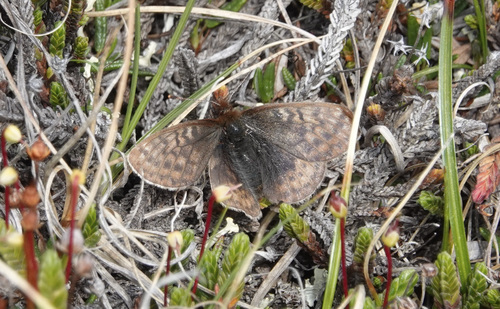
Arctic Fritillary

Arctic Fritillary

Boloria chariclea

Daily sighting probability ~30% · Possible
at Wrangell-St. Elias National Park

In 3 days ~70% in a week ~90%

17 Verified sightings at Wrangell-St. Elias National Park From 2019 to 2026
336 In all 8 parks
July Best month
☀️ Diurnal When it's spotted

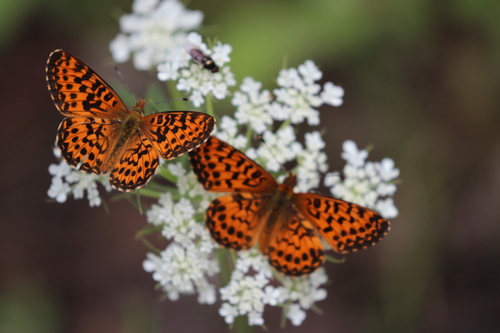
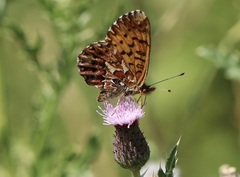
About the Arctic Fritillary

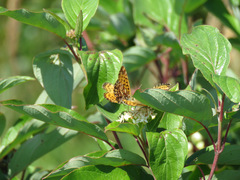
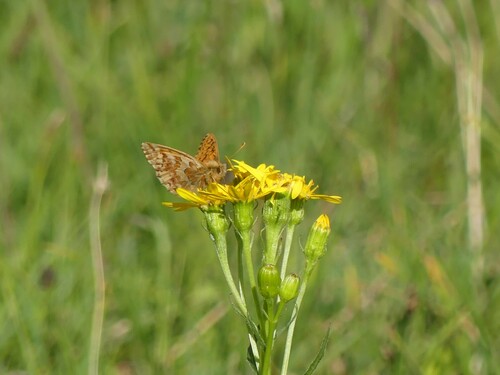
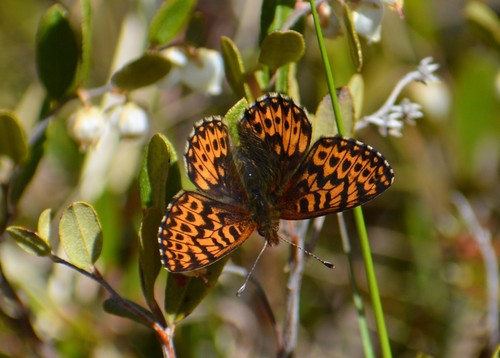
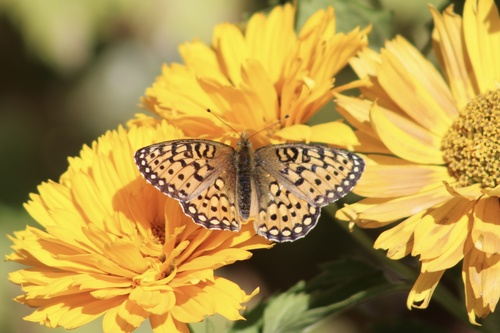
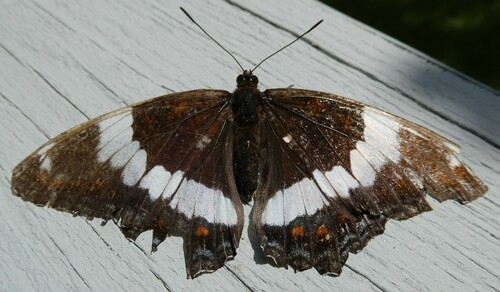
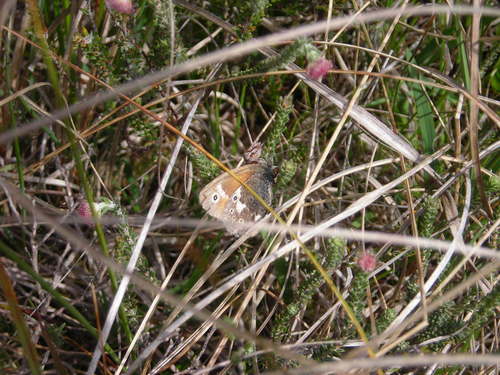
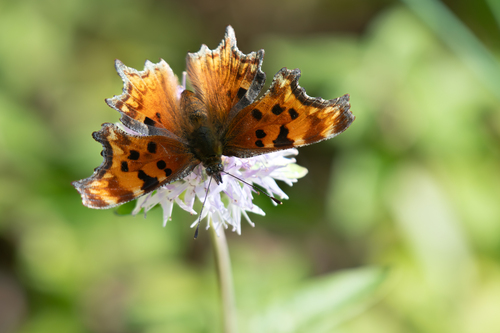
Boloria chariclea, the Arctic fritillary or purplish fritillary, is a butterfly of the family Nymphalidae. It is found in the northern parts of the Palearctic and Nearctic realms. The butterfly flies from July to August depending on the location.

The Arctic fritillary has a Holarctic distribution. In Europe it is found in northern Lapland and Russia. In North America it is found in Alaska and much of Canada, the north Cascades, the Rocky Mountains southwards to Utah and northern New Mexico, northern Minnesota, northern Maine and the White Mountains of New Hampshire. Its typical habitat is tundra, taiga, alpine meadows, stream verges and acid bogs.

The males patrol along the edges of bogs and in valleys and wait for the arrival of females. The eggs are laid singly underneath the leaves of the host plant. In North America the larvae feed on viola species, dwarf willows (Salix) and possibly blueberries (Vaccinium) while in Europe it is believed to feed on yellow wood violet (Viola biflora) and Arctic white heather (Cassiope tetragona). Depending on location, the larvae take one or two years to develop into adults, newly... Wikipedia →
Global Distribution

Parks Where Found

# Park Country Daily sighting probability
1 Nahanni National Park 🇨🇦 Canada
~60%
2 Wrangell-St. Elias National Park 🇺🇸 United States
~30%
3 Denali National Park 🇺🇸 United States
~20%
4 Banff National Park 🇨🇦 Canada
~20%
5 Jasper National Park 🇨🇦 Canada
~20%
6 Olympic National Park 🇺🇸 United States
~10%
7 Rocky Mountain National Park 🇺🇸 United States
~10%
8 Yellowstone National Park 🇺🇸 United States
~10%

Before you go

What are the chances of seeing an Arctic Fritillary in Wrangell-St. Elias National Park?

Possible

About 30% of wildlife watchers report an Arctic Fritillary sighting in Wrangell-St. Elias National Park on a given day, based on 17 verified sightings from GBIF citizen-science data from 2019 to 2026. It is the 12th most-seen of the 27 insects we can rate there. Over three days the chance rises to about 70%, and over a week to about 90%, if each day is a fresh chance.

When is the best time to see an Arctic Fritillary in Wrangell-St. Elias National Park?

July

In that month about 50% of wildlife watchers report an Arctic Fritillary in Wrangell-St. Elias National Park on a given day, against under 5% in May and June, the lowest months. October to March have too few records to rate.

What time of day is best to see an Arctic Fritillary?

Between 10 am and 1 pm

Across all the parks we cover, that three-hour window holds the most Arctic Fritillary sightings with a recorded time, and about 9 in 10 of them come between 6 am and 6 pm: it is a daytime animal.

Is Wrangell-St. Elias National Park the best place to see an Arctic Fritillary?

2nd of 8

Of the 8 parks where we can rate Arctic Fritillary sightings, Wrangell-St. Elias National Park ranks 2nd at about 30%. The best odds are in Nahanni National Park (Canada, about 60%). All parks ranked.

Which relatives of the Arctic Fritillary live in Wrangell-St. Elias National Park?

Same genus: Boloria

The closest relatives of the Arctic Fritillary that you can see in Wrangell-St. Elias National Park (genus Boloria, Lesser Fritillaries) are Alaskan Fritillary (about 40%) and Freija Fritillary (about 30%), with each one's daily chance of a sighting.

Where does the Arctic Fritillary sighting chance come from?

GBIF citizen-science records

It is estimated from how often the Arctic Fritillary is recorded against all the insects logged in Wrangell-St. Elias National Park (17 verified sightings from 2019 to 2026), calibrated against known sighting rates. Figures are rounded to the nearest 10% because citizen-science data supports honest approximations, not decimals, and months with records from fewer than five people show "—". How it works.

← Back to Wrangell-St. Elias National Park