American Three-toed Woodpecker

American Three-toed Woodpecker

Picoides dorsalis

Silhouette: Gareth Monger · PhyloPic

Daily sighting probability <5% · Rare
at Yellowstone National Park

In 3 days ~10%

123 Verified sightings at Yellowstone National Park From 2019 to 2026
2,506 In all 12 parks
December Best month
☀️ Diurnal When it's spotted

About the American Three-toed Woodpecker

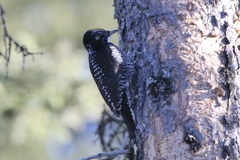
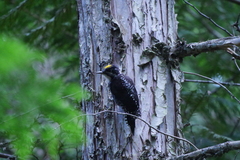
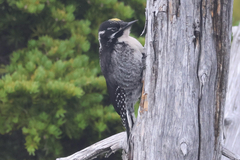
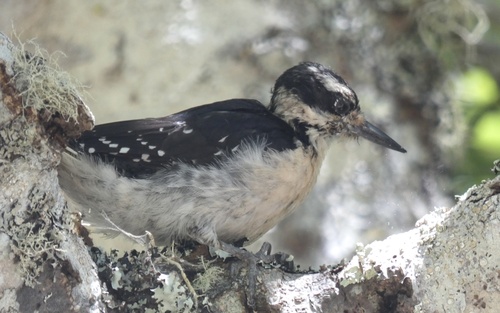
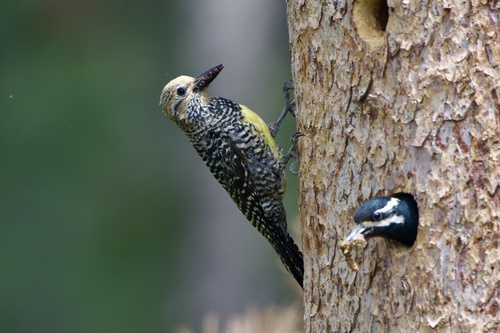
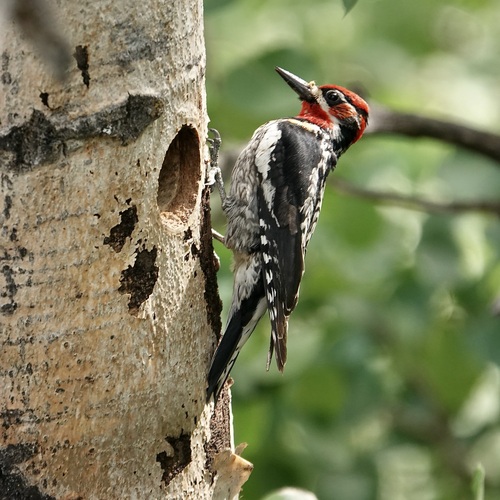
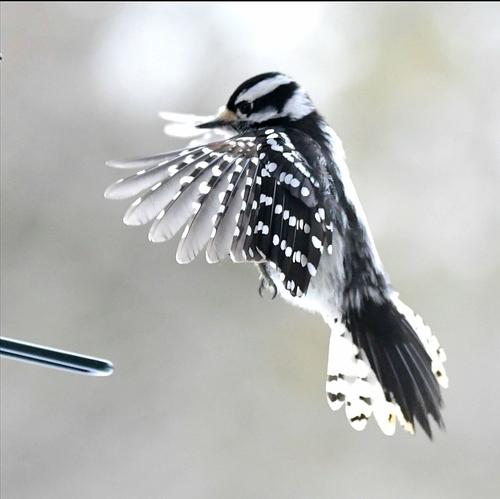
The American three-toed woodpecker (Picoides dorsalis) is a medium-sized woodpecker (family Picidae), which is native to North America. This woodpecker has a length between 21 – 23 cm (8.3 – 9.1 in) and a wingspan between 37 – 39 cm (14.6 – 15.3 in). Males have an average weight of 58.3 g (2.06 oz), and females are slightly smaller, averaging 52 g (1.8 oz). Its maximum lifespan in the wild is 6 years. It closely resembles the black-backed woodpecker, which is also three-toed. Until recently, it was considered to be the same species as the Eurasian three-toed woodpecker, P. tridactylus. Adults are black on the head, wings and rump, and white from the throat to the belly; the flanks are white with black bars. The back is white with black bars and the tail is black with the white outer feathers barred with black. The adult male has a yellow cap.

The breeding habitat is coniferous forests across western Canada, Alaska and the western and extreme northeastern United States. It has also been seen in Michigan's upper peninsula, and has been recorded breeding in the extreme north of Wisconsin and Minnesota on extremely rare occasions. The female lays 3 to 7... Wikipedia →

Sounds

Call0:21

Canada · 2011

© Doug Hynes · XC613386 · CC BY-SA 4.0

Pecking0:29

United States · 2019

© Bruce Lagerquist · XC505980 · CC BY-NC-SA 4.0

Begging call0:23

United States · 2018

© Julia Wittmann · XC438517 · CC BY-NC-SA 4.0

Global Distribution

Parks Where Found

# Park Country Daily sighting probability
1 Banff National Park 🇨🇦 Canada
~20%
2 Wrangell-St. Elias National Park 🇺🇸 United States
~20%
3 Jasper National Park 🇨🇦 Canada
~10%
4 Denali National Park 🇺🇸 United States
~10%
5 Glacier National Park 🇺🇸 United States
~10%
6 Katmai National Park 🇺🇸 United States
~10%
7 Rocky Mountain National Park 🇺🇸 United States
<5%
8 Riding Mountain National Park 🇨🇦 Canada
<5%
9 Kluane National Park 🇨🇦 Canada
<5%
10 Grand Teton National Park 🇺🇸 United States
<5%
11 Yellowstone National Park 🇺🇸 United States
<5%
12 Grand Canyon National Park 🇺🇸 United States
<5%

Cities Where Found

# City Country Daily sighting probability
1 Anchorage 🇺🇸 United States
<5%
2 Calgary 🇨🇦 Canada
<5%

Before you go

What are the chances of seeing an American Three-toed Woodpecker in Yellowstone National Park?

Rare

Under 5% of wildlife watchers report an American Three-toed Woodpecker sighting in Yellowstone National Park on a given day, based on 123 verified sightings from GBIF citizen-science data from 2019 to 2026. It is the 126th most-seen of the 197 birds we can rate there. Over three days the chance rises to about 10%, if each day is a fresh chance.

When is the best time to see an American Three-toed Woodpecker in Yellowstone National Park?

December

In that month about 20% of wildlife watchers report an American Three-toed Woodpecker in Yellowstone National Park on a given day, against under 5% in March to November, the lowest months.

What time of day is best to see an American Three-toed Woodpecker?

Between 8 and 11 am

Across all the parks we cover, that three-hour window holds the most American Three-toed Woodpecker sightings with a recorded time, and about 9 in 10 of them come between 6 am and 6 pm: it is a daytime animal.

Is Yellowstone National Park the best place to see an American Three-toed Woodpecker?

11th of 12

Of the 12 parks where we can rate American Three-toed Woodpecker sightings, Yellowstone National Park ranks 11th at under 5%. The best odds are in Banff National Park (Canada, about 20%), Wrangell-St. Elias National Park (United States, about 20%) and Jasper National Park (Canada, about 10%).

Where does the American Three-toed Woodpecker sighting chance come from?

GBIF citizen-science records

It is estimated from how often the American Three-toed Woodpecker is recorded against all the birds logged in Yellowstone National Park (123 verified sightings from 2019 to 2026), calibrated against known sighting rates. Figures are rounded to the nearest 10% because citizen-science data supports honest approximations, not decimals, and months with records from fewer than five people show "—". How it works.

← Back to Yellowstone National Park