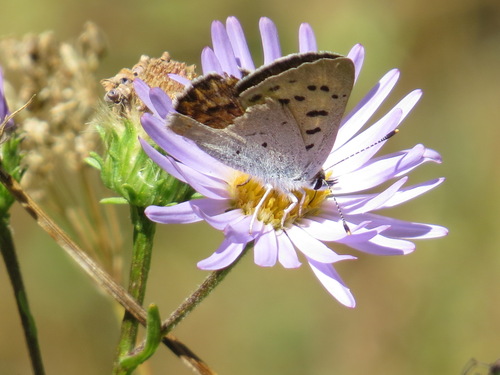
Acmon Blue

Acmon Blue

Icaricia acmon

Daily sighting probability ~10% · With luck
at Yosemite National Park

In 3 days ~30% in a week ~60%

45 Verified sightings at Yosemite National Park From 2019 to 2026
128 In all 5 parks
August Best month
☀️ Diurnal When it's spotted

About the Acmon Blue

Icaricia acmon, the Acmon blue, is a North American butterfly. It ranges mainly in California and Oregon but can also be seen in southwestern Canada and in the Great Plains Region of the United States, with a total range of about 2,500,000 square km. Because of the breadth of its range, it occurs in several different habitats, such as grasslands, fields, shrub lands, forests, and deserts. Acmon blue was discovered by Pierre Lorquin in 1850, while he visited California during the Gold Rush. It is believed that Acmon Blue was discovered in the San Francisco area.

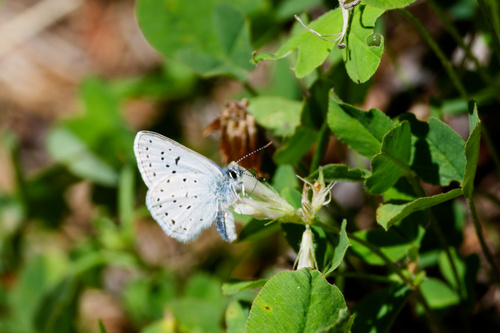
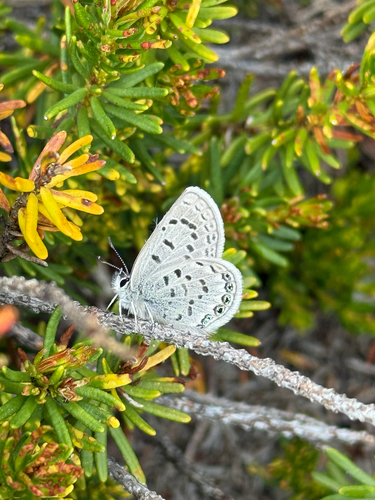
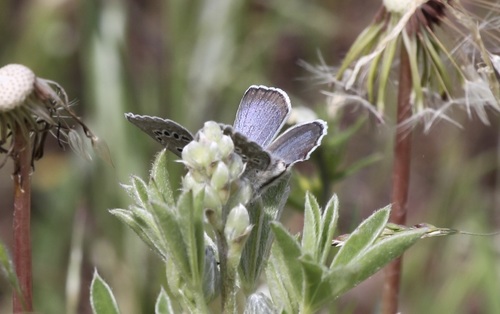
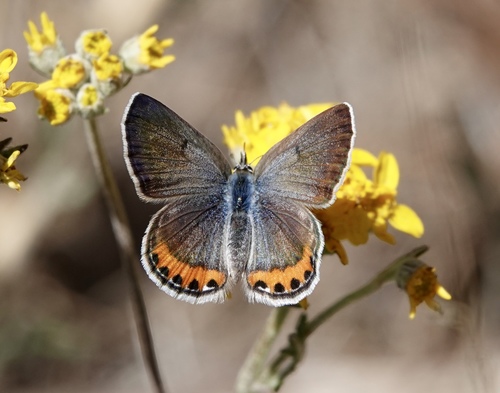
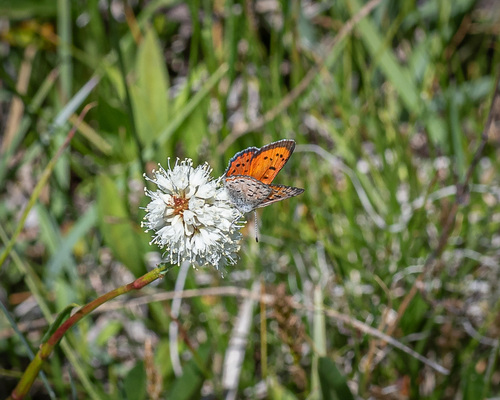
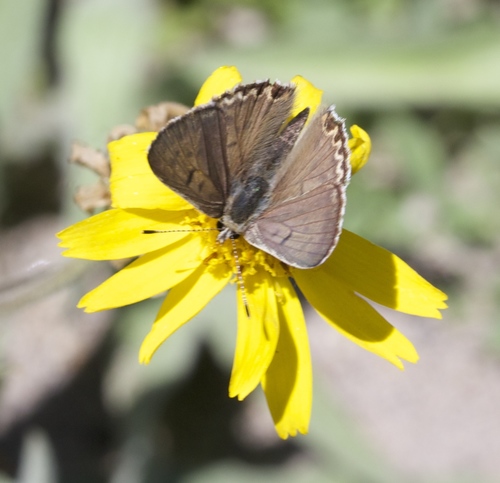
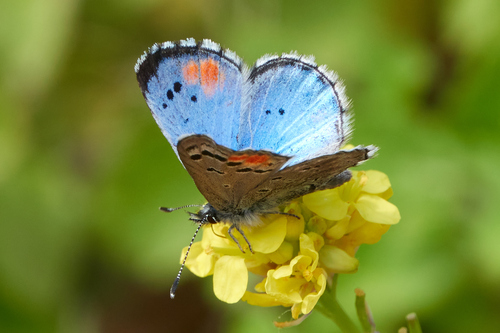
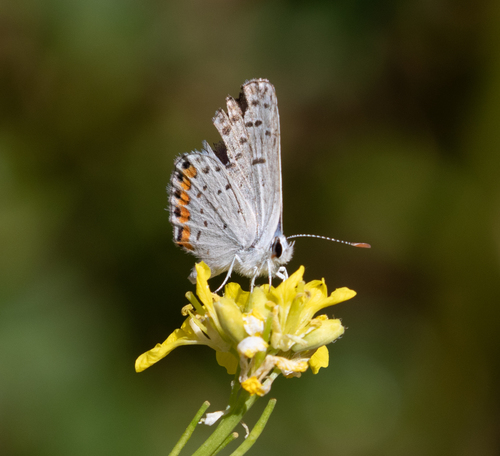
Wingspan is between the range of 17-30 mm. The tops of the wings are blue with dark edges in males and brown in females. Its underside is white with black spots for both sexes and a red-orange band on the hindwing. Caterpillars are yellow with white hairs and a green stripe down the back. The Acmon is richly colored, more specifically the females with contrasting rows of red lunules (sometimes fused into a band). Meanwhile, the male's hindwing lunules tend to become pink and may disappear during autumn.

Like many other lycaenid butterflies, it has a mutualistic relationship with ants, who protect Acmon blue larvae in exchange for honeydew that the larvae secrete. Wikipedia →
Global Distribution

Parks Where Found

# Park Country Daily sighting probability
1 Joshua Tree National Park 🇺🇸 United States
~20%
2 Yosemite National Park 🇺🇸 United States
~10%
3 Sequoia and Kings Canyon National Parks 🇺🇸 United States
~10%
4 Channel Islands National Park 🇺🇸 United States
~10%
5 Redwood National Park 🇺🇸 United States
~10%

Cities Where Found

# City Country Daily sighting probability
1 Sacramento 🇺🇸 United States
~10%
2 San Francisco 🇺🇸 United States
~10%
3 Los Angeles 🇺🇸 United States
~10%
4 San Diego 🇺🇸 United States
<5%

Before you go

What are the chances of seeing an Acmon Blue in Yosemite National Park?

With luck

About 10% of wildlife watchers report an Acmon Blue sighting in Yosemite National Park on a given day, based on 45 verified sightings from GBIF citizen-science data from 2019 to 2026. It is the 39th most-seen of the 227 insects we can rate there. Over three days the chance rises to about 30%, and over a week to about 60%, if each day is a fresh chance.

When is the best time to see an Acmon Blue in Yosemite National Park?

August

In that month about 20% of wildlife watchers report an Acmon Blue in Yosemite National Park on a given day, against under 5% in December to March, the lowest months. That is one of Yosemite National Park's driest months, with about 30 mm of rain against 220 mm in January.

What time of day is best to see an Acmon Blue?

Between noon and 3 pm

Across all the parks we cover, that three-hour window holds the most Acmon Blue sightings with a recorded time, and about 9 in 10 of them come between 6 am and 6 pm: it is a daytime animal.

Is Yosemite National Park the best place to see an Acmon Blue?

2nd of 5

Of the 5 parks where we can rate Acmon Blue sightings, Yosemite National Park ranks 2nd at about 10%. The best odds are in Joshua Tree National Park (United States, about 20%).

Which relatives of the Acmon Blue live in Yosemite National Park?

Same genus: Icaricia

The closest relatives of the Acmon Blue that you can see in Yosemite National Park (genus Icaricia) are Greenish Blue (about 20%), Shasta Blue (about 20%) and Boisduval's Blue (about 10%), with each one's daily chance of a sighting.

Where does the Acmon Blue sighting chance come from?

GBIF citizen-science records

It is estimated from how often the Acmon Blue is recorded against all the insects logged in Yosemite National Park (45 verified sightings from 2019 to 2026), calibrated against known sighting rates. Figures are rounded to the nearest 10% because citizen-science data supports honest approximations, not decimals, and months with records from fewer than five people show "—". How it works.

← Back to Yosemite National Park