Gilbert's Skink

Gilbert's Skink

Plestiodon gilberti

Silhouette: David Orr · PhyloPic

LCLeast ConcernNTVUENCR Endemic
Daily sighting probability ~30% · Possible
at Yosemite National Park

In 3 days ~60% in a week ~90%

111 Verified sightings at Yosemite National Park From 2019 to 2026
132 In all 3 parks
May Best month
☀️ Diurnal When it's spotted

About the Gilbert's Skink

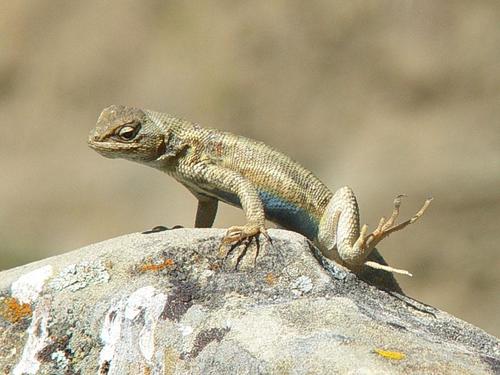
Plestiodon gilberti, commonly known as Gilbert's skink, is a species of heavy-bodied medium-sized lizard in the family Scincidae. The species is endemic to the southwestern United States and northwestern Mexico, and grows to about 7 to 12 cm (3 to 4.5 in) in total length (including tail).

Plestiodon gilberti (formerly Eumeces Gilberti) was coined by John Van Denburgh in honor of Dr. Charles H. Gilbert, who was Denburgh’s professor at Stanford University and inspiration for his involvement in herpetology. Together with the western skink (P. skiltonianus), the San Lucan skink (P. lagunensis), and the four-lined Asiatic skink (P. quadrilineatus), Gilbert's skink belongs to the so-called "skiltonianus group". The exact taxonomy within this group is being questioned and may need revision following DNA analysis research.

There are five subspecies of Plestiodon gilberti, including the nominotypical subspecies. Plestiodon gilberti arizonensis (Lowe & Shannon, 1954) – Arizona skink Plestiodon gilberti gilberti (Van Denburgh, 1896) – greater brown skink

Plestiodon gilberti placerensis (Rodgers, 1944) – northern brown skink Plestiodon gilberti cancellosus... Wikipedia →

Global Distribution

Parks Where Found

# Park Country Daily sighting probability
1 Yosemite National Park 🇺🇸 United States
~30%
2 Sequoia and Kings Canyon National Parks 🇺🇸 United States
~10%
3 Joshua Tree National Park 🇺🇸 United States
~10%

Cities Where Found

# City Country Daily sighting probability
1 Sacramento 🇺🇸 United States
~10%

Zoos & Centres Where Found

# Zoo / Centre Country
1 Lindsay Wildlife Experience 🇺🇸 United States In captivity

Closest Relatives at Yosemite National Park

No species of the same family or order lives in Yosemite National Park, so these are its closest relatives here: other reptiles.

Before you go

What are the chances of seeing a Gilbert's Skink in Yosemite National Park?

Possible

About 30% of wildlife watchers report a Gilbert's Skink sighting in Yosemite National Park on a given day, based on 111 verified sightings from GBIF citizen-science data from 2019 to 2026. It is the 4th most-seen of the 17 reptiles we can rate there. Over three days the chance rises to about 60%, and over a week to about 90%, if each day is a fresh chance.

When is the best time to see a Gilbert's Skink in Yosemite National Park?

May

In that month about 40% of wildlife watchers report a Gilbert's Skink in Yosemite National Park on a given day, against under 5% in January–February and October, the lowest months. That is one of Yosemite National Park's driest months, with about 50 mm of rain against 220 mm in January.

What time of day is best to see a Gilbert's Skink?

Between 1 and 4 pm

Across all the parks we cover, that three-hour window holds the most Gilbert's Skink sightings with a recorded time, and about 9 in 10 of them come between 6 am and 6 pm: it is a daytime animal.

Is Yosemite National Park the best place to see a Gilbert's Skink?

Yes

Of the 3 parks where we can rate Gilbert's Skink sightings, Yosemite National Park has the highest daily chance: about 30%. Next come Sequoia and Kings Canyon National Parks (United States, about 10%) and Joshua Tree National Park (United States, about 10%).

Where does the Gilbert's Skink sighting chance come from?

GBIF citizen-science records

It is estimated from how often the Gilbert's Skink is recorded against all the reptiles logged in Yosemite National Park (111 verified sightings from 2019 to 2026), calibrated against known sighting rates. Figures are rounded to the nearest 10% because citizen-science data supports honest approximations, not decimals, and months with records from fewer than five people show "—". How it works.

← Back to Yosemite National Park