

Western Velvety Tree Ant

Western Velvety Tree Ant

Liometopum occidentale

Daily sighting probability ~10% · With luck
at Yosemite National Park

In 3 days ~30% in a week ~50%

28 Verified sightings at Yosemite National Park From 2019 to 2026
53 In all 3 parks
April Best month
☀️ Diurnal When it's spotted

About the Western Velvety Tree Ant

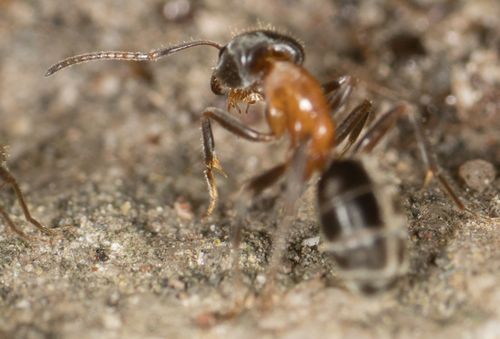
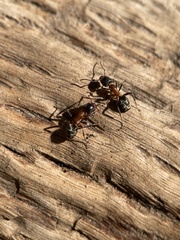
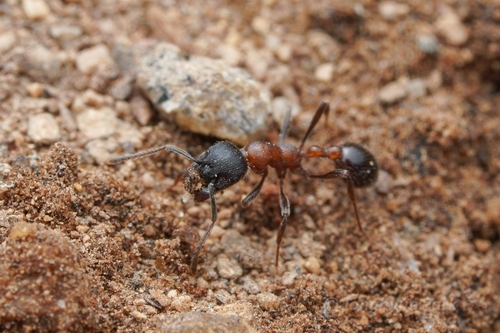
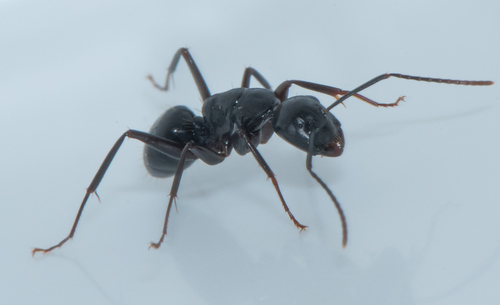
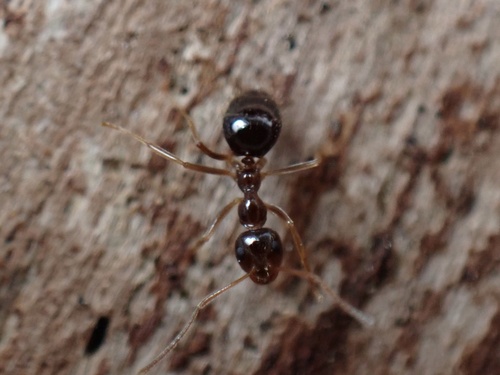
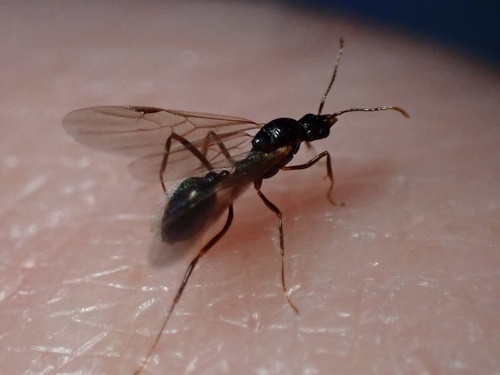
Liometopum occidentale, also called the velvety tree ant, is a species of ant in the subfamily Dolichoderinae. Liometopum occidentale is often mistaken for carpenter ants (Camponotus spp.) by homeowners and pest management professionals. This mistaken identity is due to morphological and behavioral characteristics they share with carpenter ants; namely polymorphic workers, a smooth convex thoracic profile, and the tendency to excavate wood. Consequently, their importance as structural pests may be greatly underreported, especially in California, Oregon, and Washington, United States.

Liometopum occidentale was originally described as Liometopum microcephalum var. occidentale by Emery (1895). Wheeler (1905) relocated it to a variety of Liometopum apiculatum. It was finally elevated to the species level by Wheeler (1917) and remained there in a recent taxonomic review by Del Toro et al. (2009).

Liometopum occidentale is found from sea level to over 1840 m in coastal regions from southern Washington to northern Mexico. The range of elevation of this species also appears to depend on latitude, with ants collected from locations in Oregon as low as 7 m and up... Wikipedia →

Global Distribution

Parks Where Found

# Park Country Daily sighting probability
1 Sequoia and Kings Canyon National Parks 🇺🇸 United States
~10%
2 Yosemite National Park 🇺🇸 United States
~10%
3 Joshua Tree National Park 🇺🇸 United States
~10%

Cities Where Found

# City Country Daily sighting probability
1 Sacramento 🇺🇸 United States
~10%
2 Portland 🇺🇸 United States
~10%
3 San Francisco 🇺🇸 United States
<5%
4 Los Angeles 🇺🇸 United States
<5%

Before you go

What are the chances of seeing a Western Velvety Tree Ant in Yosemite National Park?

With luck

About 10% of wildlife watchers report a Western Velvety Tree Ant sighting in Yosemite National Park on a given day, based on 28 verified sightings from GBIF citizen-science data from 2019 to 2026. It is the 61st most-seen of the 227 insects we can rate there. Over three days the chance rises to about 30%, and over a week to about 50%, if each day is a fresh chance.

When is the best time to see a Western Velvety Tree Ant in Yosemite National Park?

March and April

In those months about 20% of wildlife watchers report a Western Velvety Tree Ant in Yosemite National Park on a given day, against under 5% in August to February, the lowest months. Those are among Yosemite National Park's wettest months, with about 130 mm of rain a month against 25 mm in September.

What time of day is best to see a Western Velvety Tree Ant?

Between 2 and 5 pm

Across all the parks we cover, that three-hour window holds the most Western Velvety Tree Ant sightings with a recorded time, and about 9 in 10 of them come between 6 am and 6 pm: it is a daytime animal.

Is Yosemite National Park the best place to see a Western Velvety Tree Ant?

Among the best

Of the 3 parks where we can rate Western Velvety Tree Ant sightings, Yosemite National Park ranks 2nd at about 10%, level with the leaders once rounded. The best odds are in Sequoia and Kings Canyon National Parks (United States, about 10%).

Where does the Western Velvety Tree Ant sighting chance come from?

GBIF citizen-science records

It is estimated from how often the Western Velvety Tree Ant is recorded against all the insects logged in Yosemite National Park (28 verified sightings from 2019 to 2026), calibrated against known sighting rates. Figures are rounded to the nearest 10% because citizen-science data supports honest approximations, not decimals, and months with records from fewer than five people show "—". How it works.

← Back to Yosemite National Park