Khama

Khama

Alcelaphus caama

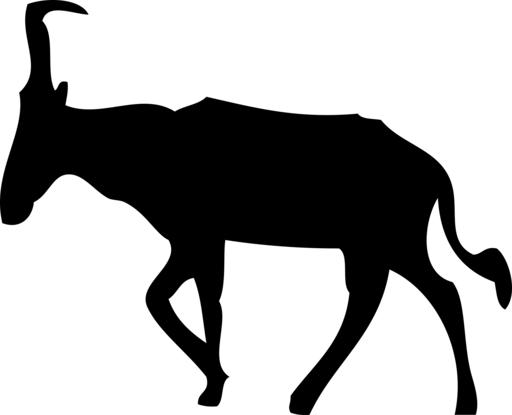
Silhouette: Jan A. Venter, Herbert H. T. Prins, David A. Balfour & Rob Slotow (vectorized by T. Michael Keesey) · PhyloPic

Daily sighting probability ~50% · Likely
at Addo Elephant National Park

In 3 days ~80% in a week >90%

329 Verified sightings at Addo Elephant National Park From 2019 to 2026
790 In all 7 parks
August Best month
☀️ Diurnal When it's spotted

About the Khama

The red hartebeest (Alcelaphus buselaphus caama), also called the Cape hartebeest or Caama, is a subspecies of the hartebeest found in Southern Africa. More than 130,000 individuals live in the wild. The red hartebeest is closely related to the tsessebe and the topi.

Alcelaphus buselaphus caama is a large African antelope of the family Bovidae, one of ten subspecies; it is sometimes treated as a separate species, A. caama. Commonly known as the red hartebeest, it is the most colorful hartebeest, with black markings contrasting against its white abdomen and behind. It has a longer face that other subspecies, with complex curving horns joined at the base. The average weight of a male is about 150 kg, and female is 120 kg. Their average shoulder height is 135 cm, and horns are 60 cm long. The life expectancy of a red hartebeest is around 19 years. Little sexual dimorphism is noted between males and females, showing no distinct identifiable physical features, but body size is slightly affected. Horn size, however, expresses more dimorphism between males and females, as males fight and defend themselves for sexual selection. Thus, male skull weight and circumference is slightly greater than that of the female.

Hartebeests have an excellent sense of hearing and smell, although their sense of sight is poor. When alarmed, hartebeests flee, reaching a maximum speed of 55 km/h. Their evasion tactic is to induce confusion by running in a zigzag pattern, making it difficult for predators to catch them. Wikipedia →

Global Distribution

Parks Where Found

# Park Country Daily sighting probability
1 Etosha National Park 🇳🇦 Namibia
~60%
2 Addo Elephant National Park 🇿🇦 South Africa
~50%
3 Kgalagadi Transfrontier Park 🇿🇦 South Africa
~40%
4 Golden Gate Highlands National Park 🇿🇦 South Africa
~40%
5 Pilanesberg National Park 🇿🇦 South Africa
~30%
6 West Coast National Park 🇿🇦 South Africa
~20%
7 Table Mountain National Park 🇿🇦 South Africa
~10%

Before you go

What are the chances of seeing a Khama in Addo Elephant National Park?

Likely

About 50% of wildlife watchers report a Khama sighting in Addo Elephant National Park on a given day, based on 329 verified sightings from GBIF citizen-science data from 2019 to 2026. It is the 6th most-seen of the 44 mammals we can rate there. Over three days the chance rises to about 80%, and over a week to over 90%, if each day is a fresh chance.

When is the best time to see a Khama in Addo Elephant National Park?

August

In that month about 60% of wildlife watchers report a Khama in Addo Elephant National Park on a given day, against about 40% in March–April, July, September and November, the lowest months.

What time of day is best to see a Khama?

Between 8 and 11 am

Across all the parks we cover, that three-hour window holds the most Khama sightings with a recorded time, and about 9 in 10 of them come between 6 am and 6 pm: it is a daytime animal.

Is Addo Elephant National Park the best place to see a Khama?

2nd of 7

Of the 7 parks where we can rate Khama sightings, Addo Elephant National Park ranks 2nd at about 50%. The best odds are in Etosha National Park (Namibia, about 60%). All parks ranked.

Where does the Khama sighting chance come from?

GBIF citizen-science records

It is estimated from how often the Khama is recorded against all the mammals logged in Addo Elephant National Park (329 verified sightings from 2019 to 2026), calibrated against known sighting rates. Figures are rounded to the nearest 10% because citizen-science data supports honest approximations, not decimals, and months with records from fewer than five people show "—". How it works.

← Back to Addo Elephant National Park