About the Purple Emperor
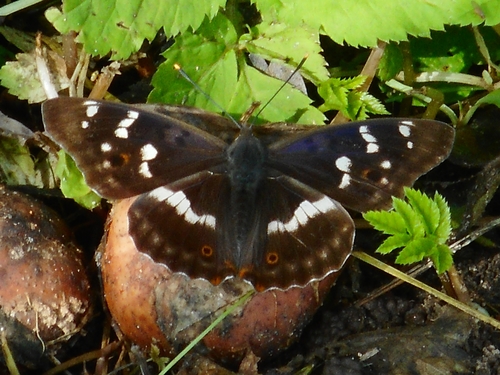
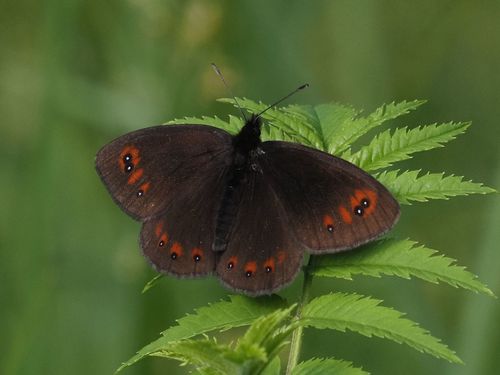
Apatura iris, the purple emperor, is a Palearctic butterfly of the family Nymphalidae. Adults have dark brown wings with white bands and spots, and a small orange ring on each of the hindwings. Males have a wingspan of 70–80 millimetres (2.8–3.1 in), and have a purple-blue sheen caused by iridescence that the slightly larger (80–92 mm) females lack. The larvae (caterpillars) are green with white and yellow markings, and have two large "horns" at the anterior end and a smaller one at the posterior.
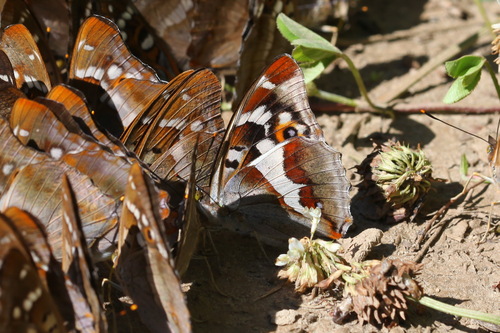
Females spend most of their lives in the tree canopy, favouring dense and mature oak woodlands, coming down only to lay their eggs on the small willow bushes that grow in clearings and bridleways. Males also spend much of their time in the tree tops, defending their territory from rivals, though they will sometimes descend to drink from puddles or feed. Unlike most butterflies, the purple emperor does not feed from flowers but instead on the honeydew secreted by aphids, sap oozing from oak trees, and on dung, urine, and animal carcasses.
Richard South noted that collectors once used animal carcasses "in a somewhat advanced state of decay" to lure the males down... Wikipedia →