Pearly Heath

Pearly Heath

Coenonympha arcania

Daily sighting probability ~40% · Likely
at Aigüestortes National Park

In 3 days ~80% in a week >90%

58 Verified sightings at Aigüestortes National Park From 2019 to 2026
703 In all 14 parks
July Best month
☀️ Diurnal When it's spotted

About the Pearly Heath

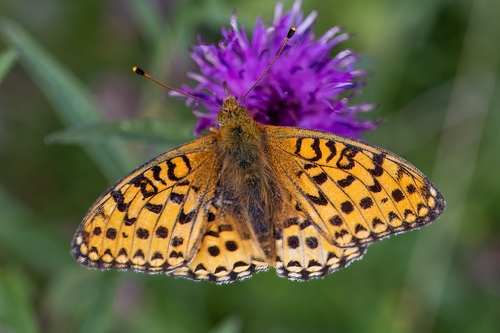
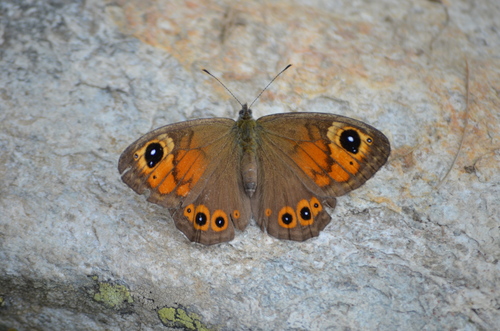
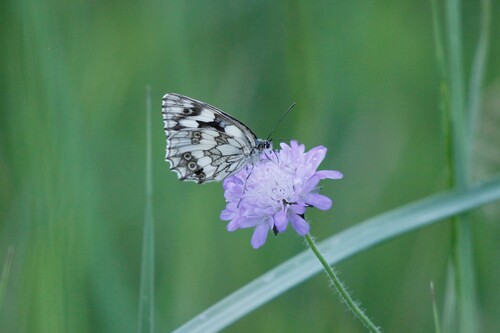
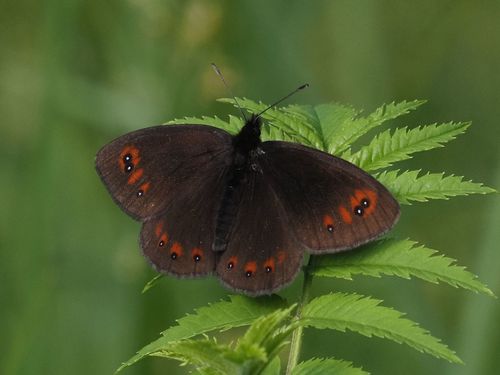
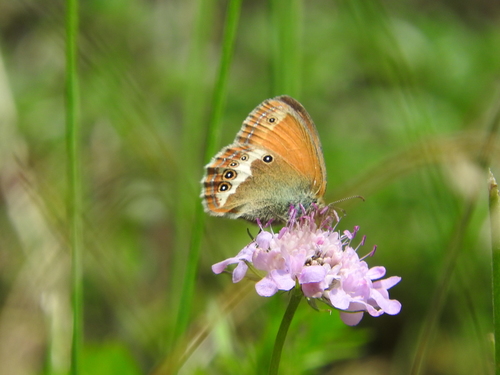
Coenonympha arcania, the pearly heath, is a butterfly species belonging to the family Nymphalidae. It can be found in Central Europe, and Scandinavia. It resembles Coenonympha hero. Seitz describes it thus C. arcania L. (48 d). Forewing fiery reddish yellow with black distal margin, hindwing dark brown. Easily recognised by the underside of the hindwing, whose marginal portion is occupied by a broad white band, which in the nymotypical form interrupts the row of ocelli below the apical eye, the latter therefore appearing to be placed on the inside of the white band. All Europe except Great Britain, from Scandinavia to the Mediterranean sea and from Spain and France to the Black sea and Armenia. — Specimens

with a very broadly black margin to the forewing and a narrowed and slightly dentate band on the underside of the hindwing, which probably occur among nymotypical specimens everywhere, but especially in the South, are considered as ab. insubrica Frey [ var.](48 d). — Larva green with dark dorsal stripe bordered with a yellowish tint, light subdorsal stripe and pale yellow lateral stripe; head blue-green, mouth and anal fork red. Until May on grasses... Wikipedia →
Global Distribution

Parks Where Found

# Park Country Daily sighting probability
1 Mercantour National Park 🇫🇷 France
~40%
2 Aigüestortes National Park 🇪🇸 Spain
~40%
3 Picos de Europa National Park 🇪🇸 Spain
~30%
4 Ordesa y Monte Perdido National Park 🇪🇸 Spain
~30%
5 Triglav National Park 🇸🇮 Slovenia
~30%
6 Pyrénées National Park 🇫🇷 France
~20%
7 Gauja National Park 🇱🇻 Latvia
~20%
8 Biebrza National Park 🇵🇱 Poland
~20%
9 Sierra de Guadarrama National Park 🇪🇸 Spain
~10%
10 Białowieża National Park 🇵🇱 Poland
~10%
11 Cévennes National Park 🇫🇷 France
~10%
12 Ecrins National Park 🇫🇷 France
~10%
13 Fertő-Hanság National Park 🇭🇺 Hungary
~10%
14 Bavarian Forest National Park 🇩🇪 Germany
<5%

Cities Where Found

# City Country Daily sighting probability
1 Stockholm 🇸🇪 Sweden
~10%
2 Budapest 🇭🇺 Hungary
~10%
3 Berlin 🇩🇪 Germany
<5%
4 Vienna 🇦🇹 Austria
<5%
5 Munich 🇩🇪 Germany
<5%

Before you go

What are the chances of seeing a Pearly Heath in Aigüestortes National Park?

Likely

About 40% of wildlife watchers report a Pearly Heath sighting in Aigüestortes National Park on a given day, based on 58 verified sightings from GBIF citizen-science data from 2019 to 2026. It is the 10th most-seen of the 256 insects we can rate there. Over three days the chance rises to about 80%, and over a week to over 90%, if each day is a fresh chance.

When is the best time to see a Pearly Heath in Aigüestortes National Park?

July

In that month about 60% of wildlife watchers report a Pearly Heath in Aigüestortes National Park on a given day, against under 5% in March–May and September–October, the lowest months.

What time of day is best to see a Pearly Heath?

Between 10 am and 1 pm

Across all the parks we cover, that three-hour window holds the most Pearly Heath sightings with a recorded time, and about 9 in 10 of them come between 6 am and 6 pm: it is a daytime animal.

Is Aigüestortes National Park the best place to see a Pearly Heath?

Among the best

Of the 14 parks where we can rate Pearly Heath sightings, Aigüestortes National Park ranks 2nd at about 40%, level with the leaders once rounded. The best odds are in Mercantour National Park (France, about 40%). All parks ranked.

Where does the Pearly Heath sighting chance come from?

GBIF citizen-science records

It is estimated from how often the Pearly Heath is recorded against all the insects logged in Aigüestortes National Park (58 verified sightings from 2019 to 2026), calibrated against known sighting rates. Figures are rounded to the nearest 10% because citizen-science data supports honest approximations, not decimals, and months with records from fewer than five people show "—". How it works.

← Back to Aigüestortes National Park