
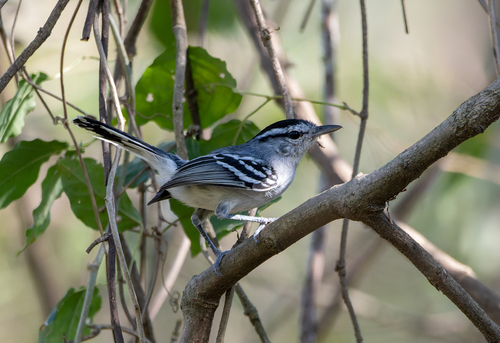
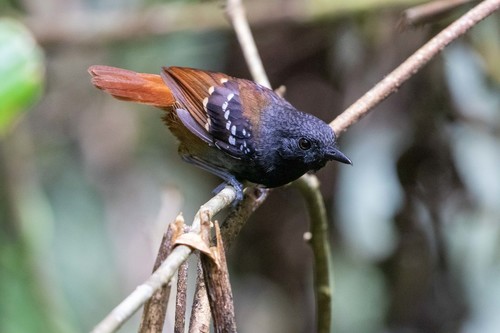
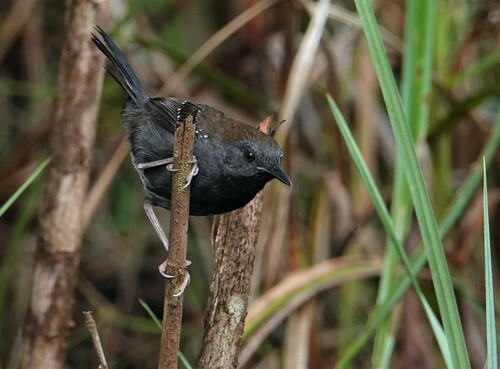
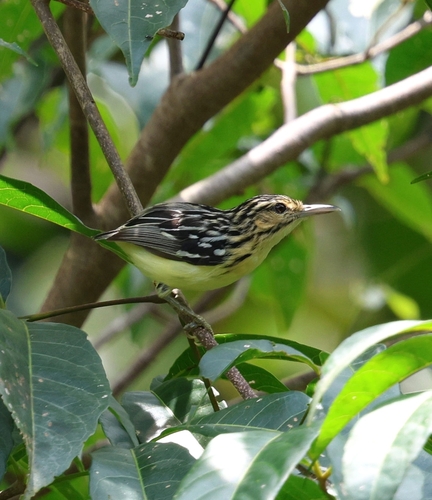
East Amazonian Fire-eye

East Amazonian Fire-eye

Pyriglena leuconota

Silhouette: Sheatherius · PhyloPic

LCLeast ConcernNTVUENCR
Daily sighting probability ~30% · Possible
at Amboró National Park

In 3 days ~60% in a week ~90%

128 Verified sightings at Amboró National Park From 2019 to 2026
195 In all 4 parks
October Best month
☀️ Diurnal When it's spotted

About the East Amazonian Fire-eye

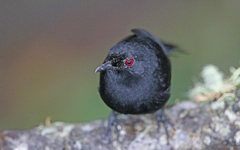
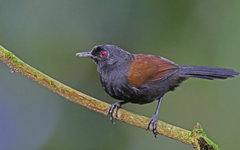
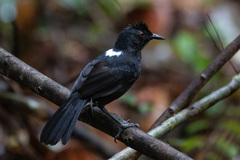
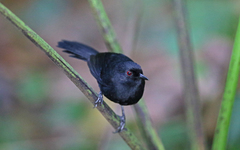
The East Amazonian fire-eye (Pyriglena leuconota) is an insectivorous bird in subfamily Thamnophilinae of family Thamnophilidae, the "typical antbirds". It is endemic to Brazil. The East Amazonian fire-eye was described and illustrated by the German naturalist Johann Baptist von Spix in 1824 and given the binomial name Myothera leuconota. The current genus Pyriglena was introduced by the German ornithologist Jean Cabanis in 1847.

The East Amazonian fire-eye's taxonomy remains unsettled. The International Ornithological Congress, the Clements taxonomy, and the South American Classification Committee of the American Ornithological Society treat it as a species with these three subspecies:

However, BirdLife International's Handbook of the Birds of the World (HBW) treats the three taxa as subspecies of what it calls the white-backed fire-eye, with the binomial Pyriglena leuconota sensu lato. Starting in 2020 the other three systems split the white-backed into the East Amazonian, Tapajos, and western fire-eyes.

The Tapajos fire-eye is 16 to 18 cm... Wikipedia →

Sounds

Alarm call0:04

Brazil · 2023

© JAYRSON ARAUJO DE OLIVEIRA · XC830572 · CC BY-NC-SA 4.0

Call0:54

Brazil · 2022

© Cicero Simão Lima Santos · XC782808 · CC BY-NC-SA 4.0

Song1:11

Brazil · 2022

© Rafael Lima · XC728752 · CC BY-NC-SA 4.0

Global Distribution

Parks Where Found

# Park Country Daily sighting probability
1 Amboró National Park 🇧🇴 Bolivia
~30%
2 Machalilla National Park 🇪🇨 Ecuador
~10%
3 Chapada dos Guimarães National Park 🇧🇷 Brazil
<5%
4 Manu National Park 🇵🇪 Peru
<5%

Before you go

What are the chances of seeing an East Amazonian Fire-eye in Amboró National Park?

Possible

About 30% of wildlife watchers report an East Amazonian Fire-eye sighting in Amboró National Park on a given day, based on 128 verified sightings from GBIF citizen-science data from 2019 to 2026. It is the 51st most-seen of the 273 birds we can rate there. Over three days the chance rises to about 60%, and over a week to about 90%, if each day is a fresh chance.

When is the best time to see an East Amazonian Fire-eye in Amboró National Park?

April and October

In those months about 40% of wildlife watchers report an East Amazonian Fire-eye in Amboró National Park on a given day, against about 10% in August, the lowest month. June has too few records to rate.

What time of day is best to see an East Amazonian Fire-eye?

Between 7 and 10 am

Across all the parks we cover, that three-hour window holds the most East Amazonian Fire-eye sightings with a recorded time, and about 9 in 10 of them come between 6 am and 6 pm: it is a daytime animal.

Is Amboró National Park the best place to see an East Amazonian Fire-eye?

Yes

Of the 4 parks where we can rate East Amazonian Fire-eye sightings, Amboró National Park has the highest daily chance: about 30%. Next come Machalilla National Park (Ecuador, about 10%) and Chapada dos Guimarães National Park (Brazil, under 5%).

Which relatives of the East Amazonian Fire-eye live in Amboró National Park?

Same family: Thamnophilidae

The closest relatives of the East Amazonian Fire-eye that you can see in Amboró National Park (family Thamnophilidae, Typical Antbirds) are Black-capped Antwren (about 50%), Plain Antvireo (about 40%) and Chestnut-backed Antshrike (about 20%), with each one's daily chance of a sighting.

Where does the East Amazonian Fire-eye sighting chance come from?

GBIF citizen-science records

It is estimated from how often the East Amazonian Fire-eye is recorded against all the birds logged in Amboró National Park (128 verified sightings from 2019 to 2026), calibrated against known sighting rates. Figures are rounded to the nearest 10% because citizen-science data supports honest approximations, not decimals, and months with records from fewer than five people show "—". How it works.

← Back to Amboró National Park