


Completed

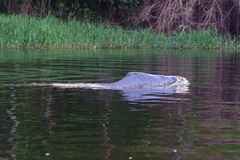
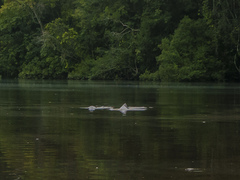


Boto
Inia geoffrensis
Silhouette: Chris huh · PhyloPic
- KingdomAnimalia (Animals)
- PhylumChordata (Chordates)
- ClassMammalia (Mammals)
- OrderCetacea
- FamilyIniidae (South American River Dolphins)
- GenusInia
- SpeciesInia geoffrensis (Boto)
In 3 days ~90% in a week >90%
93 Verified sightings at Anavilhanas National Park From 2019 to 2026
233 In all 4 parks
August Best month
☀️ Diurnal When it's spotted
About the Boto
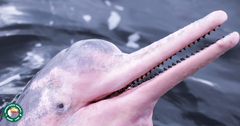
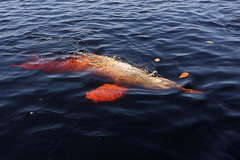
The Amazon river dolphin (Inia geoffrensis), also known as the boto, bufeo or pink river dolphin, is a species of toothed whale endemic to South America and is classified in the family Iniidae. The position of the Araguaian river dolphin (I. araguaiaensis) within the clade is still unclear. The three subspecies are distributed in the Amazon basin, the upper Madeira River in Bolivia, and the Orinoco basin, respectively.
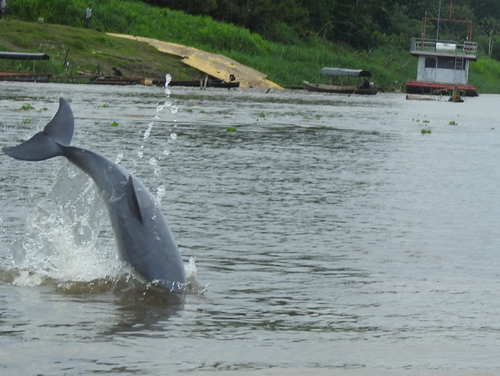
The Amazon river dolphin is the largest species of river dolphin, with many adult males reaching 185 kilograms (408 lb) in weight, and 2.5 metres (8.2 ft) in length. Adults acquire a pink color, more prominent in males, giving it its nickname "pink river dolphin". Sexual dimorphism is very evident, with males measuring 16% longer and weighing 55% more than females. Like other toothed whales, they have a melon, an organ that is used for bio sonar. The dorsal fin, although short in height, is regarded as long, and the pectoral fins are also large. The fin size, unfused vertebrae, and its relative size allow for improved maneuverability when navigating flooded forests and capturing prey.
They have one of the widest-ranging diets among toothed whales, and feed on up to 53 different species of fish, such as croakers, catfish, tetras and piranhas. They also consume other animals such as river turtles, aquatic frogs, and freshwater crabs.
In 2018, this species was ranked by the International Union for Conservation of Nature (IUCN) as endangered, with a declining population. Threats include incidental catch in fishing lines, direct hunting for use as fishing bait or predator control, damming, and pollution.
Until 2025, it was the only species of river dolphin kept in captivity, mainly in South American countries like Venezuela. It was said to be difficult to train, and had a high mortality rate among captive individuals. Wikipedia →
Sounds
Recording0:06
Brazil · 2023
© Amber M. King · iNaturalist · CC BY 4.0
Recent sightings of Boto in Anavilhanas National Park
LIVEiNaturalistGlobal Distribution
Parks Where Found
| # | Park | Country | Daily sighting probability |
|---|---|---|---|
| 1 | Cuyabeno Wildlife Reserve | 🇪🇨 Ecuador | |
| 2 | Anavilhanas National Park | 🇧🇷 Brazil | |
| 3 | Amacayacu National Natural Park | 🇨🇴 Colombia | |
| 4 | Yasuní National Park | 🇪🇨 Ecuador |
Zoos & Centres Where Found
| # | Zoo / Centre | Country | |
|---|---|---|---|
| 1 | Copenhagen Zoo | 🇩🇰 Denmark |
Closest Relatives at Anavilhanas National Park


Before you go
What are the chances of seeing a Boto in Anavilhanas National Park?
Likely
About 50% of wildlife watchers report a Boto sighting in Anavilhanas National Park on a given day, based on 93 verified sightings from GBIF citizen-science data from 2019 to 2026. It is the most-seen of the 5 mammals we can rate there. Over three days the chance rises to about 90%, and over a week to over 90%, if each day is a fresh chance.
When is the best time to see a Boto in Anavilhanas National Park?
August
In that month about 80% of wildlife watchers report a Boto in Anavilhanas National Park on a given day, against about 10% in June and September–October, the lowest months. That is one of Anavilhanas National Park's driest months, with about 75 mm of rain against 340 mm in March.
What time of day is best to see a Boto?
Between 9 am and noon
Across all the parks we cover, that three-hour window holds the most Boto sightings with a recorded time, and about 8 in 10 of them come between 6 am and 6 pm: it is a daytime animal.
Is Anavilhanas National Park the best place to see a Boto?
Among the best
Of the 4 parks where we can rate Boto sightings, Anavilhanas National Park ranks 2nd at about 50%, level with the leaders once rounded. The best odds are in Cuyabeno Wildlife Reserve (Ecuador, about 50%). All parks ranked.
Where does the Boto sighting chance come from?
GBIF citizen-science records
It is estimated from how often the Boto is recorded against all the mammals logged in Anavilhanas National Park (93 verified sightings from 2019 to 2026), calibrated against known sighting rates. Figures are rounded to the nearest 10% because citizen-science data supports honest approximations, not decimals, and months with records from fewer than five people show "—". How it works.
