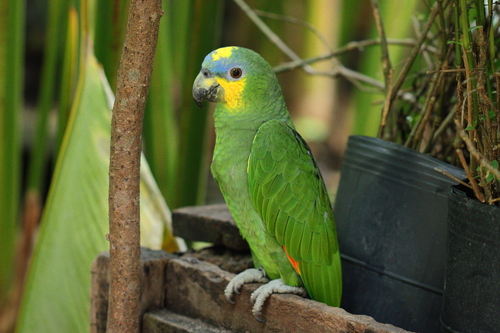


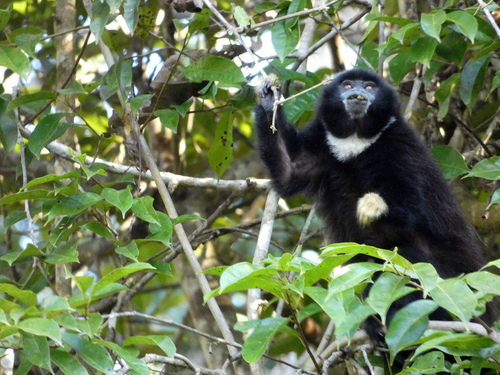
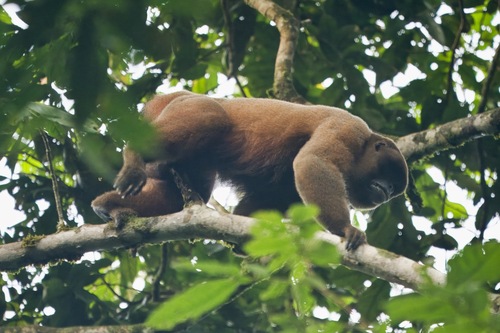


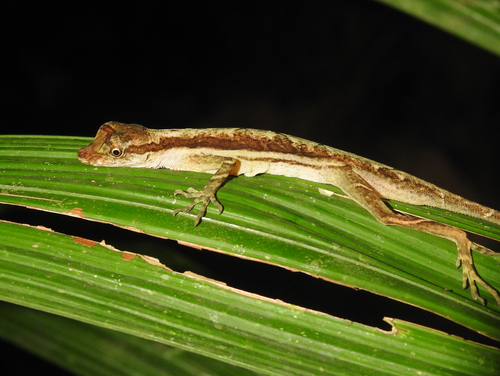


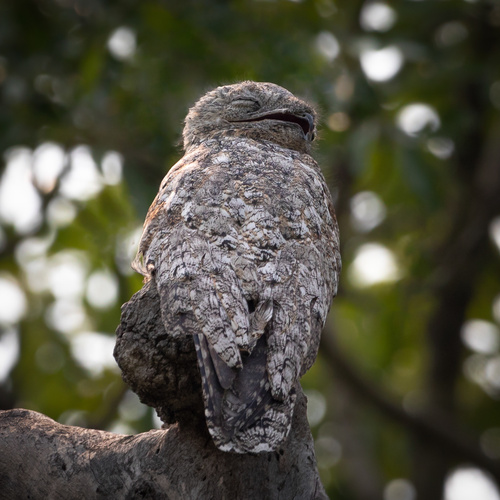


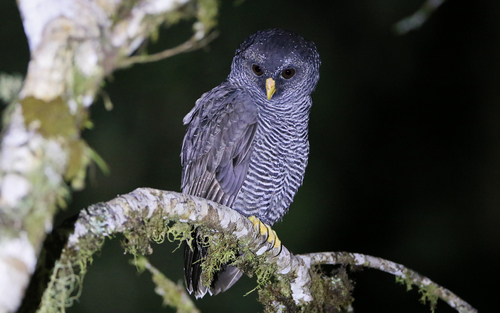


All 5 in 3 days here: <5%
Amacayacu National Natural Park
🇨🇴 Colombia
Amazon, Colombia 1308 spp. recorded
Amacayacu protects 267,000 hectares of Amazon rainforest in Colombia's southern trapezoid, near Leticia. Reached only by boat up the Amazon River, its flooded forests and channels shelter one of the richest concentrations of primates and river life on the continent.
-3.420° S 70.094° W
🦜 Nature

656 Species sighted
34,012 Verified sightings From 2019 to 2026
Aug Best month
⭐ Iconic Species
📊 Most Spotted
⭐ Iconic Species
📊 Most Spotted
📊 Most Spotted
📊 Most Spotted
📊 Most Spotted
📊 Most Spotted
🌙 Most active after dark
+ 552 more species with insufficient data
Challenges you can complete here
Recent sightings in Amacayacu National Natural Park
LIVEiNaturalistSighting Calendar
How many species you'd see in a day
50Jan
56Feb
37Mar
39Apr
52May
52Jun
43Jul
58Aug
47Sep
48Oct
45Nov
46Dec
Sighting Zones
Warmer areas are where all species together are recorded most often.
-
Sendero Puerto Nariño a San Martín
-
Nainekü Lodge
Daily sight. prob.vs avg Eastern Cane Toad~50%+20%
 Russet-backed Oropendola~50%-20%
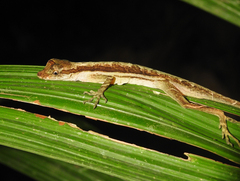
 Brown-eared Anole~50%+20%
 Undulated Tinamou~50%-10%
 South American Common Toad~40%+20%
 Rocket Tree Frog~40%+20%
 Variable Clown Tree Frog~40%+20%
 Silver-beaked Tanager~40%-10%
 Blunthead Tree Snake~40%+10%
 Trinidad Gecko~40%+20%
 Waxy Monkey Treefrog~40%+10%
 Yellow-rumped Cacique~40%-30%
-
Reubicación de San Antonio de Cacao
-
Fundación Maikuchiga
Daily sight. prob.vs avg Ecuadorian Squirrel Monkey~60%+20%
 Green Iguana~50%+30%
- Eastern Cane Toad~40%+10%
 Brown Capuchin~40%+20%
- Undulated Tinamou~40%-10%
 Three-striped Poison Frog~40%+10%
- Russet-backed Oropendola~40%-30%
 Black-fronted Nunbird~40%-10%
- Yellow-rumped Cacique~40%-30%
- Blunthead Tree Snake~30%+10%
 Tucuxi~30%≈
 Lucifer Titi~30%+10%
-
Comunidad Indígena San Martín de Amacayacu
Daily sight. prob.vs avg- Eastern Cane Toad~60%+20%
- Russet-backed Oropendola~50%-20%
- Undulated Tinamou~40%-10%
- Brown-eared Anole~40%+10%
- Ecuadorian Squirrel Monkey~40%≈
- Trinidad Gecko~40%+20%
- Three-striped Poison Frog~40%≈
- Rocket Tree Frog~40%+20%
- Variable Clown Tree Frog~40%+20%
- Yellow-rumped Cacique~30%-30%
- Silver-beaked Tanager~30%-20%
- Waxy Monkey Treefrog~30%+10%




🏕️ Experience
Essentials
Entrance
Free
Tourism
Low
Typical stay
2–3
daysTrails
Easy
World Heritage
No
Climate
Temp °C Rain mm
JanFebMarAprMayJunJulAugSepOctNovDec
0.0 Good
Wallace's Line Score
How good is this park for seeing wildlife? 🦜
Biodiversity
Very goodHow rich is the wildlife?
4.3
Species by taxon
🦅 Birds 721
🐒 Mammals 228
🦎 Reptiles 197
🐸 Amphibians 162
1308 Total Species
828 Global average across 316 parks
32 Threatened 42 Endemic
🔭
Sighting
GoodHow likely to see animals?
3.1
🎯
Top-12 Avg Probability
47% 📊
Coverage (355 species at ≥5% of 1308 in the inventory)
27% 🔀
Taxon variety in top 12 (10 bird, 1 mammal, 1 amphibian)
39% 🔭
Species per 10 outings (distinct species a visitor would meet over 10 outings — effort held equal across parks)
234 🌟
Iconic-group species (≥15%) (every species from the 19 iconic groups — monkeys, cats, toucans, macaws, sloths, crocodilians… — not just the 4 highlighted above)
28 ⭐
High-prob species (>40%)
8 🏕️
Experience
ExcellentHow easy and pleasant is the visit?
4.7
Climate Mixed Medium
Entrance Free High
Tourism Low High
Trails Easy High
World Heritage No —
What visitors say
Nearby we found a pair of Slate-Coloured Grosbeak (Saltator grossus) and in a clearing nearer to San Martin village, a Fulvous Shrike-Tanager (Lanio fulvus).
I saw what was clearly a jacamar, but one I had never seen before, even in the bird guides!
Our destination was Casa Gregorio, an ecolodge that sits along San Martín’s western edge, a few hundred feet from the Amacayacu River.
Before you go
What animals can you see in Amacayacu National Natural Park?
1,308 species
Amacayacu National Natural Park has 1,308 recorded vertebrate species. The ones wildlife watchers report most often on a given day are Russet-backed Oropendola (about 70%), Yellow-rumped Cacique (about 60%), Undulated Tinamou (about 50%), Silver-beaked Tanager (about 50%) and Black-fronted Nunbird (about 50%). Among mammals, the most-seen is Ecuadorian Squirrel Monkey (about 40%); among reptiles, Green Iguana (about 20%); among amphibians, Eastern Cane Toad (about 40%).
When is the best time to visit Amacayacu National Natural Park for wildlife?
May–August and November–February
In those months the park's 12 most-seen species average about 50% on a given day, against about 40% in March–April and September–October.
Can you see a Boto in Amacayacu National Natural Park?
Yes
About 30% of wildlife watchers report a Boto sighting in Amacayacu National Natural Park on a given day, based on 38 verified sightings from GBIF citizen-science data from 2019 to 2026. The best time is July (about 50%).
Can you see an Ecuadorian Squirrel Monkey in Amacayacu National Natural Park?
Yes
About 40% of wildlife watchers report an Ecuadorian Squirrel Monkey sighting in Amacayacu National Natural Park on a given day, based on 22 verified sightings from GBIF citizen-science data from 2019 to 2026. The best time is February, May and December (about 50%).
Can you see a Brown-throated Sloth in Amacayacu National Natural Park?
Yes
About 30% of wildlife watchers report a Brown-throated Sloth sighting in Amacayacu National Natural Park on a given day, based on 10 verified sightings from GBIF citizen-science data from 2019 to 2026. The best time is March and May–June (about 40%).
Can you see a Tucuxi in Amacayacu National Natural Park?
Yes
About 30% of wildlife watchers report a Tucuxi sighting in Amacayacu National Natural Park on a given day, based on 15 verified sightings from GBIF citizen-science data from 2019 to 2026. The best time is December (about 60%).
Where in Amacayacu National Natural Park is wildlife easiest to see?
Around Sendero Puerto Nariño a San Martín
The richest sighting zone is around Sendero Puerto Nariño a San Martín, followed by Nainekü Lodge and Reubicación de San Antonio de Cacao, ranked by how many of the park's headline animals visitors can expect to see in each. See the zones on the map.
Is Amacayacu National Natural Park good for wildlife watching?
3.5 out of 5
On the Wallace's Line Score, Amacayacu National Natural Park rates 3.5/5: 205th of 316 parks worldwide and 27th in South America. 14 of its species are reported by about 40% or more of wildlife watchers on a given day.