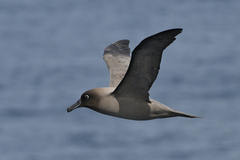
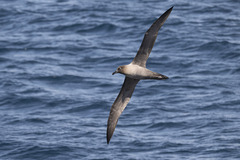
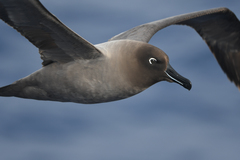
The light-mantled albatross (Phoebetria palpebrata), also known as the grey-mantled albatross or the light-mantled sooty albatross, is a small albatross in the genus Phoebetria, which it shares with the sooty albatross. The light-mantled albatross was first described as Phoebetria palpebrata by Johann Reinhold Forster, in 1785, based on a specimen from south of the Cape of Good Hope.
Light-mantled albatrosses share some identifying features with other Procellariiformes. They have nasal tubes on the upper bill called naricorns, though with albatrosses these are on the sides of the upper mandible rather than the top. They also have a salt gland above the nasal passage which excretes a concentrated saline solution to maintain osmotic balance, due to the amount of seawater imbibed. The bills of the Procellariiformes are unique in that they are covered with from seven to nine horny plates. These birds produce a stomach oil made up of wax esters and triglycerides that is stored in the proventriculus. This can be sprayed out of their mouths as a defence against predators as well as an energy rich food source for chicks and for the adults during their long flights.