Snow Petrel

Snow Petrel

Pagodroma nivea

LCLeast ConcernNTVUENCR
Daily sighting probability ~40% · Likely
at Antarctic Peninsula & South Shetland Islands

In 3 days ~70% in a week >90%

755 Verified sightings at Antarctic Peninsula & South Shetland Islands From 2019 to 2026
1,081 In all 2 parks
October Best month
☀️ Diurnal When it's spotted

About the Snow Petrel

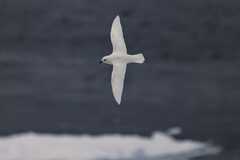
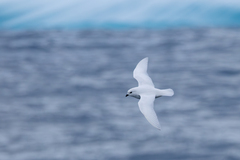
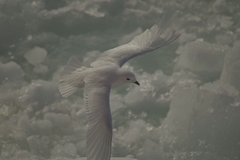
The snow petrel (Pagodroma nivea) is the only member of the genus Pagodroma. It is one of only three birds that have been seen at the Geographic South Pole, along with the Antarctic petrel and the south polar skua, and it has the most southerly breeding sites of any bird, inland in Antarctica.

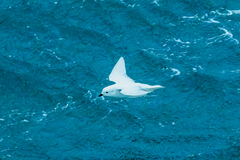
The snow petrel was described in 1777 by the German naturalist Georg Forster in his book A Voyage Round the World. He had accompanied James Cook on Cook's second voyage to the Pacific. We particularly observed a petrel, about the size of a pigeon, entirely white, with a black bill and blueish feet; it constantly appeared about the icy masses, and may be looked upon as a sure fore-runner of ice.

Forster placed the snow petrel in the genus Procellaria that had been erected for the petrels by Carl Linnaeus in 1758 and coined the binomial name Procellaria nivea. The snow petrel is now the only species placed in the genus Pagodroma that was introduced for the snow petrel in 1856 by French naturalist Charles Lucien Bonaparte. The genus name combines the Ancient Greek pagos meaning "frost" or "sea-ice" with dromos meaning "racer" or "runner". The specific epithet is from the Latin niveus...

Wikipedia →

Global Distribution

Parks Where Found

# Park Country Daily sighting probability
1 Antarctic Peninsula & South Shetland Islands 🇦🇶 Antarctica
~40%
2 South Georgia and the South Sandwich Islands 🇬🇸 South Georgia and the South Sandwich Islands
~30%

Before you go

What are the chances of seeing a Snow Petrel in Antarctic Peninsula & South Shetland Islands?

Likely

About 40% of wildlife watchers report a Snow Petrel sighting in Antarctic Peninsula & South Shetland Islands on a given day, based on 755 verified sightings from GBIF citizen-science data from 2019 to 2026. It is the 14th most-seen of the 29 birds we can rate there. Over three days the chance rises to about 70%, and over a week to over 90%, if each day is a fresh chance.

When is the best time to see a Snow Petrel in Antarctic Peninsula & South Shetland Islands?

October

In that month over 90% of wildlife watchers report a Snow Petrel in Antarctic Peninsula & South Shetland Islands on a given day, against about 30% in January to March, the lowest months. April to September have too few records to rate.

What time of day is best to see a Snow Petrel?

Between 8 and 11 am

Across all the parks we cover, that three-hour window holds the most Snow Petrel sightings with a recorded time, and about 7 in 10 of them come between 6 am and 6 pm: it is a daytime animal.

Is Antarctic Peninsula & South Shetland Islands the best place to see a Snow Petrel?

Yes

Of the 2 parks where we can rate Snow Petrel sightings, Antarctic Peninsula & South Shetland Islands has the highest daily chance: about 40%. Next come South Georgia and the South Sandwich Islands (South Georgia and the South Sandwich Islands, about 30%).

Which relatives of the Snow Petrel live in Antarctic Peninsula & South Shetland Islands?

Same family: Procellariidae

The closest relatives of the Snow Petrel that you can see in Antarctic Peninsula & South Shetland Islands (family Procellariidae, Shearwaters and Petrels) are Southern Giant Petrel (about 90%), Southern Fulmar (about 70%) and Cape Petrel (about 60%), with each one's daily chance of a sighting.

Where does the Snow Petrel sighting chance come from?

GBIF citizen-science records

It is estimated from how often the Snow Petrel is recorded against all the birds logged in Antarctic Peninsula & South Shetland Islands (755 verified sightings from 2019 to 2026), calibrated against known sighting rates. Figures are rounded to the nearest 10% because citizen-science data supports honest approximations, not decimals, and months with records from fewer than five people show "—". How it works.

← Back to Antarctic Peninsula & South Shetland Islands