About the Mountain Stone Weta
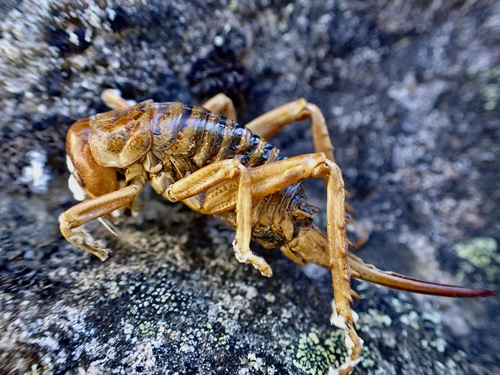
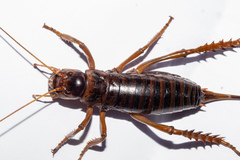
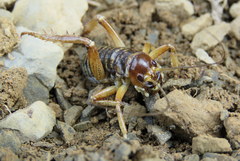
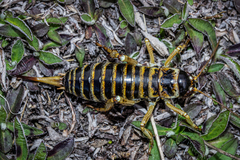
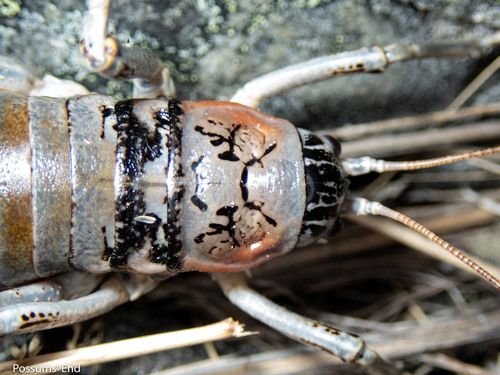
Hemideina maori, also known as the mountain stone wētā, is a wētā of the family Anostostomatidae. They are a large, flightless, nocturnal orthopteran endemic to New Zealand. Mountain stone wētā are long lived and are found on many central mountain ranges in New Zealand's South Island.
Hemideina maori was first described in 1891 by Swiss Entomologists Alphonse Pictet and Henri de Saussure. Unlike other Hemideina species H. maori occupy an alpine habitat. They are found at high elevation (above the tree line) of the South Island of New Zealand. They have been found above 1500 metres above sea level (m.a.s.l) with a lower limit of 1100m.a.s.l, from the Kaikōura Ranges south to the Rock and Pillar range in Otago. They use cavities under rock slabs ('tors') broken from schist outcrops as retreats during the day. Tors are separated by alpine meadows with no rocks and therefore are assumed to have no wētā, causing population fragmentation.
The mountain wētā do not move far during their lifetime, and are exposed to high winds and low temperatures all year round. Studies of mountain stone wētā frass have found that they eat many plant... Wikipedia →