Scree Weta

Scree Weta

Deinacrida connectens

Endemic
Daily sighting probability ~20% · Possible
at Aoraki Mount Cook National Park

In 3 days ~50% in a week ~80%

5 Verified sightings at Aoraki Mount Cook National Park From 2019 to 2026
5 In 1 park
February Best month
☀️🌙 Day & Night When it's spotted

About the Scree Weta

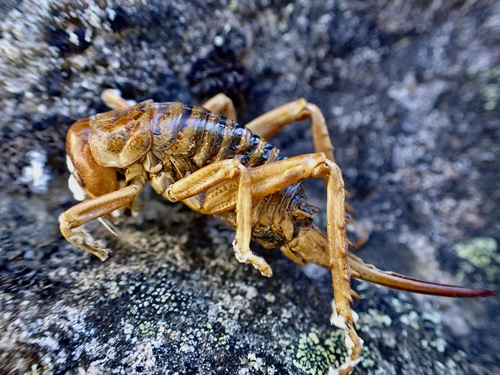
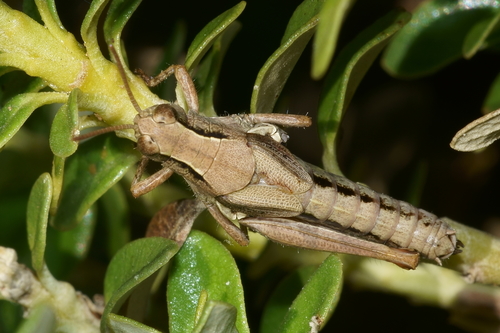
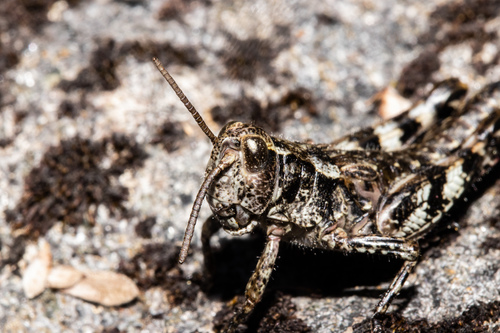
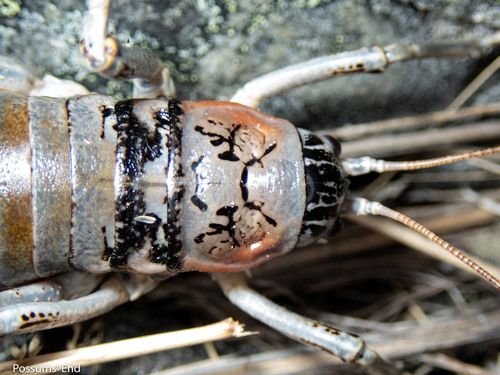
Deinacrida connectens, often referred to as the alpine scree wētā, is a member of the Anostostomatidae family. It is nocturnal and lives under rocks between 1,200 m (3,900 ft) and 3,600 m (11,800 ft) above sea level in the South Island. The male can reach up to 3.5 cm (1.4 in) in length, whereas the female can be 7.2 cm (2.8 in), with both sexes varying substantially in colour. It is the most widespread of the eleven species of giant wētā (Deinacrida), but unlike most other giant wētā, is not a threatened species under the New Zealand Threat Classification System. It is an omnivore that feeds on plants such as Aciphylla and Gaultheria depressa. To survive the alpine environment, it is moderately freeze tolerant. The genetic structure of the species suggests that it diversified during the Pliocene mountain building that created the Southern Alps four million years ago. It was first described in scientific literature in 1939 by Swedish entomologist Kjell Ernst Viktor Ander.

Deinacrida connectens, commonly referred to as the alpine scree wētā, was first described scientific literature in 1939 by Swedish entomologist Kjell Ernst Viktor Ander as Deinacridopsis connectens,... Wikipedia →
Global Distribution

Parks Where Found

# Park Country Daily sighting probability
1 Aoraki Mount Cook National Park 🇳🇿 New Zealand
~20%

More parks will be added in future updates.

Before you go

What are the chances of seeing a Scree Weta in Aoraki Mount Cook National Park?

Possible

About 20% of wildlife watchers report a Scree Weta sighting in Aoraki Mount Cook National Park on a given day, based on 5 verified sightings from GBIF citizen-science data from 2019 to 2026. It is the 10th most-seen of the 10 insects we can rate there. Over three days the chance rises to about 50%, and over a week to about 80%, if each day is a fresh chance.

When is the best time to see a Scree Weta in Aoraki Mount Cook National Park?

January and February

In those months about 30% of wildlife watchers report a Scree Weta in Aoraki Mount Cook National Park on a given day, against under 5% in April–May and July–December, the lowest months.

What time of day is best to see a Scree Weta?

Between 7 and 10 am

Across all the parks we cover, that three-hour window holds the most Scree Weta sightings with a recorded time, and about 6 in 10 of them come between 6 am and 6 pm: it is seen both by day and at night.

Where else can you see a Scree Weta?

Only Aoraki Mount Cook National Park, in our data

Aoraki Mount Cook National Park is the only park on Wallace's Line with enough records to rate Scree Weta sightings: about 20% of wildlife watchers there report one on a given day.

Where does the Scree Weta sighting chance come from?

GBIF citizen-science records

It is estimated from how often the Scree Weta is recorded against all the insects logged in Aoraki Mount Cook National Park (5 verified sightings from 2019 to 2026), calibrated against known sighting rates. Figures are rounded to the nearest 10% because citizen-science data supports honest approximations, not decimals, and months with records from fewer than five people show "—". How it works.

← Back to Aoraki Mount Cook National Park