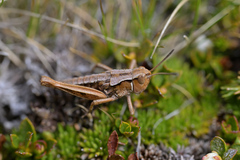
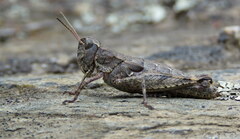
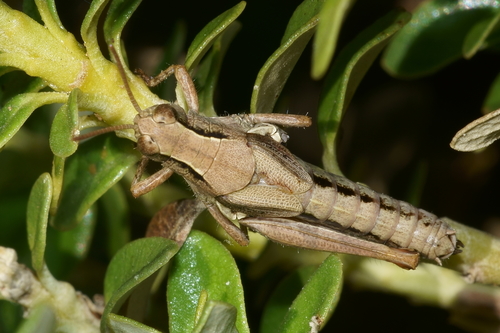
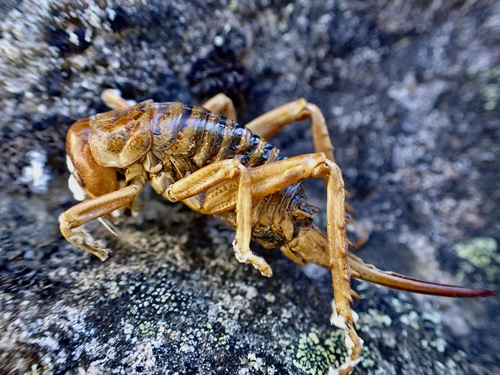
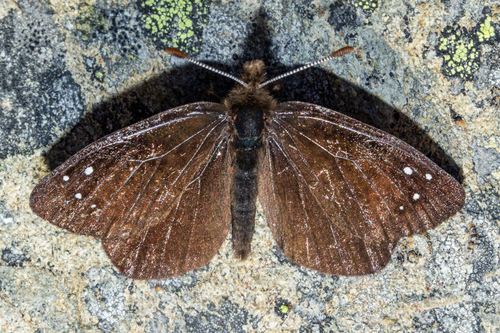
Sigaus australis

Sigaus australis

Sigaus australis

Endemic
Daily sighting probability ~30% · Possible
at Aoraki Mount Cook National Park

In 3 days ~70% in a week ~90%

13 Verified sightings at Aoraki Mount Cook National Park From 2019 to 2026
54 In all 2 parks
January Best month
☀️ Diurnal When it's spotted

About the Sigaus australis

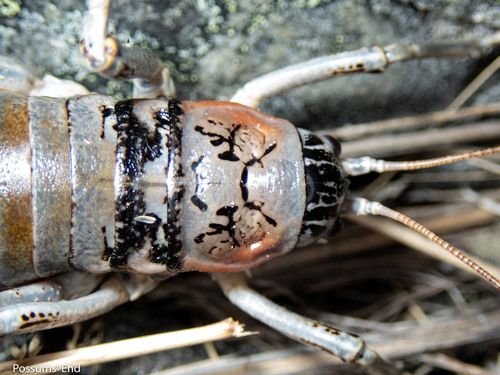
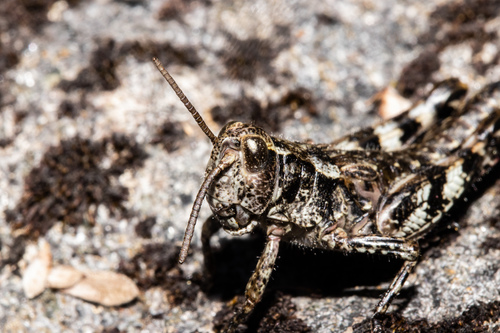
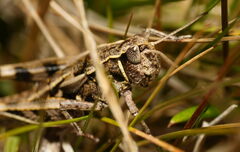
Sigaus australis is the most common alpine grasshopper found in New Zealand. It can be found in the southern half of the South Island above the tree line. Sigaus australis was described in 1897 by Frederick Hutton. Like all of New Zealand sub-alpine and alpine grasshoppers S. australis has a 2 or 3 years life cycle. Individuals can survive the cold by freezing solid at any life stage, at any time of the year. Sigaus australis adults are relatively large grasshoppers (females ~ 26mm, 0.8g). The genus Sigaus is endemic to New Zealand.

Sigaus australis can be found in the southern half of the South Island, from Otago and Canterbury regions. It can be found as far south as the Takitimu Mountains and as far north as the Torless Range (43°14′39″S 171°48′34″E). Sigaus australis prefer tussock grasslands between 1,300–1,700 metres (4,300–5,600 ft) elevation, however, can be found as low as 200 metres (660 ft) on the Alexandra Tailings, (45°14′49″S 169°22′07″E) and as high as 2,000 metres (6,600 ft) on Smite Peak (43°21′10″S 171°14′17″E). Evidence from mtDNA sequencing suggests that S. australis encompasses several narrow endemic taxa and one widespread species... Wikipedia →
Global Distribution

Parks Where Found

# Park Country Daily sighting probability
1 Aoraki Mount Cook National Park 🇳🇿 New Zealand
~30%
2 Fiordland National Park 🇳🇿 New Zealand
~20%

Before you go

What are the chances of seeing a Sigaus australis in Aoraki Mount Cook National Park?

Possible

About 30% of wildlife watchers report a Sigaus australis sighting in Aoraki Mount Cook National Park on a given day, based on 13 verified sightings from GBIF citizen-science data from 2019 to 2026. It is the 6th most-seen of the 10 insects we can rate there. Over three days the chance rises to about 70%, and over a week to about 90%, if each day is a fresh chance.

When is the best time to see a Sigaus australis in Aoraki Mount Cook National Park?

January

In that month about 50% of wildlife watchers report a Sigaus australis in Aoraki Mount Cook National Park on a given day, against under 5% in May, October and December, the lowest months.

What time of day is best to see a Sigaus australis?

Between 11 am and 2 pm

Across all the parks we cover, that three-hour window holds the most Sigaus australis sightings with a recorded time, and about 9 in 10 of them come between 6 am and 6 pm: it is a daytime animal.

Is Aoraki Mount Cook National Park the best place to see a Sigaus australis?

Yes

Of the 2 parks where we can rate Sigaus australis sightings, Aoraki Mount Cook National Park has the highest daily chance: about 30%. Next come Fiordland National Park (New Zealand, about 20%).

Where does the Sigaus australis sighting chance come from?

GBIF citizen-science records

It is estimated from how often the Sigaus australis is recorded against all the insects logged in Aoraki Mount Cook National Park (13 verified sightings from 2019 to 2026), calibrated against known sighting rates. Figures are rounded to the nearest 10% because citizen-science data supports honest approximations, not decimals, and months with records from fewer than five people show "—". How it works.

← Back to Aoraki Mount Cook National Park