Rifleman

Rifleman

Acanthisitta chloris

Silhouette: Wynston Cooper (photo) and Albertonykus (silhouette) · PhyloPic

LCLeast ConcernNTVUENCR Endemic
Daily sighting probability ~50% · Likely
at Aoraki Mount Cook National Park

In 3 days ~90% in a week >90%

217 Verified sightings at Aoraki Mount Cook National Park From 2019 to 2026
2,421 In all 6 parks
March Best month
☀️ Diurnal When it's spotted

About the Rifleman

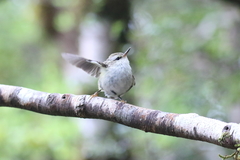
The rifleman (Acanthisitta chloris) (Māori: titipounamu or tītitipounamu) is a small insectivorous passerine bird that is endemic to New Zealand. It belongs to the family Acanthisittidae, also known as the New Zealand wrens, of which it is one of only two surviving species. The rifleman resembles a wren in form, but is not related to the family of true wrens, Troglodytidae, nor the fairy-wrens of Australia.

The rifleman was described by Anders Sparrman in 1787 based on a bird collected in Queen Charlotte Sound in the Marlborough Sounds of New Zealand's South Island. He originally placed it in the nuthatch genus Sitta. Frédéric de Lafresnaye placed it in its own monotypic genus Acanthisitta in 1842. The name Acanthisitta is a portmanteau of the thornbill genus Acanthiza and the genus Sitta.

The rifleman is named after a colonial New Zealand regiment because its plumage drew similarities with the military uniform of a rifleman. The rifleman is New Zealand's smallest endemic bird, with fully grown adults reaching around 7 to 9 cm (2.8–3.5 in) in length. Male birds typically weigh around 6 g (0.21 oz), females 7 g (0.25 oz). The bill of the female is also... Wikipedia →

Sounds

Song0:16

New Zealand · 2020

© James Lidster · XC526700 · CC BY-NC-SA 4.0

Call0:46

New Zealand · 2018

© David Welch · XC428801 · CC BY-NC-SA 4.0

Call0:09

New Zealand · 2011

© David Bradley · XC237584 · CC BY-NC-SA 4.0

Global Distribution

Parks Where Found

# Park Country Daily sighting probability
1 Arthur's Pass National Park 🇳🇿 New Zealand
~60%
2 Aoraki Mount Cook National Park 🇳🇿 New Zealand
~50%
3 Rakiura National Park 🇳🇿 New Zealand
~30%
4 Fiordland National Park 🇳🇿 New Zealand
~30%
5 Egmont National Park 🇳🇿 New Zealand
~10%
6 Abel Tasman National Park 🇳🇿 New Zealand
<5%

Before you go

What are the chances of seeing a Rifleman in Aoraki Mount Cook National Park?

Likely

About 50% of wildlife watchers report a Rifleman sighting in Aoraki Mount Cook National Park on a given day, based on 217 verified sightings from GBIF citizen-science data from 2019 to 2026. It is the 12th most-seen of the 36 birds we can rate there. Over three days the chance rises to about 90%, and over a week to over 90%, if each day is a fresh chance.

When is the best time to see a Rifleman in Aoraki Mount Cook National Park?

March to May

In those months about 60% of wildlife watchers report a Rifleman in Aoraki Mount Cook National Park on a given day, against about 30% in August, the lowest month.

What time of day is best to see a Rifleman?

Between noon and 3 pm

Across all the parks we cover, that three-hour window holds the most Rifleman sightings with a recorded time, and about 8 in 10 of them come between 6 am and 6 pm: it is a daytime animal.

Is Aoraki Mount Cook National Park the best place to see a Rifleman?

2nd of 6

Of the 6 parks where we can rate Rifleman sightings, Aoraki Mount Cook National Park ranks 2nd at about 50%. The best odds are in Arthur's Pass National Park (New Zealand, about 60%). All parks ranked.

Which relatives of the Rifleman live in Aoraki Mount Cook National Park?

Same order: Passeriformes

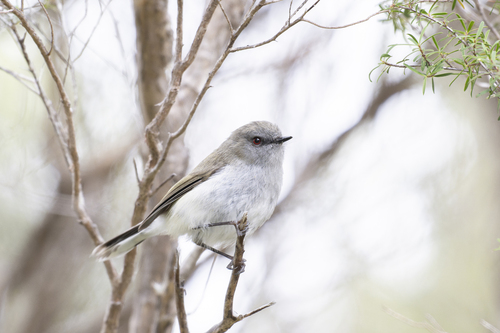
The closest relatives of the Rifleman that you can see in Aoraki Mount Cook National Park (order Passeriformes, Perching Birds) are Chaffinch (about 90%), Eurasian Blackbird (about 90%) and Grey Warbler (about 80%), with each one's daily chance of a sighting.

Where does the Rifleman sighting chance come from?

GBIF citizen-science records

It is estimated from how often the Rifleman is recorded against all the birds logged in Aoraki Mount Cook National Park (217 verified sightings from 2019 to 2026), calibrated against known sighting rates. Figures are rounded to the nearest 10% because citizen-science data supports honest approximations, not decimals, and months with records from fewer than five people show "—". How it works.

← Back to Aoraki Mount Cook National Park