Chilton's Giant Dragonfly

Chilton's Giant Dragonfly

Uropetala chiltoni

Endemic
Daily sighting probability ~50% · Likely
at Arthur's Pass National Park

In 3 days ~80% in a week >90%

97 Verified sightings at Arthur's Pass National Park From 2019 to 2026
97 In 1 park
January Best month
☀️ Diurnal When it's spotted

About the Chilton's Giant Dragonfly

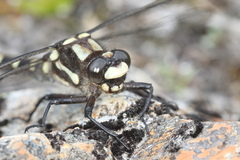
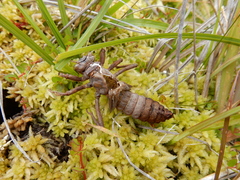
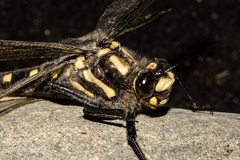
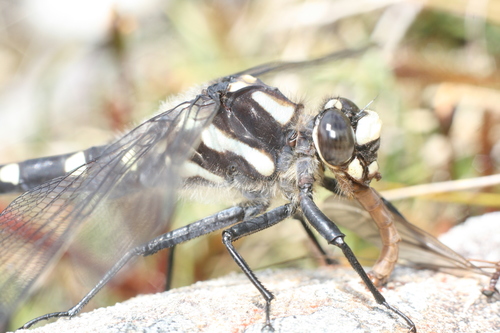
Uropetala chiltoni (New Zealand mountain giant dragonfly) is a giant dragonfly in the family Petaluridae, endemic to New Zealand. The Māori name for giant dragonflies, kapokapowai, means "water snatcher", alluding to the water-dwelling juvenile stage (nymph), which, like all dragonflies, has a long extendable jaw that shoots out to snatch prey.

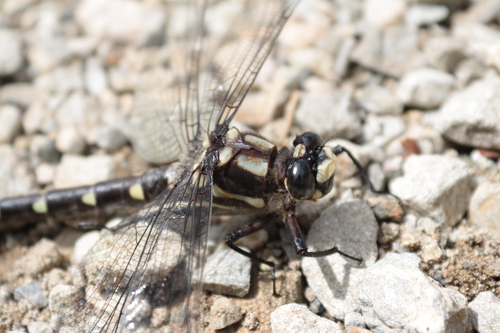
The second-largest New Zealand dragonfly species, Uropetala chiltoni has a body length of about 80 mm and wingspan of about 100 mm. Uropetala chiltoni can be distinguished from the similar Uropetala carovei by large pale blotches on its labrum (which in Uropetala carovei is all black), and its black femur leg segments (which are brownish in Uropetala carovei). It was described as a separate species in 1921, based on specimens collected at Cass and Arthur's Pass.

This species is found only in New Zealand, in upland and sub-alpine parts of the South Island. It has been recorded from Lake Rotoiti down to Lake Wakatipu and east to the Old Man Range and Garvie Mountains. There are also unconfirmed reports from the southern North Island.

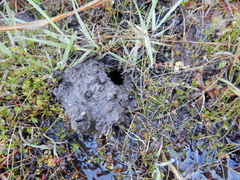
The nymphs tunnel into the soft earth around alpine swamp or... Wikipedia →
Global Distribution

Parks Where Found

# Park Country Daily sighting probability
1 Arthur's Pass National Park 🇳🇿 New Zealand
~50%

More parks will be added in future updates.

Before you go

What are the chances of seeing a Chilton's Giant Dragonfly in Arthur's Pass National Park?

Likely

About 50% of wildlife watchers report a Chilton's Giant Dragonfly sighting in Arthur's Pass National Park on a given day, based on 97 verified sightings from GBIF citizen-science data from 2019 to 2026. It is the most-seen of the 60 insects we can rate there. Over three days the chance rises to about 80%, and over a week to over 90%, if each day is a fresh chance.

When is the best time to see a Chilton's Giant Dragonfly in Arthur's Pass National Park?

January

In that month about 70% of wildlife watchers report a Chilton's Giant Dragonfly in Arthur's Pass National Park on a given day, against under 5% in April–June and October, the lowest months.

What time of day is best to see a Chilton's Giant Dragonfly?

Between noon and 3 pm

Across all the parks we cover, that three-hour window holds the most Chilton's Giant Dragonfly sightings with a recorded time, and nearly all of them come between 6 am and 6 pm: it is a daytime animal.

Where else can you see a Chilton's Giant Dragonfly?

Only Arthur's Pass National Park, in our data

Arthur's Pass National Park is the only park on Wallace's Line with enough records to rate Chilton's Giant Dragonfly sightings: about 50% of wildlife watchers there report one on a given day.

Where does the Chilton's Giant Dragonfly sighting chance come from?

GBIF citizen-science records

It is estimated from how often the Chilton's Giant Dragonfly is recorded against all the insects logged in Arthur's Pass National Park (97 verified sightings from 2019 to 2026), calibrated against known sighting rates. Figures are rounded to the nearest 10% because citizen-science data supports honest approximations, not decimals, and months with records from fewer than five people show "—". How it works.

← Back to Arthur's Pass National Park