About the Carové's Giant Dragonfly
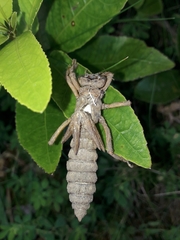
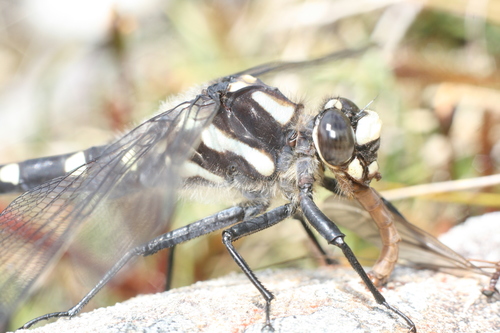
Uropetala carovei (New Zealand bush giant dragonfly) is a giant dragonfly of the family Petaluridae, endemic to New Zealand. Its Māori name, kapokapowai (or kapowai) means "water snatcher", alluding to the water dwelling juvenile stage (nymph), which, like all dragonflies, has a long extendable jaw that shoots out to snatch prey. It is also known as Carové's Giant Dragonfly.
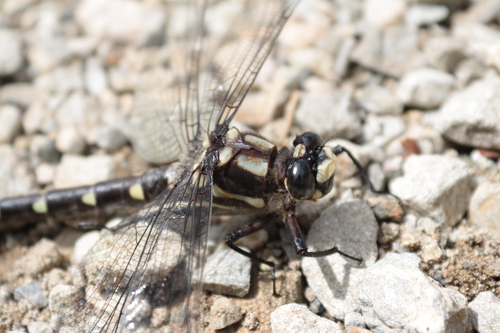
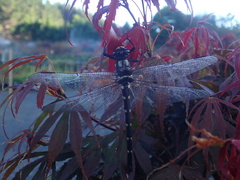
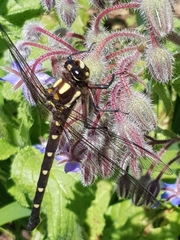
Its yellow and black body can be up to 95 millimetres (3.7 in) long, with a wingspan up to 130 millimetres (5.1 in), making it the largest dragonfly in New Zealand. Females are slightly larger than males. The bodies of both the female and male are dark brown, with pale spots on the abdomen and thorax. Males have petal-shaped appendages at the tip of the abdomen. Uropetala carovei can be distinguished from the similar Uropetala chiltoni, which occurs in the mountains of the South Island, by its all-black labrum (lacking the large pale blotch on Uropetala chiltoni), and its brown to yellowish leg femur segments (which are black in Uropetala chiltoni).
Uropetala carovei was first described by Adam White in 1843 and originally named Petalura carovei. The Natural History Museum, London... Wikipedia →