Common Tussock Butterfly

Common Tussock Butterfly

Argyrophenga antipodum

Endemic
Daily sighting probability ~20% · Possible
at Arthur's Pass National Park

In 3 days ~40% in a week ~70%

10 Verified sightings at Arthur's Pass National Park From 2019 to 2026
43 In all 3 parks
February Best month
☀️ Diurnal When it's spotted

About the Common Tussock Butterfly

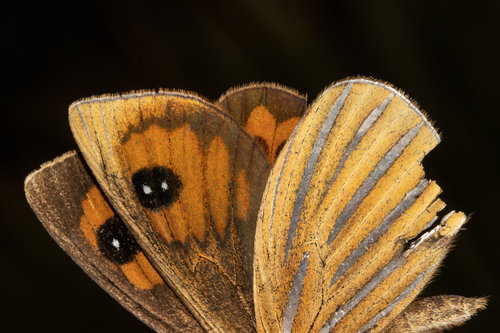
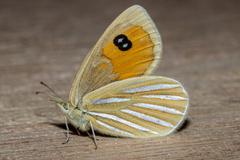
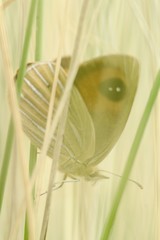
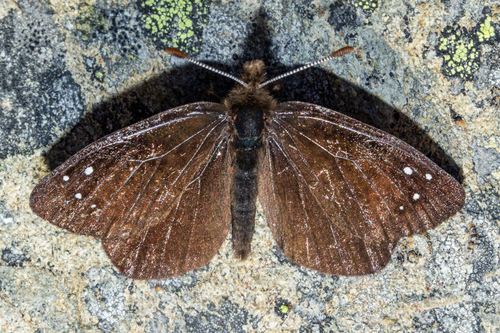
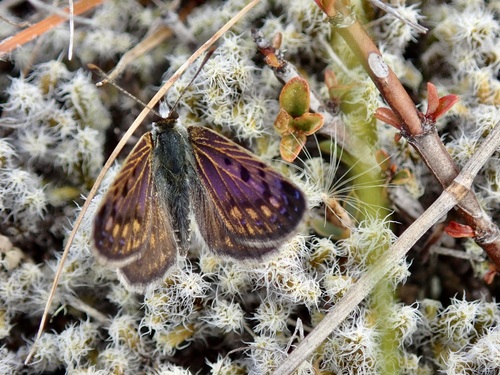
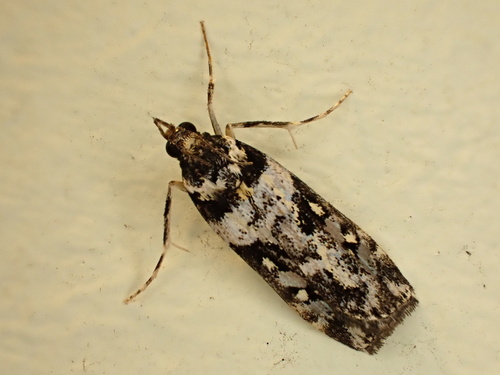
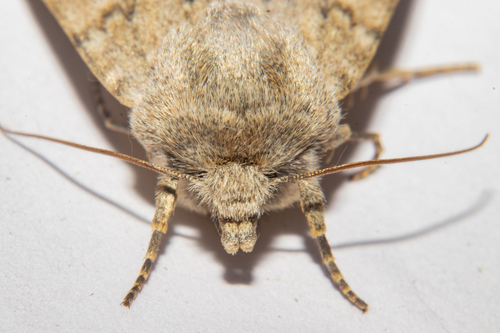
Argyrophenga antipodum, the common tussock or tussock ringlet, is a species of butterfly commonly found in the South Island of New Zealand. Argyrophenga antipodum is approximately 12–17 mm long with a wingspan of about 35–45 mm. Male and female common tussock butterflies are quite different in body shape, as females are shorter and have more rounded bodies compared to the males. Common tussock butterflies have very distinct markings on the underside of their wings; they are described as silver streaks and give the butterflies an advantage when it comes to camouflage. The butterfly itself is brown and red, with distinctive eyespots, this is believed to be an evolutionary adaptation to prevent prey from attacking. The sexes are coloured differently with the males being darker in colour and having more red and brown on them and the females are more of a yellow colour, but have very similar patterns or markings on their topside and underside.

The common tussock butterfly is endemic to New Zealand. It can be found in the eastern, southern and central regions of New Zealand's South Island, most abundantly in lowland Canterbury... Wikipedia →

Global Distribution

Parks Where Found

# Park Country Daily sighting probability
1 Aoraki Mount Cook National Park 🇳🇿 New Zealand
~40%
2 Arthur's Pass National Park 🇳🇿 New Zealand
~20%
3 Fiordland National Park 🇳🇿 New Zealand
~10%

Before you go

What are the chances of seeing a Common Tussock Butterfly in Arthur's Pass National Park?

Possible

About 20% of wildlife watchers report a Common Tussock Butterfly sighting in Arthur's Pass National Park on a given day, based on 10 verified sightings from GBIF citizen-science data from 2019 to 2026. It is the 15th most-seen of the 60 insects we can rate there. Over three days the chance rises to about 40%, and over a week to about 70%, if each day is a fresh chance.

When is the best time to see a Common Tussock Butterfly in Arthur's Pass National Park?

February

In that month about 30% of wildlife watchers report a Common Tussock Butterfly in Arthur's Pass National Park on a given day, against under 5% in April–October and December, the lowest months.

What time of day is best to see a Common Tussock Butterfly?

Between noon and 3 pm

Across all the parks we cover, that three-hour window holds the most Common Tussock Butterfly sightings with a recorded time, and about 9 in 10 of them come between 6 am and 6 pm: it is a daytime animal.

Is Arthur's Pass National Park the best place to see a Common Tussock Butterfly?

2nd of 3

Of the 3 parks where we can rate Common Tussock Butterfly sightings, Arthur's Pass National Park ranks 2nd at about 20%. The best odds are in Aoraki Mount Cook National Park (New Zealand, about 40%).

Where does the Common Tussock Butterfly sighting chance come from?

GBIF citizen-science records

It is estimated from how often the Common Tussock Butterfly is recorded against all the insects logged in Arthur's Pass National Park (10 verified sightings from 2019 to 2026), calibrated against known sighting rates. Figures are rounded to the nearest 10% because citizen-science data supports honest approximations, not decimals, and months with records from fewer than five people show "—". How it works.

← Back to Arthur's Pass National Park