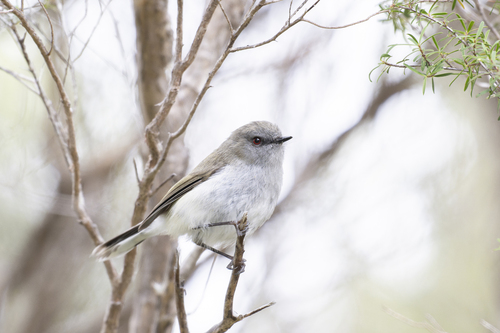
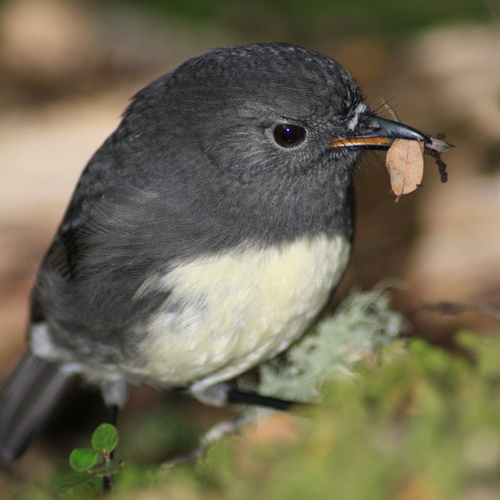
New Zealand Bellbird

New Zealand Bellbird

Anthornis melanura

Silhouette: Rachael Joakim · PhyloPic

LCLeast ConcernNTVUENCR Endemic
Daily sighting probability ~90% · Very likely
at Arthur's Pass National Park
1,518 Verified sightings at Arthur's Pass National Park From 2019 to 2026
6,726 In all 6 parks
June Best month
☀️ Diurnal When it's spotted

About the New Zealand Bellbird

The New Zealand bellbird (Anthornis melanura), also known by its Māori language names korimako, makomako and kōmako, is a medium-sized species of honeyeater endemic to New Zealand. It has been the only living member of the genus Anthornis since the Chatham Islands bellbird went extinct in the early 20th century. The bellbird's closest living relative is the only other New Zealand honeyeater, the tūī (Prosthemadera novaeseelandiae). The bellbird forms a significant component of the famed New Zealand dawn chorus of birdsong, which was much noted by early European settlers. Exceptional singing abilities were already observed by Captain James Cook, who described its song as "like small bells most exquisitely tuned".

Bellbirds measure about 17–20 cm (6.7–7.9 in) in length, with females weighing approximately 25 g (0.88 oz) and males 33 g (1.2 oz). Males are mostly olive-green with paler underparts, and bluish-black wings and tail. Females are paler and browner. Like other honeyeaters, the bellbird has a brush-like tongue that enables effective feeding on nectar from deep flowers. The species is common across much of New Zealand, its offshore islands, and the Auckland Islands, but it is scarce north of Waikato and across the Canterbury Plains and Central Otago. Its habitat includes both native and exotic forests and scrublands, and it is commonly found in parks and gardens.

Bellbirds feed on nectar, fruit, honeydew, and insects. During the breeding season, they become highly territorial and aggressively defend their territory against intruders. Bellbirds form monogamous pairs with long-lasting bonds that can span many years. Females typically lay around 3–4 eggs and incubate them for about 13–15 days. Fledging occurs approximately 19 days after hatching. Bellbirds have modified their ninth primary flight feathers, allowing them to produce specific whirring sounds in flight that they utilise during courtship and territorial defence. The bellbird is regarded as taonga (cultural or spiritual treasure) by the Māori, who traditionally valued it for both its meat and its melodious singing abilities. Wikipedia →

Sounds

Song1:13

New Zealand · 2024

© Ken George · XC1092059 · CC BY-NC-SA 4.0

Alarm call0:42

New Zealand · 2021

© David Boyle · XC925263 · CC BY-NC-SA 4.0

Call0:30

New Zealand · 2022

© Barry Edmonston · XC794900 · CC BY-NC-SA 4.0

Global Distribution

Parks Where Found

# Park Country Daily sighting probability
1 Arthur's Pass National Park 🇳🇿 New Zealand
~90%
2 Rakiura National Park 🇳🇿 New Zealand
~80%
3 Abel Tasman National Park 🇳🇿 New Zealand
~70%
4 Fiordland National Park 🇳🇿 New Zealand
~60%
5 Aoraki Mount Cook National Park 🇳🇿 New Zealand
~40%
6 Egmont National Park 🇳🇿 New Zealand
~10%

Cities Where Found

# City Country Daily sighting probability
1 Auckland 🇳🇿 New Zealand
<5%

Zoos & Centres Where Found

# Zoo / Centre Country
1 Orana Wildlife Park 🇳🇿 New Zealand In captivity
2 Pūkaha National Wildlife Centre 🇳🇿 New Zealand In captivity
3 Auckland Zoo 🇳🇿 New Zealand In captivity
4 Willowbank Wildlife Reserve 🇳🇿 New Zealand In captivity
5 Ōtorohanga Kiwi House 🇳🇿 New Zealand In captivity

Before you go

What are the chances of seeing a New Zealand Bellbird in Arthur's Pass National Park?

Very likely

About 90% of wildlife watchers report a New Zealand Bellbird sighting in Arthur's Pass National Park on a given day, based on 1,518 verified sightings from GBIF citizen-science data from 2019 to 2026. It is the most-seen of the 48 birds we can rate there.

When is the best time to see a New Zealand Bellbird in Arthur's Pass National Park?

March, June and December

In those months over 90% of wildlife watchers report a New Zealand Bellbird in Arthur's Pass National Park on a given day, against about 60% in July, the lowest month.

What time of day is best to see a New Zealand Bellbird?

Between noon and 3 pm

Across all the parks we cover, that three-hour window holds the most New Zealand Bellbird sightings with a recorded time, and nearly all of them come between 6 am and 6 pm: it is a daytime animal.

Is Arthur's Pass National Park the best place to see a New Zealand Bellbird?

Yes

Of the 6 parks where we can rate New Zealand Bellbird sightings, Arthur's Pass National Park has the highest daily chance: about 90%. Next come Rakiura National Park (New Zealand, about 80%) and Abel Tasman National Park (New Zealand, about 70%). All parks ranked.

Where does the New Zealand Bellbird sighting chance come from?

GBIF citizen-science records

It is estimated from how often the New Zealand Bellbird is recorded against all the birds logged in Arthur's Pass National Park (1,518 verified sightings from 2019 to 2026), calibrated against known sighting rates. Figures are rounded to the nearest 10% because citizen-science data supports honest approximations, not decimals, and months with records from fewer than five people show "—". How it works.

← Back to Arthur's Pass National Park