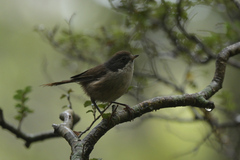
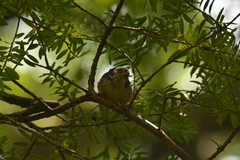
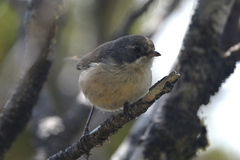
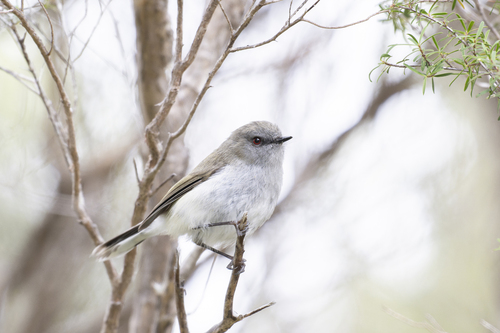
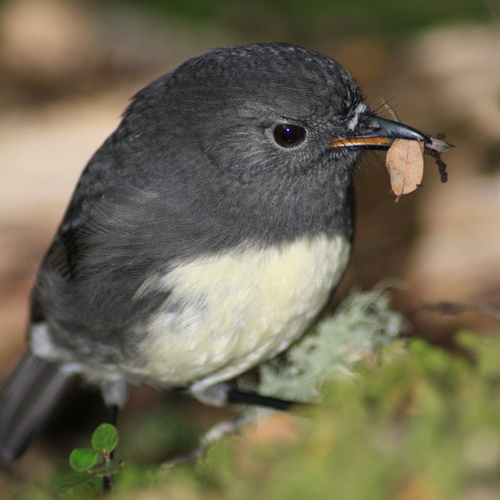
Pipipi

Pipipi

Finschia novaeseelandiae

LCLeast ConcernNTVUENCR Endemic
Daily sighting probability ~50% · Likely
at Arthur's Pass National Park

In 3 days ~90% in a week >90%

507 Verified sightings at Arthur's Pass National Park From 2019 to 2026
1,877 In all 4 parks
March Best month
☀️ Diurnal When it's spotted

About the Pipipi

The pīpipi (Mohoua novaeseelandiae), also known as brown creeper or New Zealand creeper, is a small passerine bird endemic to the South Island, Stewart Island and their surrounding islands, in New Zealand. It was called the New Zealand titmouse in the 1780s. It is a specialist insectivore, gleaning insects from branches and leaves. They have strong legs and toes for hanging upside down while feeding.

The pīpipi was formally described in 1789 by the German naturalist Johann Friedrich Gmelin in his revised and expanded edition of Carl Linnaeus's Systema Naturae. He placed it with the tits in the genus Parus and coined the binomial name Parus novaeseelandiae. Gmelin based his description on the "New-Zealand titmouse" that had been described in 1783 by the English ornithologist John Latham in his book A General Synopsis of Birds. The naturalist Joseph Banks had provided Latham with a watercolour painting of the bird by Georg Forster who had accompanied James Cook on his second voyage to the Pacific Ocean. The specimen had been collected in 1773 at Dusky Sound on the southwest coast of New Zealand. This picture is now the holotype for the species and is in the collection... Wikipedia →

Sounds

Call0:53

New Zealand · 2022

© Barry Edmonston · XC796385 · CC BY-NC-SA 4.0

Song0:14

New Zealand · 2015

© Penelope N Gillette · XC528020 · CC BY-NC-SA 4.0

Call0:29

New Zealand · 2018

© David Welch · XC428745 · CC BY-NC-SA 4.0

Global Distribution

Parks Where Found

# Park Country Daily sighting probability
1 Arthur's Pass National Park 🇳🇿 New Zealand
~50%
2 Rakiura National Park 🇳🇿 New Zealand
~50%
3 Fiordland National Park 🇳🇿 New Zealand
~20%
4 Abel Tasman National Park 🇳🇿 New Zealand
<5%

Before you go

What are the chances of seeing a Pipipi in Arthur's Pass National Park?

Likely

About 50% of wildlife watchers report a Pipipi sighting in Arthur's Pass National Park on a given day, based on 507 verified sightings from GBIF citizen-science data from 2019 to 2026. It is the 13th most-seen of the 48 birds we can rate there. Over three days the chance rises to about 90%, and over a week to over 90%, if each day is a fresh chance.

When is the best time to see a Pipipi in Arthur's Pass National Park?

March

In that month about 70% of wildlife watchers report a Pipipi in Arthur's Pass National Park on a given day, against about 40% in April, July and November, the lowest months.

What time of day is best to see a Pipipi?

Between noon and 3 pm

Across all the parks we cover, that three-hour window holds the most Pipipi sightings with a recorded time, and about 9 in 10 of them come between 6 am and 6 pm: it is a daytime animal.

Is Arthur's Pass National Park the best place to see a Pipipi?

Yes

Of the 4 parks where we can rate Pipipi sightings, Arthur's Pass National Park has the highest daily chance: about 50%. Next come Rakiura National Park (New Zealand, about 50%) and Fiordland National Park (New Zealand, about 20%).

Which relatives of the Pipipi live in Arthur's Pass National Park?

Same family: Acanthizidae

The closest relatives of the Pipipi that you can see in Arthur's Pass National Park (family Acanthizidae, Thornbills and Allies) are Grey Warbler (about 90%) and Mōhua (Yellowhead) (about 10%), with each one's daily chance of a sighting.

Where does the Pipipi sighting chance come from?

GBIF citizen-science records

It is estimated from how often the Pipipi is recorded against all the birds logged in Arthur's Pass National Park (507 verified sightings from 2019 to 2026), calibrated against known sighting rates. Figures are rounded to the nearest 10% because citizen-science data supports honest approximations, not decimals, and months with records from fewer than five people show "—". How it works.

← Back to Arthur's Pass National Park