
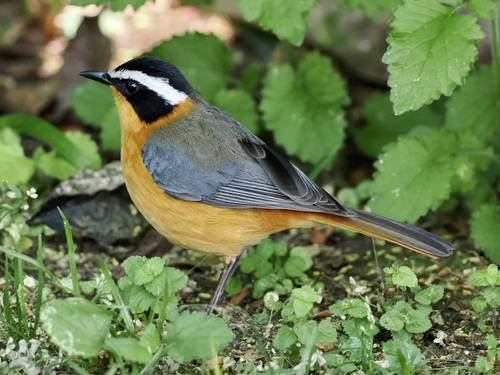
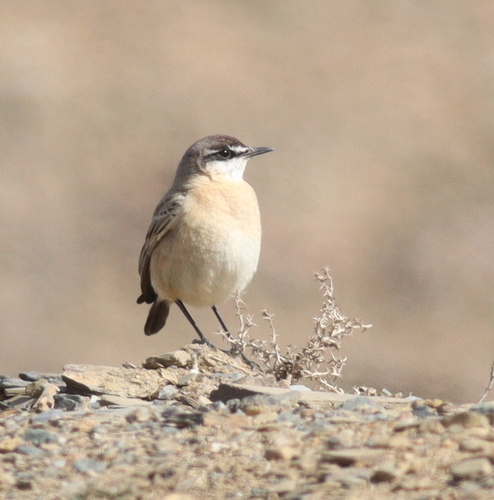
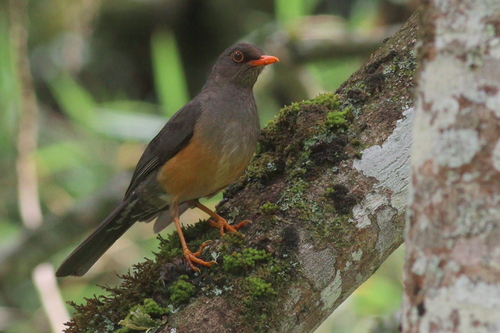
Abyssinian Slaty Flycatcher

Abyssinian Slaty Flycatcher

Dioptrornis chocolatinus

Silhouette: Martin Bulla, based on François Desbordes' illustration · PhyloPic

Daily sighting probability ~20% · Possible
at Bale Mountains National Park

In 3 days ~50% in a week ~80%

47 Verified sightings at Bale Mountains National Park From 2019 to 2026
47 In 1 park
July Best month
☀️ Diurnal When it's spotted

About the Abyssinian Slaty Flycatcher

The Abyssinian slaty flycatcher (Melaenornis chocolatinus), also known as Abyssinian flycatcher, Abyssinian black flycatcher or Abyssinian chocolate flycatcher, is a species of bird in the family Muscicapidae, the Old World flycatchers. It is often placed in the genus Dioptrornis. It is native to Africa, where it occurs in Eritrea and Ethiopia.

The Abyssinian slaty flycatcher is a rather dingy, undistinguished grey brown bird which normally perches with the typical vertical posture of an Old World flycatcher. It has a yellow eye set in a plain brownish face, the upperparts are dark sooty brown and the underparts are buff brown. It measures 15–16 cm (5.9–6.3 in) in length and weights 20–25 g (0.71–0.88 oz).

It makes various "tseep" calls and has a harsh chiiering alarm call. There are two currently recognised subspecies of Abyssinian slaty flycatcher and they are listed below with their distributions: Melaenornis chocolatinus chocolatinus (Rüppell, 1840): central Eritrea and north and central Ethiopia.

Melaenornis chocolatinus reichenowi (Neumann, 1902): western Ethiopia. The Abyssinian slaty flycatcher occurs... Wikipedia →

Global Distribution

Parks Where Found

# Park Country Daily sighting probability
1 Bale Mountains National Park 🇪🇹 Ethiopia
~20%

More parks will be added in future updates.

Cities Where Found

# City Country Daily sighting probability
1 Addis Ababa 🇪🇹 Ethiopia
~40%

Before you go

What are the chances of seeing an Abyssinian Slaty Flycatcher in Bale Mountains National Park?

Possible

About 20% of wildlife watchers report an Abyssinian Slaty Flycatcher sighting in Bale Mountains National Park on a given day, based on 47 verified sightings from GBIF citizen-science data from 2019 to 2026. It is the 41st most-seen of the 117 birds we can rate there. Over three days the chance rises to about 50%, and over a week to about 80%, if each day is a fresh chance.

When is the best time to see an Abyssinian Slaty Flycatcher in Bale Mountains National Park?

July

In that month about 40% of wildlife watchers report an Abyssinian Slaty Flycatcher in Bale Mountains National Park on a given day, against about 10% in January, the lowest month. That is one of Bale Mountains National Park's wettest months, with about 220 mm of rain against 35 mm in December. March and September have too few records to rate.

What time of day is best to see an Abyssinian Slaty Flycatcher?

Between 8 and 11 am

Across all the parks we cover, that three-hour window holds the most Abyssinian Slaty Flycatcher sightings with a recorded time, and about 9 in 10 of them come between 6 am and 6 pm: it is a daytime animal.

Where else can you see an Abyssinian Slaty Flycatcher?

Only Bale Mountains National Park, in our data

Bale Mountains National Park is the only park on Wallace's Line with enough records to rate Abyssinian Slaty Flycatcher sightings: about 20% of wildlife watchers there report one on a given day.

Which relatives of the Abyssinian Slaty Flycatcher live in Bale Mountains National Park?

Same family: Muscicapidae

The closest relatives of the Abyssinian Slaty Flycatcher that you can see in Bale Mountains National Park (family Muscicapidae, Old World Flycatchers, Robins, and Chats) are Moorland Chat (about 80%), African Stonechat (about 40%) and African Dusky Flycatcher (about 20%), with each one's daily chance of a sighting.

Where does the Abyssinian Slaty Flycatcher sighting chance come from?

GBIF citizen-science records

It is estimated from how often the Abyssinian Slaty Flycatcher is recorded against all the birds logged in Bale Mountains National Park (47 verified sightings from 2019 to 2026), calibrated against known sighting rates. Figures are rounded to the nearest 10% because citizen-science data supports honest approximations, not decimals, and months with records from fewer than five people show "—". How it works.

← Back to Bale Mountains National Park