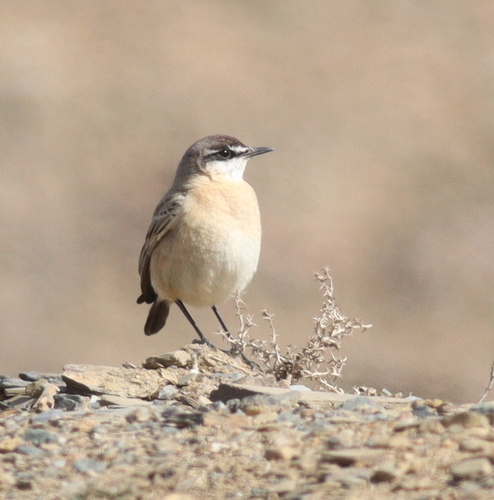

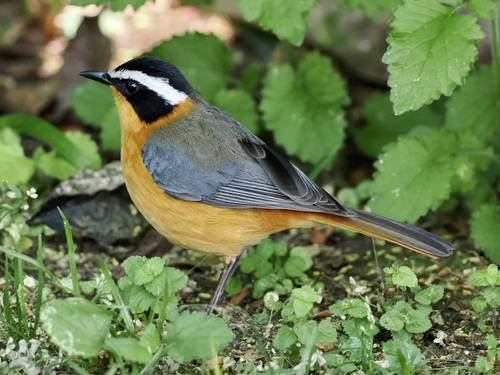
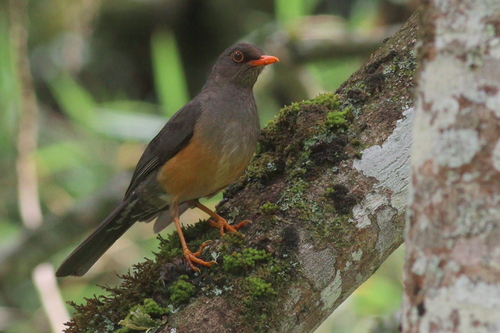
Red-breasted Wheatear

Red-breasted Wheatear

Oenanthe bottae

Silhouette: PhyloPic

LCLeast ConcernNTVUENCR
Daily sighting probability ~10% · With luck
at Bale Mountains National Park

In 3 days ~20% in a week ~50%

16 Verified sightings at Bale Mountains National Park From 2019 to 2026
16 In 1 park
May Best month

About the Red-breasted Wheatear

The buff-breasted wheatear (Oenanthe bottae), also known as Botta's wheatear or the red-breasted wheatear, is a species of bird in the Old World flycatcher family Muscicapidae. It is endemic to the Asir Mountains. The species is named after Paul-Émile Botta.

Heuglin's wheatear (O. heuglini) and the rusty-breasted wheatear (Oenanthe frenata) were formerly considered to be conspecific. Resembles the larger and darker northern wheatear, but with a duller reddish breast and broader black tail tip. The sexes are alike. It is native to the Asir Mountains of western Saudi Arabia and Yemen. Its natural habitat is subtropical or tropical high-altitude grassland. It is most common at altitudes over 1800 m. Wikipedia →

Sounds

Song0:15

Ethiopia · 2015

© Hans Matheve · XC306648 · CC BY-NC-ND 4.0

Alarm call0:24

Saudi Arabia · 2024

© Gregory Askew · XC946927 · CC BY-NC-SA 4.0

Song1:16

Ethiopia · 2014

© Andrew Spencer · XC266653 · CC BY-NC-SA 4.0

Global Distribution

Parks Where Found

# Park Country Daily sighting probability
1 Bale Mountains National Park 🇪🇹 Ethiopia
~10%

More parks will be added in future updates.

Before you go

What are the chances of seeing a Red-breasted Wheatear in Bale Mountains National Park?

With luck

About 10% of wildlife watchers report a Red-breasted Wheatear sighting in Bale Mountains National Park on a given day, based on 16 verified sightings from GBIF citizen-science data from 2019 to 2026. It is the 78th most-seen of the 117 birds we can rate there. Over three days the chance rises to about 20%, and over a week to about 50%, if each day is a fresh chance.

When is the best time to see a Red-breasted Wheatear in Bale Mountains National Park?

May

In that month about 30% of wildlife watchers report a Red-breasted Wheatear in Bale Mountains National Park on a given day, against under 5% in July and November–December, the lowest months. March and September have too few records to rate.

Where else can you see a Red-breasted Wheatear?

Only Bale Mountains National Park, in our data

Bale Mountains National Park is the only park on Wallace's Line with enough records to rate Red-breasted Wheatear sightings: about 10% of wildlife watchers there report one on a given day.

Which relatives of the Red-breasted Wheatear live in Bale Mountains National Park?

Same family: Muscicapidae

The closest relatives of the Red-breasted Wheatear that you can see in Bale Mountains National Park (family Muscicapidae, Old World Flycatchers, Robins, and Chats) are Moorland Chat (about 80%), African Stonechat (about 40%) and Abyssinian Slaty Flycatcher (about 20%), with each one's daily chance of a sighting.

Where does the Red-breasted Wheatear sighting chance come from?

GBIF citizen-science records

It is estimated from how often the Red-breasted Wheatear is recorded against all the birds logged in Bale Mountains National Park (16 verified sightings from 2019 to 2026), calibrated against known sighting rates. Figures are rounded to the nearest 10% because citizen-science data supports honest approximations, not decimals, and months with records from fewer than five people show "—". How it works.

← Back to Bale Mountains National Park