12-Spot Ladybird

12-Spot Ladybird

Vibidia duodecimguttata

Daily sighting probability <5% · Rare
at Bavarian Forest National Park

In 3 days ~10% in a week ~30%

5 Verified sightings at Bavarian Forest National Park From 2019 to 2026
18 In all 3 parks
June Best month
☀️🌙 Day & Night When it's spotted

About the 12-Spot Ladybird

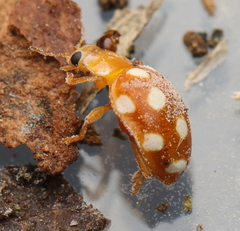
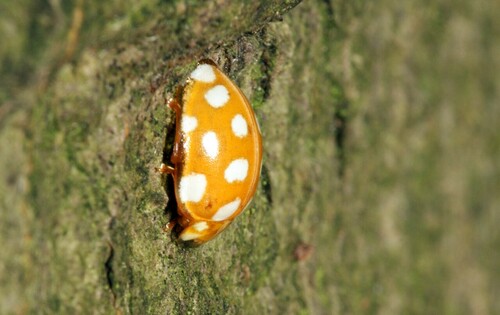
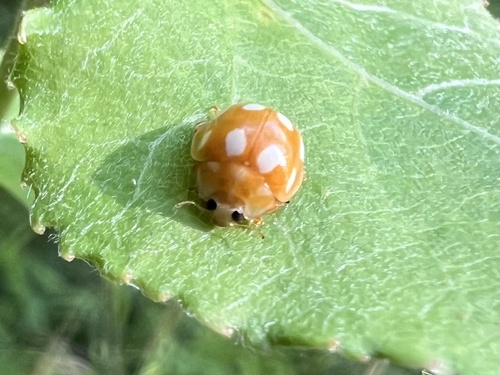
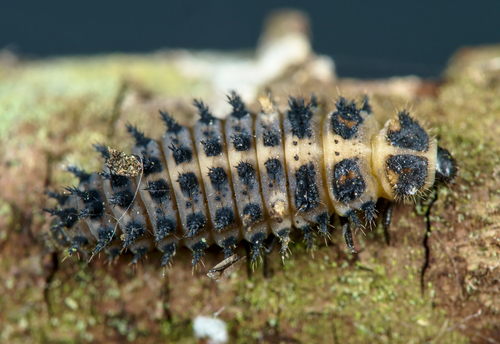
Vibidia duodecimguttata, commonly known as the twelve-spotted ladybird beetle, is a species of ladybird beetle belonging to the family Coccinellidae, subfamily Coccinellinae. This species is present in most of Europe, in the eastern Palearctic realm, and in the Near East.

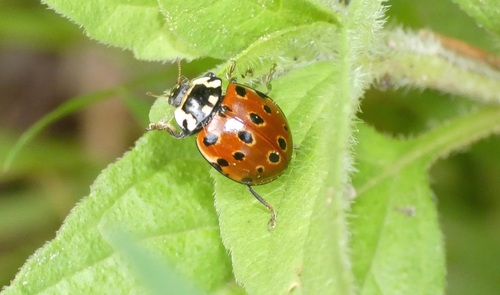
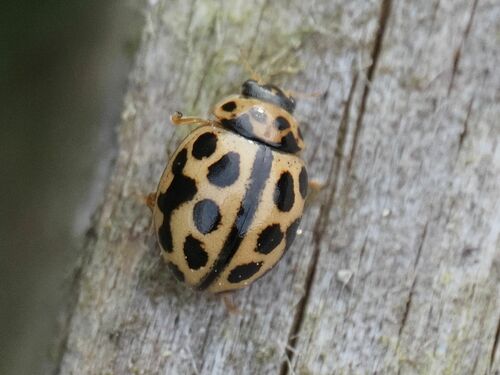
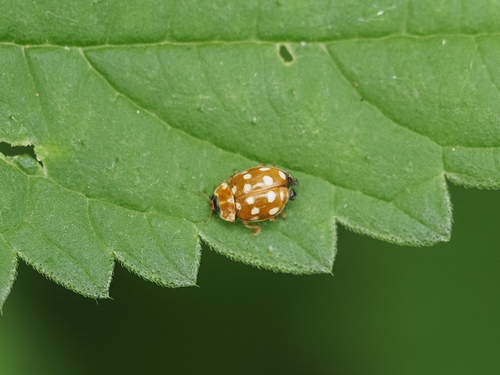
Vibidia duodecimguttata can reach a length of about 4 millimetres (0.16 in). These beetles have an oval shaped body with quite long, light brown antennae. The elytra have a slightly wider side edge. Their entire body has a light brown basic colour on the upper and lower side, only the eyes are black. The elytra show 12 whitish spots, six on each elytron (hence the Latin word duodecimguttata, meaning twelve-spotted as if by drops). There is a whitish spot on both sides of the throat.

This species bears resemblance to Calvia decemguttata and Halyzia sedecimguttata. Adults can be encountered from April through September. This beetle is mycophagous, mainly feeding on the powdery mildew which infects certain trees (including oak, hazel and alder).

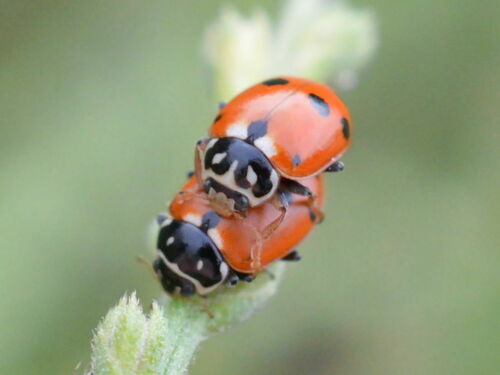
First, the chase is expressed in rapid movements, with the male pausing for a moment at least twice before... Wikipedia →

Global Distribution

Parks Where Found

# Park Country Daily sighting probability
1 Cévennes National Park 🇫🇷 France
<5%
2 Bavarian Forest National Park 🇩🇪 Germany
<5%
3 Pyrénées National Park 🇫🇷 France
<5%

Cities Where Found

# City Country Daily sighting probability
1 Sofia 🇧🇬 Bulgaria
~20%
2 Jinan 🇨🇳 China
~20%
3 Kharkiv 🇺🇦 Ukraine
~10%
4 Paris 🇫🇷 France
~10%
5 Kyiv 🇺🇦 Ukraine
~10%
6 Beijing 🇨🇳 China
~10%
7 Brussels 🇧🇪 Belgium
~10%
8 Vienna 🇦🇹 Austria
~10%
9 Warsaw 🇵🇱 Poland
~10%
10 Lyon 🇫🇷 France
~10%

Before you go

What are the chances of seeing a 12-Spot Ladybird in Bavarian Forest National Park?

Rare

Under 5% of wildlife watchers report a 12-Spot Ladybird sighting in Bavarian Forest National Park on a given day, based on 5 verified sightings from GBIF citizen-science data from 2019 to 2026. It is the 964th most-seen of the 1115 insects we can rate there. Over three days the chance rises to about 10%, and over a week to about 30%, if each day is a fresh chance.

When is the best time to see a 12-Spot Ladybird in Bavarian Forest National Park?

May–June and August

In those months about 10% of wildlife watchers report a 12-Spot Ladybird in Bavarian Forest National Park on a given day, against under 5% in July and September–April, the lowest months.

What time of day is best to see a 12-Spot Ladybird?

Between 9 pm and midnight

Across all the parks we cover, that three-hour window holds the most 12-Spot Ladybird sightings with a recorded time, and about 6 in 10 of them come between 6 am and 6 pm: it is seen both by day and at night.

Is Bavarian Forest National Park the best place to see a 12-Spot Ladybird?

Among the best

Of the 3 parks where we can rate 12-Spot Ladybird sightings, Bavarian Forest National Park ranks 2nd at under 5%, level with the leaders once rounded. The best odds are in Cévennes National Park (France, under 5%).

Which relatives of the 12-Spot Ladybird live in Bavarian Forest National Park?

Same family: Coccinellidae

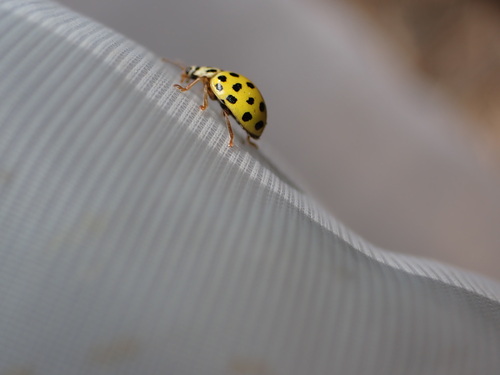
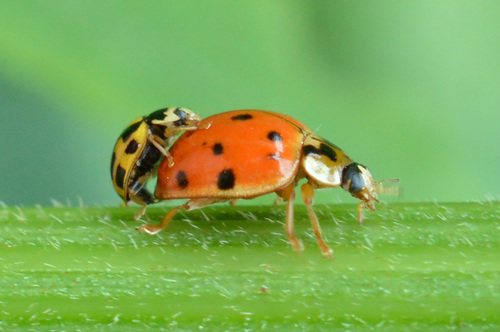
The closest relatives of the 12-Spot Ladybird that you can see in Bavarian Forest National Park (family Coccinellidae, Lady Beetles) are Asian Lady Beetle (about 30%), Seven-Spotted Lady Beetle (about 20%) and 22-Spot Ladybird (about 10%), with each one's daily chance of a sighting.

Where does the 12-Spot Ladybird sighting chance come from?

GBIF citizen-science records

It is estimated from how often the 12-Spot Ladybird is recorded against all the insects logged in Bavarian Forest National Park (5 verified sightings from 2019 to 2026), calibrated against known sighting rates. Figures are rounded to the nearest 10% because citizen-science data supports honest approximations, not decimals, and months with records from fewer than five people show "—". How it works.

← Back to Bavarian Forest National Park