Chequered Fruit-Tree Tortrix

Chequered Fruit-Tree Tortrix

Pandemis corylana

Daily sighting probability ~10% · With luck
at Bavarian Forest National Park

In 3 days ~20% in a week ~40%

10 Verified sightings at Bavarian Forest National Park From 2019 to 2026
10 In 1 park
February Best month
☀️🌙 Day & Night When it's spotted

About the Chequered Fruit-Tree Tortrix

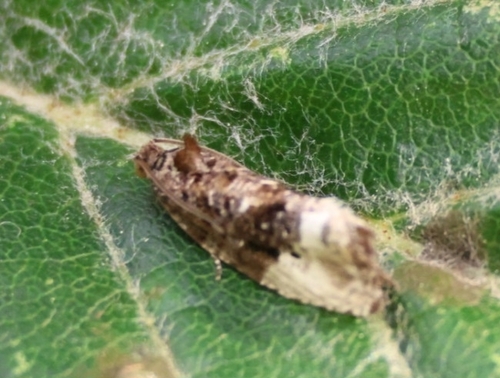
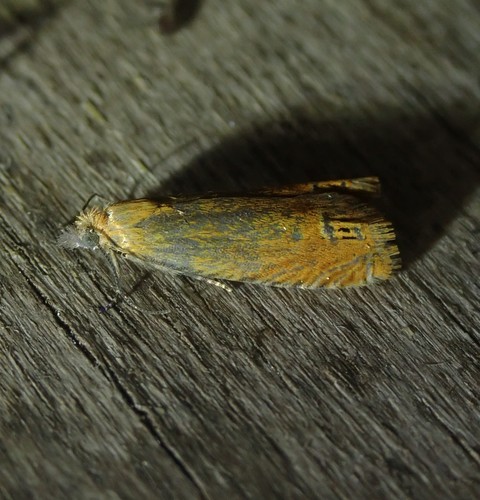
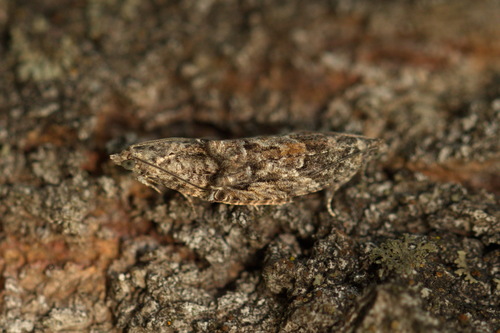
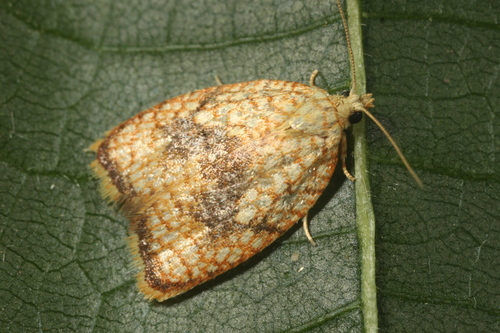
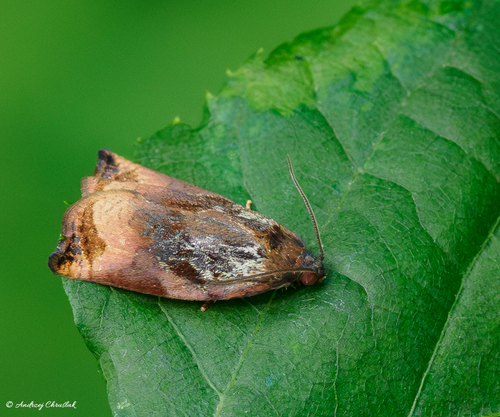
Pandemis corylana, the chequered fruit-tree tortrix, hazel tortrix moth, filbert tortricid or barred fruit tree moth, is a moth of the family Tortricidae. It is found from northern and central Europe to Siberia, Korea and Japan.

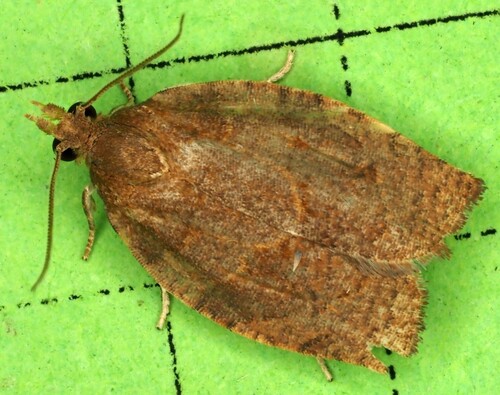
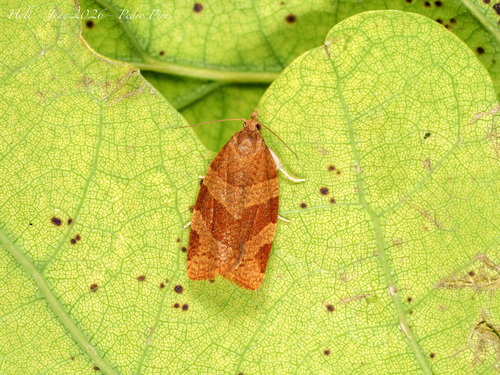
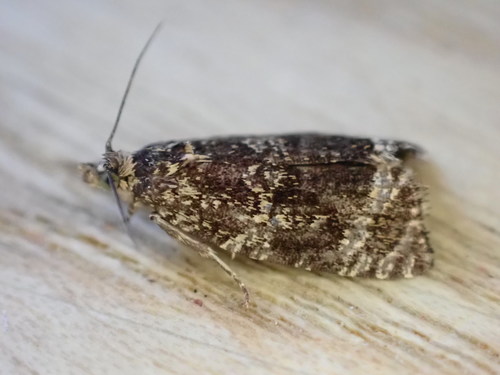
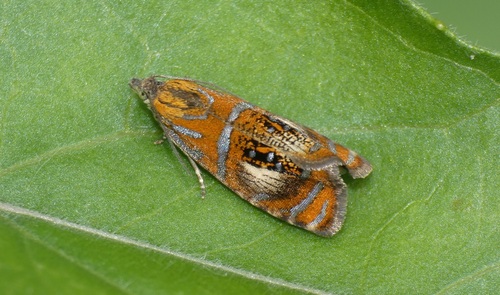
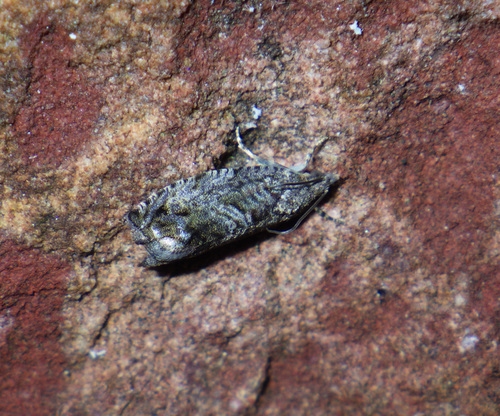
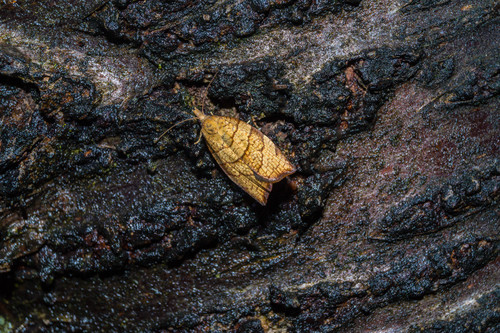
The wingspan is 18–24 mm. It is similar to other Pandemis and Choristoneura species, but it is much paler in colour and the forewing markings are barely darker than the rest of the wing. The head and thorax are pale yellowish brown. The base colour of the forewing is pale yellowish brown with a marked brown mesh pattern. The wings, as in the related species, have marked basal blotches, an oblique cross-band in the middle and a triangular spot at the tip. These marks are barely darker than the surrounding parts, but are marked by brown edges. The hindwings are light grey and relatively narrow.

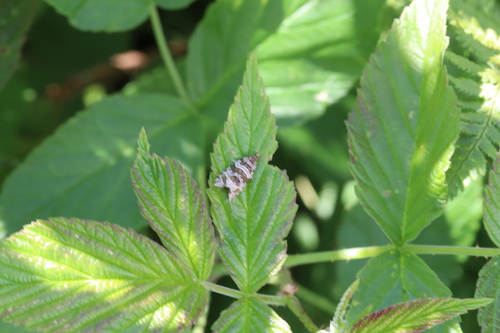
Adults are on wing from July to August in western Europe. In Korea, adults are on wing from early June to the end of September. The larvae feed on the leaves of various deciduous trees and shrubs, including Corylus, Fraxinus, Prunus, Quercus, Rubus, Swida sanguinea, Betula, Fagus, Larix, Pinus, Rhamnus frangula, Thelycrania sanguinea and Vaccinium. Larvae can be found from May to July. Pupation occurs in the larval habitation.

It is an occasional pest of cultivated nut and fruit trees. Wikipedia →
Global Distribution

Parks Where Found

# Park Country Daily sighting probability
1 Bavarian Forest National Park 🇩🇪 Germany
~10%

More parks will be added in future updates.

Cities Where Found

# City Country Daily sighting probability
1 Liverpool 🇬🇧 United Kingdom
~20%
2 Birmingham 🇬🇧 United Kingdom
~10%
3 London 🇬🇧 United Kingdom
<5%
4 Moscow 🇷🇺 Russia
<5%

Before you go

What are the chances of seeing a Chequered Fruit-Tree Tortrix in Bavarian Forest National Park?

With luck

About 10% of wildlife watchers report a Chequered Fruit-Tree Tortrix sighting in Bavarian Forest National Park on a given day, based on 10 verified sightings from GBIF citizen-science data from 2019 to 2026. It is the 523rd most-seen of the 1115 insects we can rate there. Over three days the chance rises to about 20%, and over a week to about 40%, if each day is a fresh chance.

When is the best time to see a Chequered Fruit-Tree Tortrix in Bavarian Forest National Park?

February and July–September

In those months about 10% of wildlife watchers report a Chequered Fruit-Tree Tortrix in Bavarian Forest National Park on a given day, against under 5% in March–June and October–January, the lowest months.

What time of day is best to see a Chequered Fruit-Tree Tortrix?

Between 9 pm and midnight

Across all the parks we cover, that three-hour window holds the most Chequered Fruit-Tree Tortrix sightings with a recorded time, and about 6 in 10 of them come between 6 pm and 6 am: it is seen both by day and at night.

Where else can you see a Chequered Fruit-Tree Tortrix?

Only Bavarian Forest National Park, in our data

Bavarian Forest National Park is the only park on Wallace's Line with enough records to rate Chequered Fruit-Tree Tortrix sightings: about 10% of wildlife watchers there report one on a given day.

Which relatives of the Chequered Fruit-Tree Tortrix live in Bavarian Forest National Park?

Same genus: Pandemis

The closest relatives of the Chequered Fruit-Tree Tortrix that you can see in Bavarian Forest National Park (genus Pandemis) are Barred Fruit-Tree Tortrix (about 10%), Dark Fruit-Tree Tortrix (about 10%) and White-Faced Tortrix (about 10%), with each one's daily chance of a sighting.

Where does the Chequered Fruit-Tree Tortrix sighting chance come from?

GBIF citizen-science records

It is estimated from how often the Chequered Fruit-Tree Tortrix is recorded against all the insects logged in Bavarian Forest National Park (10 verified sightings from 2019 to 2026), calibrated against known sighting rates. Figures are rounded to the nearest 10% because citizen-science data supports honest approximations, not decimals, and months with records from fewer than five people show "—". How it works.

← Back to Bavarian Forest National Park