Cloaked Pug

Cloaked Pug

Eupithecia abietaria

Daily sighting probability <5% · Rare
at Bavarian Forest National Park

In 3 days ~10% in a week ~30%

6 Verified sightings at Bavarian Forest National Park From 2019 to 2026
6 In 1 park
June Best month
☀️🌙 Day & Night When it's spotted

About the Cloaked Pug

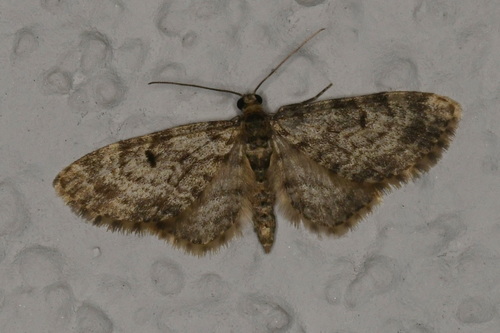
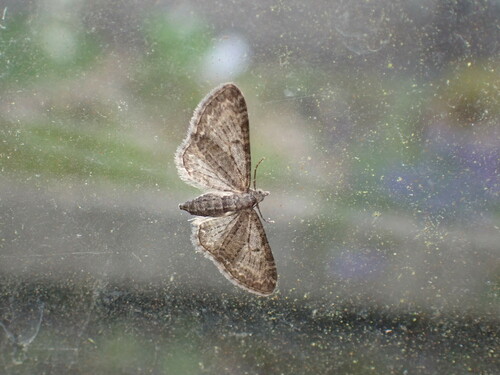
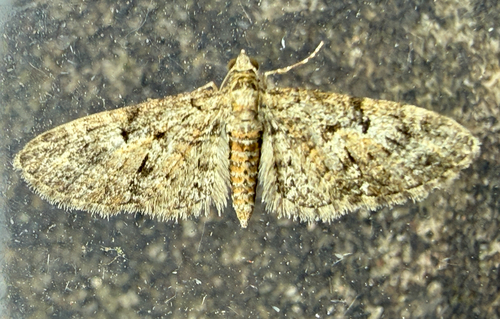
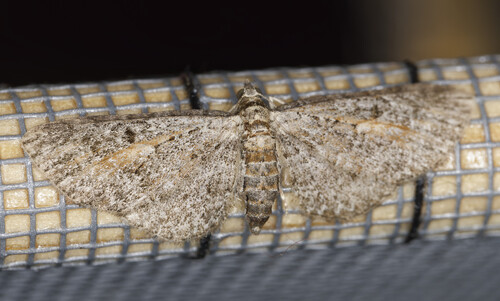
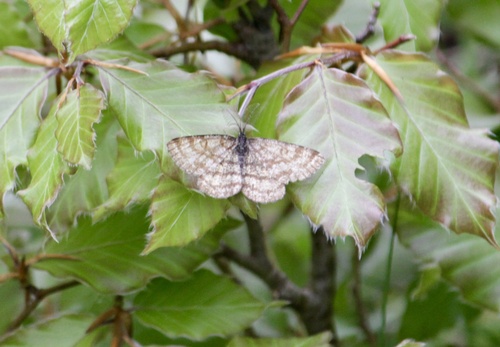
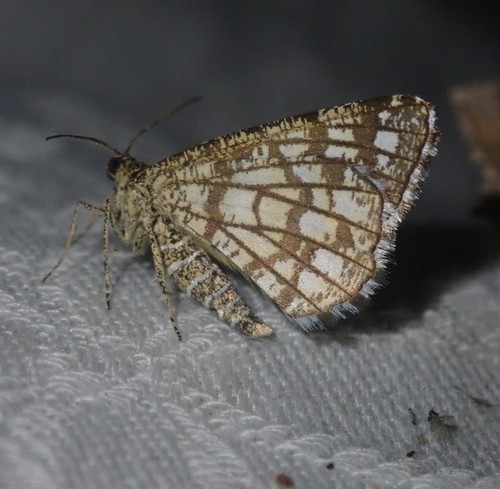
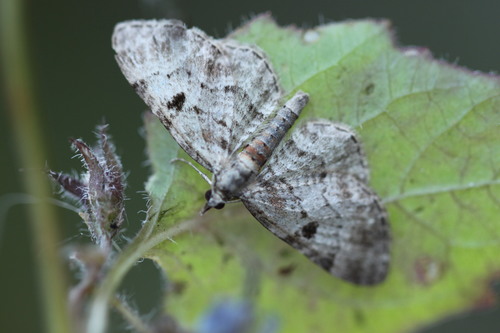
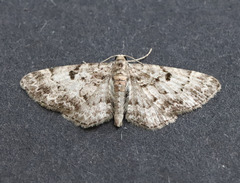
The cloaked pug (Eupithecia abietaria) is a moth of the family Geometridae. The species was first described by Johann August Ephraim Goeze in 1781 and it can be found in Europe and to the east in Siberia and Japan. The wingspan is 21–23 mm. It is a large and handsome species, the lines sharply expressed and marked with black teeth or dashes on the veins. There is a very large discal dot and two red-brown bands. The face is without well-developed cone of scales and the palpus is about twice as long as the diameter of the eye The forewing has a double areole. - ab. constricta ab. nov.[Prout] has the median area reduced to a width of only 1-2 mm. and the antemedian and postmedian lines ere connected by black veins. - debrunneata Stgr., from the Ussuri district, is more mixed with blackish, the red-brown tone wanting - gigantea Stgr.[now species Eupithecia gigantea Staudinger, 1897], from the Ussuri district and Japan, is darker grey than in debrunneata, the reddish bands (as in rufescens) strongly developed.

The oval egg is characterized by regular, large, hexagonal depressions on the shell sculpture. Final instar larvae are thick, fleshy red coloured and show no patterns. The pupa is dark reddish-brown and has two strong hook bristles on the cremaster as well as several fine bristles.

The moths flies from June to July depending on the location. The larvae feed on Picea abies, Picea sitchensis and Abies procera. Wikipedia →
Global Distribution

Parks Where Found

# Park Country Daily sighting probability
1 Bavarian Forest National Park 🇩🇪 Germany
<5%

More parks will be added in future updates.

Before you go

What are the chances of seeing a Cloaked Pug in Bavarian Forest National Park?

Rare

Under 5% of wildlife watchers report a Cloaked Pug sighting in Bavarian Forest National Park on a given day, based on 6 verified sightings from GBIF citizen-science data from 2019 to 2026. It is the 822nd most-seen of the 1115 insects we can rate there. Over three days the chance rises to about 10%, and over a week to about 30%, if each day is a fresh chance.

When is the best time to see a Cloaked Pug in Bavarian Forest National Park?

May and June

In those months about 10% of wildlife watchers report a Cloaked Pug in Bavarian Forest National Park on a given day, against under 5% in July to April, the lowest months.

What time of day is best to see a Cloaked Pug?

Between 9 am and noon

Across all the parks we cover, that three-hour window holds the most Cloaked Pug sightings with a recorded time, and about half of them come between 6 am and 6 pm: it is seen both by day and at night.

Where else can you see a Cloaked Pug?

Only Bavarian Forest National Park, in our data

Bavarian Forest National Park is the only park on Wallace's Line with enough records to rate Cloaked Pug sightings: under 5% of wildlife watchers there report one on a given day.

Which relatives of the Cloaked Pug live in Bavarian Forest National Park?

Same genus: Eupithecia

The closest relatives of the Cloaked Pug that you can see in Bavarian Forest National Park (genus Eupithecia, Pug Moths) are Dwarf Pug (about 10%), Grey Pug Moth (about 10%) and Oak-Tree Pug (about 10%), with each one's daily chance of a sighting.

Where does the Cloaked Pug sighting chance come from?

GBIF citizen-science records

It is estimated from how often the Cloaked Pug is recorded against all the insects logged in Bavarian Forest National Park (6 verified sightings from 2019 to 2026), calibrated against known sighting rates. Figures are rounded to the nearest 10% because citizen-science data supports honest approximations, not decimals, and months with records from fewer than five people show "—". How it works.

← Back to Bavarian Forest National Park