Oak-Tree Pug

Oak-Tree Pug

Eupithecia dodoneata

Daily sighting probability ~10% · With luck
at Bavarian Forest National Park

In 3 days ~20% in a week ~30%

13 Verified sightings at Bavarian Forest National Park From 2019 to 2026
13 In 1 park
April Best month
☀️🌙 Day & Night When it's spotted

About the Oak-Tree Pug

Eupithecia dodoneata, the oak-tree pug, is a moth of the family Geometridae. The species can be found in Europe into West Russia and including the Central Black Earth Region Other occurrences are found in Asia Minor, the Caucasus as well as in Morocco. In the Pyrenees and the Alps, it rises to altitudes of 1000 metres. The species prefers dry oak and oak mixed forests.

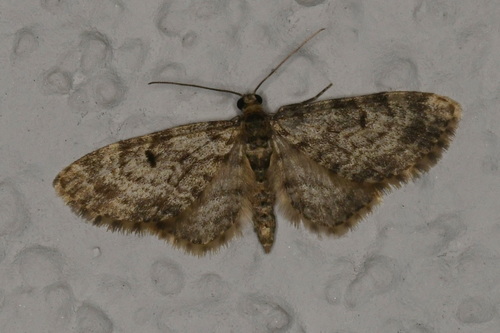
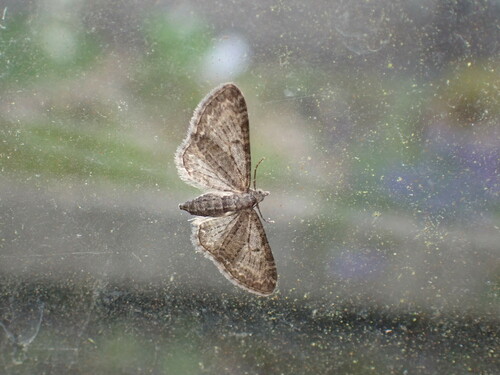
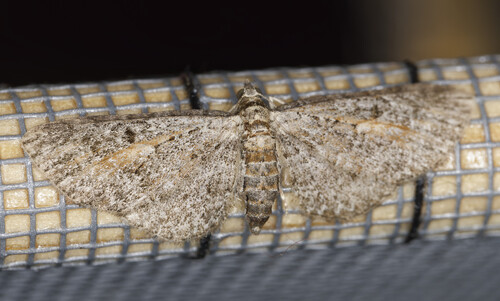
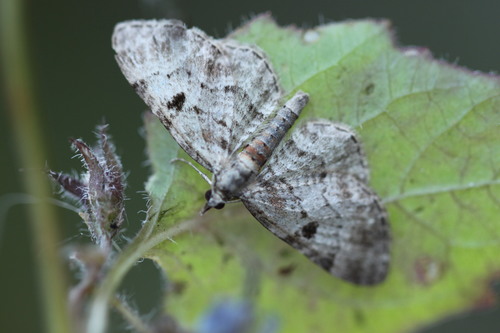
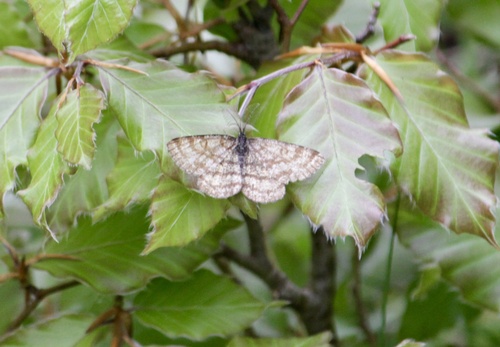
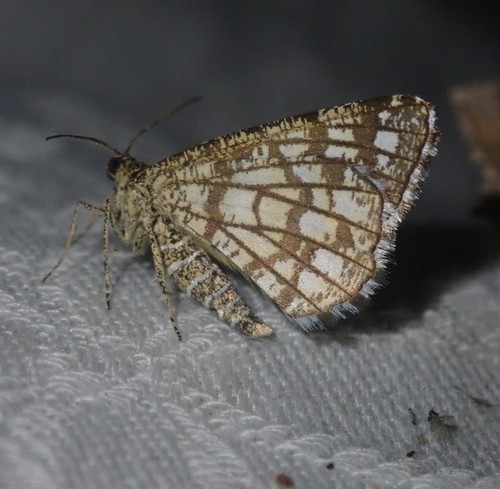
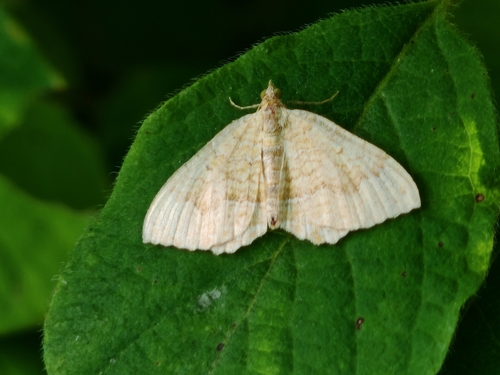
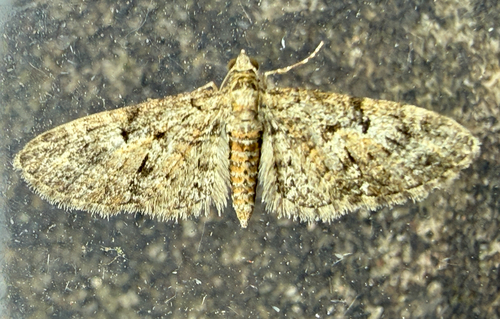
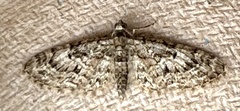
The wingspan is 19–22 mm. The ground colour of the forewings is usually light grey, sometimes slightly brownish on dusted. There are several dark grey crosslines are wavy and often in pairs. The outer cross line near the front edge with a sharp, inward-pointing V. The midfield is brighter in some specimens and framed by a thin dark band. The black median stain has an oval shape. The hind wings are slightly lighter than the forewings and have also several dark designs and a small black middle spot.

Adult caterpillars are brownish and show on the back very clear reddish-brown triangular spots, the tip of which is directed forward. The pupa is coloured black-brown and equipped with two strong and six thin hook bristles on the cremaster.

A reliable determination should be made by specialists, and a genital morphological analysis is also needed for a certain assignment. The moths flies from May to June depending on the location. The larvae feed on Crataegus and Quercus species. Wikipedia →
Global Distribution

Parks Where Found

# Park Country Daily sighting probability
1 Bavarian Forest National Park 🇩🇪 Germany
~10%

More parks will be added in future updates.

Cities Where Found

# City Country Daily sighting probability
1 Liverpool 🇬🇧 United Kingdom
~10%
2 London 🇬🇧 United Kingdom
<5%
3 Birmingham 🇬🇧 United Kingdom
<5%

Before you go

What are the chances of seeing an Oak-Tree Pug in Bavarian Forest National Park?

With luck

About 10% of wildlife watchers report an Oak-Tree Pug sighting in Bavarian Forest National Park on a given day, based on 13 verified sightings from GBIF citizen-science data from 2019 to 2026. It is the 585th most-seen of the 1115 insects we can rate there. Over three days the chance rises to about 20%, and over a week to about 30%, if each day is a fresh chance.

When is the best time to see an Oak-Tree Pug in Bavarian Forest National Park?

April

In that month about 20% of wildlife watchers report an Oak-Tree Pug in Bavarian Forest National Park on a given day, against under 5% in June to March, the lowest months.

What time of day is best to see an Oak-Tree Pug?

Between 8 and 11 am

Across all the parks we cover, that three-hour window holds the most Oak-Tree Pug sightings with a recorded time, and about half of them come between 6 am and 6 pm: it is seen both by day and at night.

Where else can you see an Oak-Tree Pug?

Only Bavarian Forest National Park, in our data

Bavarian Forest National Park is the only park on Wallace's Line with enough records to rate Oak-Tree Pug sightings: about 10% of wildlife watchers there report one on a given day.

Which relatives of the Oak-Tree Pug live in Bavarian Forest National Park?

Same genus: Eupithecia

The closest relatives of the Oak-Tree Pug that you can see in Bavarian Forest National Park (genus Eupithecia, Pug Moths) are Dwarf Pug (about 10%), Grey Pug Moth (about 10%) and Tawny Speckled Pug (about 10%), with each one's daily chance of a sighting.

Where does the Oak-Tree Pug sighting chance come from?

GBIF citizen-science records

It is estimated from how often the Oak-Tree Pug is recorded against all the insects logged in Bavarian Forest National Park (13 verified sightings from 2019 to 2026), calibrated against known sighting rates. Figures are rounded to the nearest 10% because citizen-science data supports honest approximations, not decimals, and months with records from fewer than five people show "—". How it works.

← Back to Bavarian Forest National Park