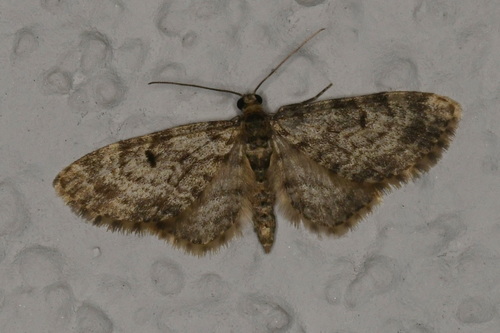
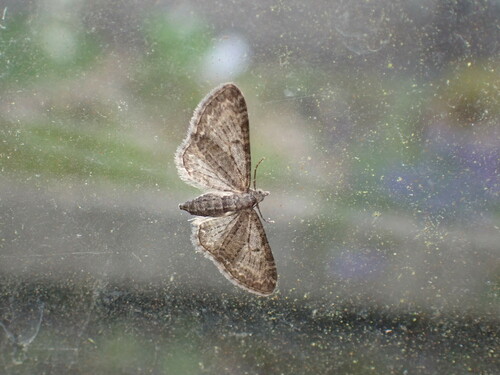
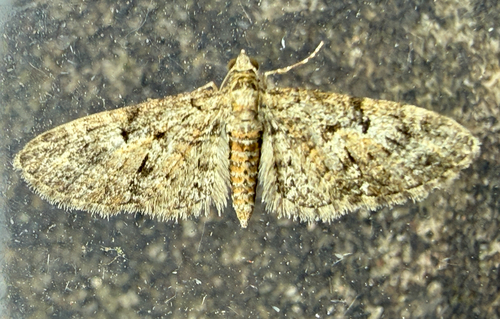
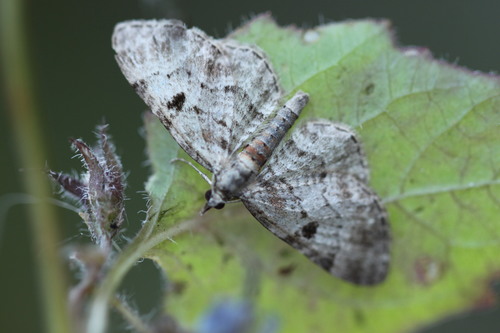
Tawny Speckled Pug

Tawny Speckled Pug

Eupithecia icterata

Daily sighting probability ~10% · With luck
at Bavarian Forest National Park

In 3 days ~20% in a week ~30%

10 Verified sightings at Bavarian Forest National Park From 2019 to 2026
65 In all 5 parks
August Best month
🌙 Nocturnal When it's spotted

About the Tawny Speckled Pug

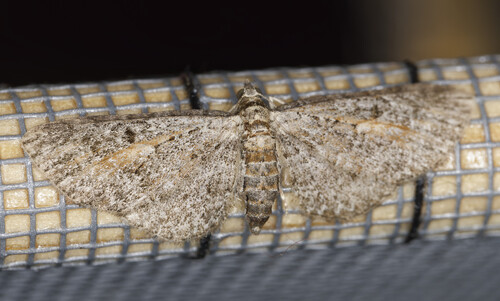
The tawny speckled pug (Eupithecia icterata) is a moth of the family Geometridae. Subfulvata (Haworth, 1809) Eupithecia icterata f. Cognata Stephens, 1831 This species can be found throughout the Palearctic region, the Near East and North Africa. It occurs in large parts of Europe, but is absent in Portugal, in the northernmost part of Scandinavia, as well as on Iceland and some Mediterranean islands. In the Sierra Nevada it rises to an altitude of 3000 meters. In Asia it can be found in Turkey, the Caucasus, Iran, Kazakhstan and Western Siberia as far as the Altai Mountains. There is also an occurrence in the Atlas Mountains in North Africa.

These moths prefer dry mountain meadows, forest edges and parks. It may be present ion areas with host plants on the edges of roads, fields, and bushes, semi-arid grasslands and loosely standing shrubbery and perennial herb fields with warm microclimate.

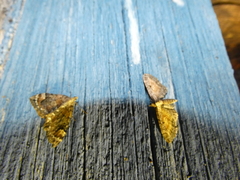
Eupithecia icterata can reach a wingspan of 20–24 mm. It is among the larger species in the genus... Wikipedia →
Global Distribution

Parks Where Found

# Park Country Daily sighting probability
1 Vanoise National Park 🇫🇷 France
~10%
2 Cairngorms National Park 🇬🇧 United Kingdom
~10%
3 Pyrénées National Park 🇫🇷 France
~10%
4 Bavarian Forest National Park 🇩🇪 Germany
~10%
5 Cévennes National Park 🇫🇷 France
<5%

Cities Where Found

# City Country Daily sighting probability
1 Helsinki 🇫🇮 Finland
<5%
2 London 🇬🇧 United Kingdom
<5%
3 Nizhny Novgorod 🇷🇺 Russia
<5%
4 Moscow 🇷🇺 Russia
<5%

Before you go

What are the chances of seeing a Tawny Speckled Pug in Bavarian Forest National Park?

With luck

About 10% of wildlife watchers report a Tawny Speckled Pug sighting in Bavarian Forest National Park on a given day, based on 10 verified sightings from GBIF citizen-science data from 2019 to 2026. It is the 585th most-seen of the 1115 insects we can rate there. Over three days the chance rises to about 20%, and over a week to about 30%, if each day is a fresh chance.

When is the best time to see a Tawny Speckled Pug in Bavarian Forest National Park?

July to September

In those months about 10% of wildlife watchers report a Tawny Speckled Pug in Bavarian Forest National Park on a given day, against under 5% in October to June, the lowest months.

What time of day is best to see a Tawny Speckled Pug?

Between 10 pm and 1 am

Across all the parks we cover, that three-hour window holds the most Tawny Speckled Pug sightings with a recorded time, and about 8 in 10 of them come between 6 pm and 6 am: it is mostly seen at night.

Is Bavarian Forest National Park the best place to see a Tawny Speckled Pug?

Among the best

Of the 5 parks where we can rate Tawny Speckled Pug sightings, Bavarian Forest National Park ranks 4th at about 10%, level with the leaders once rounded. The best odds are in Vanoise National Park (France, about 10%), Cairngorms National Park (United Kingdom, about 10%) and Pyrénées National Park (France, about 10%).

Which relatives of the Tawny Speckled Pug live in Bavarian Forest National Park?

Same genus: Eupithecia

The closest relatives of the Tawny Speckled Pug that you can see in Bavarian Forest National Park (genus Eupithecia, Pug Moths) are Dwarf Pug (about 10%), Grey Pug Moth (about 10%) and Oak-Tree Pug (about 10%), with each one's daily chance of a sighting.

Where does the Tawny Speckled Pug sighting chance come from?

GBIF citizen-science records

It is estimated from how often the Tawny Speckled Pug is recorded against all the insects logged in Bavarian Forest National Park (10 verified sightings from 2019 to 2026), calibrated against known sighting rates. Figures are rounded to the nearest 10% because citizen-science data supports honest approximations, not decimals, and months with records from fewer than five people show "—". How it works.

← Back to Bavarian Forest National Park