Grey Pug Moth

Grey Pug Moth

Eupithecia subfuscata

Daily sighting probability ~10% · With luck
at Bavarian Forest National Park

In 3 days ~20% in a week ~40%

13 Verified sightings at Bavarian Forest National Park From 2019 to 2026
13 In 1 park
June Best month
☀️🌙 Day & Night When it's spotted

About the Grey Pug Moth

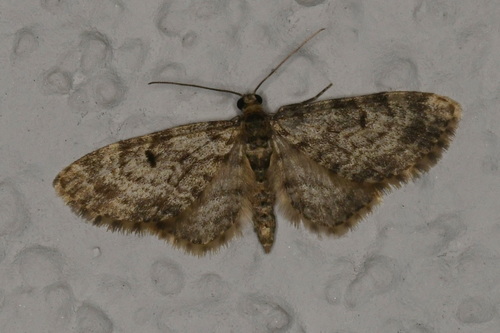
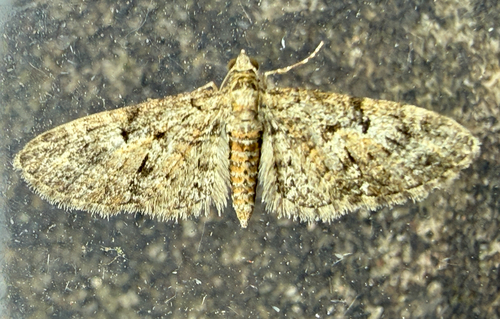
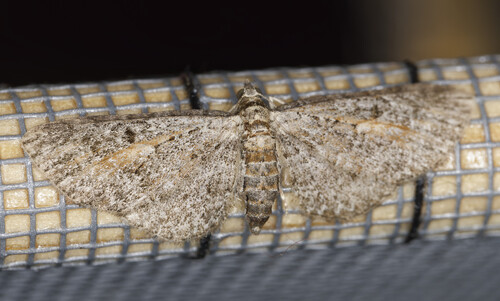
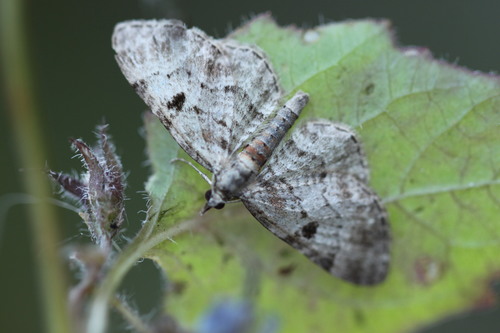
The grey pug (Eupithecia subfuscata) is a moth of the family Geometridae. It is found throughout the Palearctic region. It is also found in North America. Since it does not place any special demands on climatic conditions, special caterpillar food plants, geological subsoil or the like it is a typical species of almost any Hochstaudenflur (plant corridor), where it occurs in the herb layer, in bushes and even on deciduous trees. It can be found on forest edges and hedgerows, on heath, in rocky places and wetlands, parks and gardens, as well as in villages and town centres.

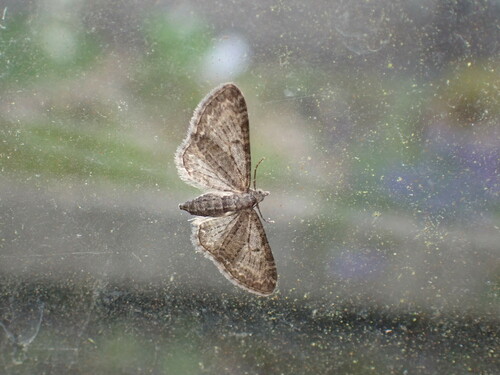
There are two subspecies: Eupithecia subfuscata subfuscata Eupithecia subfuscata ussuriensis Dietze 1910 (Russian Far East, Japan) The forewings of this species are grey (occasionally with an ochreous tinge) marked with pale fascia and radial lines which give it a mottled appearance. There is a pale sub-marginal line and a small discal spot. The hindwings are much paler and plainer also with a small black discal spot. Melanism is quite common in this species. The wingspan is 17–21 mm. See also Prout

Final instar larvae are smooth and elongated. They are grey-green or red-brown... Wikipedia →
Global Distribution

Parks Where Found

# Park Country Daily sighting probability
1 Bavarian Forest National Park 🇩🇪 Germany
~10%

More parks will be added in future updates.

Before you go

What are the chances of seeing a Grey Pug Moth in Bavarian Forest National Park?

With luck

About 10% of wildlife watchers report a Grey Pug Moth sighting in Bavarian Forest National Park on a given day, based on 13 verified sightings from GBIF citizen-science data from 2019 to 2026. It is the 436th most-seen of the 1115 insects we can rate there. Over three days the chance rises to about 20%, and over a week to about 40%, if each day is a fresh chance.

When is the best time to see a Grey Pug Moth in Bavarian Forest National Park?

June

In that month about 20% of wildlife watchers report a Grey Pug Moth in Bavarian Forest National Park on a given day, against under 5% in July to April, the lowest months.

What time of day is best to see a Grey Pug Moth?

Between 8 and 11 am

Across all the parks we cover, that three-hour window holds the most Grey Pug Moth sightings with a recorded time, and about 7 in 10 of them come between 6 am and 6 pm: it is seen both by day and at night.

Where else can you see a Grey Pug Moth?

Only Bavarian Forest National Park, in our data

Bavarian Forest National Park is the only park on Wallace's Line with enough records to rate Grey Pug Moth sightings: about 10% of wildlife watchers there report one on a given day.

Which relatives of the Grey Pug Moth live in Bavarian Forest National Park?

Same genus: Eupithecia

The closest relatives of the Grey Pug Moth that you can see in Bavarian Forest National Park (genus Eupithecia, Pug Moths) are Dwarf Pug (about 10%), Oak-Tree Pug (about 10%) and Tawny Speckled Pug (about 10%), with each one's daily chance of a sighting.

Where does the Grey Pug Moth sighting chance come from?

GBIF citizen-science records

It is estimated from how often the Grey Pug Moth is recorded against all the insects logged in Bavarian Forest National Park (13 verified sightings from 2019 to 2026), calibrated against known sighting rates. Figures are rounded to the nearest 10% because citizen-science data supports honest approximations, not decimals, and months with records from fewer than five people show "—". How it works.

← Back to Bavarian Forest National Park