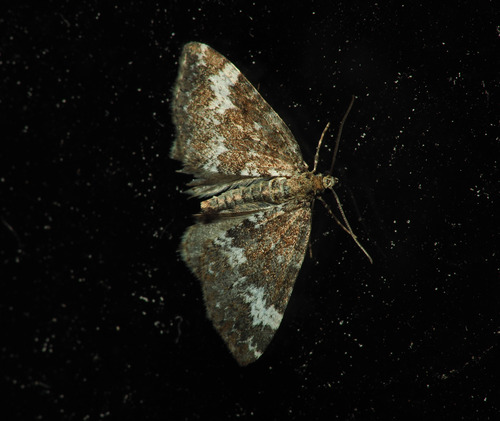
Lunar Thorn

Lunar Thorn

Selenia lunularia

Daily sighting probability ~10% · With luck
at Bavarian Forest National Park

In 3 days ~10% in a week ~30%

8 Verified sightings at Bavarian Forest National Park From 2019 to 2026
42 In all 4 parks
April Best month
☀️🌙 Day & Night When it's spotted

About the Lunar Thorn

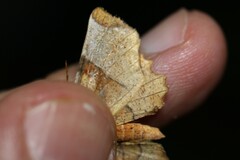
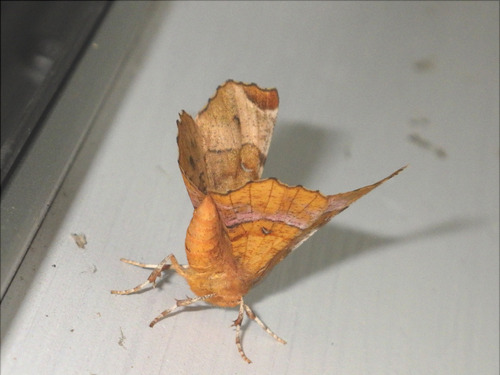
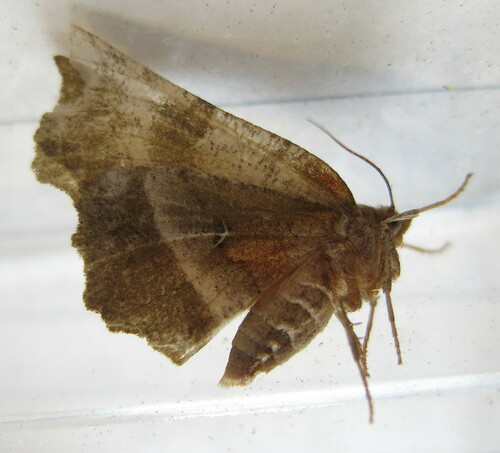
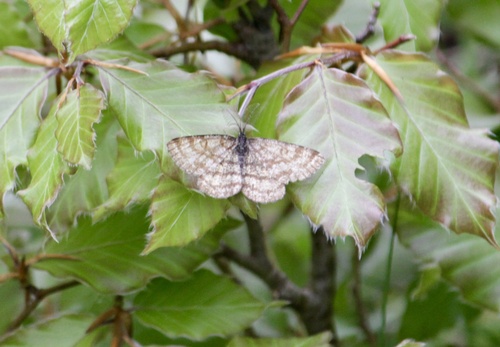
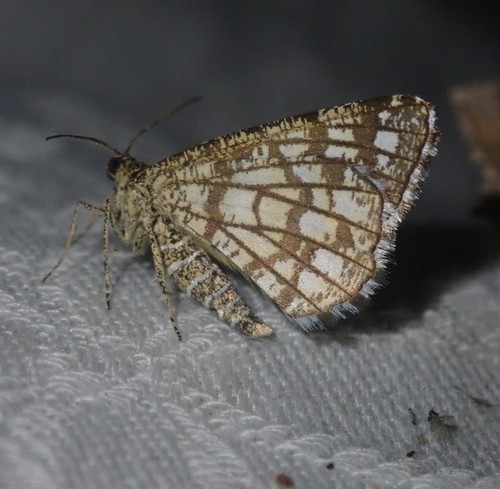
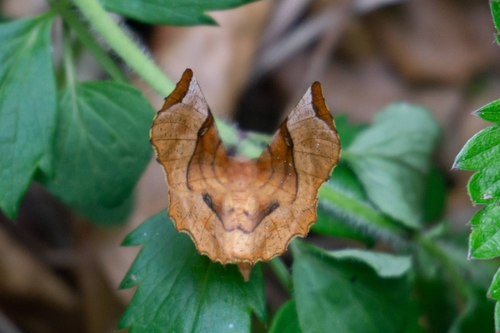
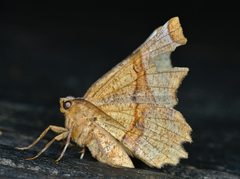
Selenia lunularia, the lunar thorn, is a moth of the family Geometridae. It is found in Europe except Iberia and Greece; also in Asia Minor, Armenia, SiberiaIssyk-Kul. The wingspan is 38–44 mm. The length of the forewings is 16–22 mm. Similar to Selenia dentaria but "Antemedian lines of forewing strongly curved, postmedian

almost straight, oblique outwards, median area very much wider posteriorly than anteriorly, wholly or in part dark-shaded.- ab. sublunaria Steph. is much darker and more purple, almost exactly the colour of some tetralunaria

- delunaria Hhn. the 2nd generation, is on an average rather smaller and with less irroration, but differs less from the 1st brood than in the other [related] species. The ground colour of the caterpillar is usually some shade of brown, ranging from greyish or greenish to reddish, variegated with darker or paler clouds, and with traces of pale lines on the back.Humps and protrusions on the fifth, eighth and ninth segments gives them the appearance of a small branch with buds and represents an excellent camouflage.

The moth flies in two generation from mid-May to mid-August [1]. The caterpillars feed on various deciduous trees, such as birch and oak. Wikipedia →
Global Distribution

Parks Where Found

# Park Country Daily sighting probability
1 Snowdonia National Park 🇬🇧 United Kingdom
~10%
2 Cévennes National Park 🇫🇷 France
~10%
3 Pyrénées National Park 🇫🇷 France
~10%
4 Bavarian Forest National Park 🇩🇪 Germany
~10%

Before you go

What are the chances of seeing a Lunar Thorn in Bavarian Forest National Park?

With luck

About 10% of wildlife watchers report a Lunar Thorn sighting in Bavarian Forest National Park on a given day, based on 8 verified sightings from GBIF citizen-science data from 2019 to 2026. It is the 727th most-seen of the 1115 insects we can rate there. Over three days the chance rises to about 10%, and over a week to about 30%, if each day is a fresh chance.

When is the best time to see a Lunar Thorn in Bavarian Forest National Park?

April and May

In those months about 10% of wildlife watchers report a Lunar Thorn in Bavarian Forest National Park on a given day, against under 5% in June to March, the lowest months.

What time of day is best to see a Lunar Thorn?

Between 10 pm and 1 am

Across all the parks we cover, that three-hour window holds the most Lunar Thorn sightings with a recorded time, and about 7 in 10 of them come between 6 pm and 6 am: it is seen both by day and at night.

Is Bavarian Forest National Park the best place to see a Lunar Thorn?

Among the best

Of the 4 parks where we can rate Lunar Thorn sightings, Bavarian Forest National Park ranks 4th at about 10%, level with the leaders once rounded. The best odds are in Snowdonia National Park (United Kingdom, about 10%), Cévennes National Park (France, about 10%) and Pyrénées National Park (France, about 10%).

Which relatives of the Lunar Thorn live in Bavarian Forest National Park?

Same genus: Selenia

The closest relatives of the Lunar Thorn that you can see in Bavarian Forest National Park (genus Selenia) are Purple Thorn (about 10%) and Early Thorn (about 10%), with each one's daily chance of a sighting.

Where does the Lunar Thorn sighting chance come from?

GBIF citizen-science records

It is estimated from how often the Lunar Thorn is recorded against all the insects logged in Bavarian Forest National Park (8 verified sightings from 2019 to 2026), calibrated against known sighting rates. Figures are rounded to the nearest 10% because citizen-science data supports honest approximations, not decimals, and months with records from fewer than five people show "—". How it works.

← Back to Bavarian Forest National Park