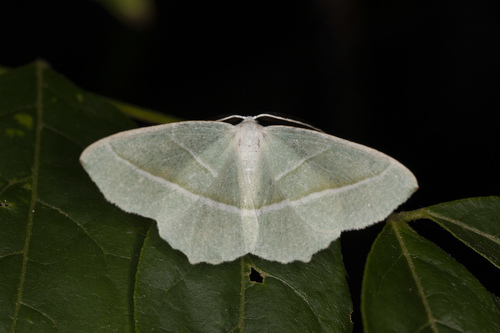
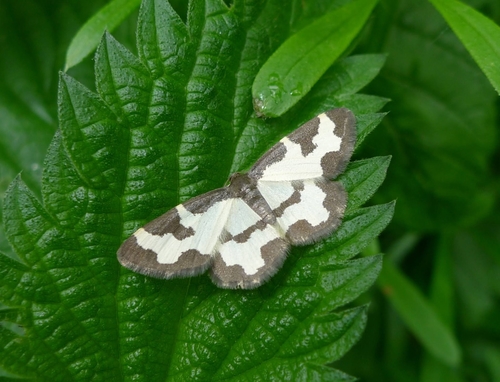
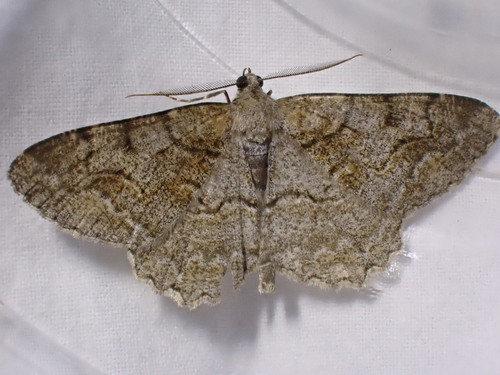
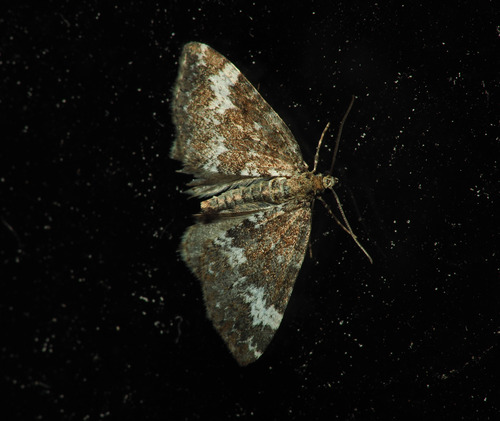
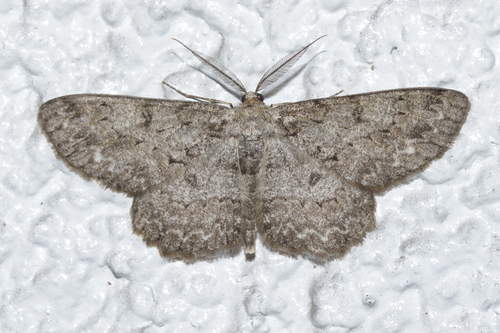
Pale Brindled Beauty

Pale Brindled Beauty

Phigalia pilosaria

Daily sighting probability ~10% · With luck
at Bavarian Forest National Park

In 3 days ~20% in a week ~40%

13 Verified sightings at Bavarian Forest National Park From 2019 to 2026
25 In all 3 parks
February Best month
☀️ Diurnal When it's spotted

About the Pale Brindled Beauty

Phigalia pilosaria, the pale brindled beauty, is a moth of the family Geometridae. The species was first described by Michael Denis and Ignaz Schiffermüller in 1775. It is found from Europe and Anatolia to the Caucasus. The wingspan is 35–40 mm for males. Females are wingless. The male is grey with a more or less strong olivaceous tinge, sometimes mixed with some ochreous or with some whitish scales. The lines are variable,

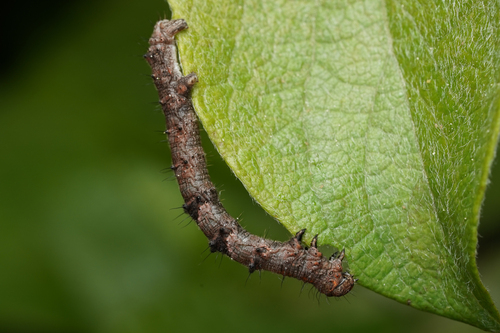
thickened and darkened at the margins. The female is stouter than that of E. defoliaria, with a longer ovipositor and dorsally more or less brownish, abdomen spinose. — ab. extinctaria Stndf. is a paler, almost unicolorous form of the male - ab. monacharia Stgr. is unicolorous blackish or even quite black. Chiefly from Yorkshire. The larva is brown mottled with ferruginous, frequently with V-shaped ochreous dorsal marks on the 2nd and 3rd abdominal segments.

Adults are on wing from January to April. There is one generation per year. The larva feeds on various deciduous trees, including Quercus species. Wikipedia →
Global Distribution

Parks Where Found

# Park Country Daily sighting probability
1 Snowdonia National Park 🇬🇧 United Kingdom
~10%
2 Bavarian Forest National Park 🇩🇪 Germany
~10%
3 Wadden Sea National Park 🇩🇪 Germany
<5%

Cities Where Found

# City Country Daily sighting probability
1 Liverpool 🇬🇧 United Kingdom
~10%
2 Vienna 🇦🇹 Austria
<5%
3 Prague 🇨🇿 Czechia
<5%
4 Paris 🇫🇷 France
<5%
5 Berlin 🇩🇪 Germany
<5%
6 Moscow 🇷🇺 Russia
<5%
7 London 🇬🇧 United Kingdom
<5%
8 Copenhagen 🇩🇰 Denmark
<5%
9 Munich 🇩🇪 Germany
<5%
10 Saint Petersburg 🇷🇺 Russia
<5%

Before you go

What are the chances of seeing a Pale Brindled Beauty in Bavarian Forest National Park?

With luck

About 10% of wildlife watchers report a Pale Brindled Beauty sighting in Bavarian Forest National Park on a given day, based on 13 verified sightings from GBIF citizen-science data from 2019 to 2026. It is the 471st most-seen of the 1115 insects we can rate there. Over three days the chance rises to about 20%, and over a week to about 40%, if each day is a fresh chance.

When is the best time to see a Pale Brindled Beauty in Bavarian Forest National Park?

February and December

In those months about 30% of wildlife watchers report a Pale Brindled Beauty in Bavarian Forest National Park on a given day, against under 5% in January and June–November, the lowest months.

What time of day is best to see a Pale Brindled Beauty?

Between 7 and 10 am

Across all the parks we cover, that three-hour window holds the most Pale Brindled Beauty sightings with a recorded time, and about 7 in 10 of them come between 6 am and 6 pm: it is a daytime animal.

Is Bavarian Forest National Park the best place to see a Pale Brindled Beauty?

Among the best

Of the 3 parks where we can rate Pale Brindled Beauty sightings, Bavarian Forest National Park ranks 2nd at about 10%, level with the leaders once rounded. The best odds are in Snowdonia National Park (United Kingdom, about 10%).

Which relatives of the Pale Brindled Beauty live in Bavarian Forest National Park?

Same family: Geometridae

The closest relatives of the Pale Brindled Beauty that you can see in Bavarian Forest National Park (family Geometridae, Geometer Moths) are Common Heath (about 20%), Latticed Heath (about 20%) and Yellow Shell Moth (about 20%), with each one's daily chance of a sighting.

Where does the Pale Brindled Beauty sighting chance come from?

GBIF citizen-science records

It is estimated from how often the Pale Brindled Beauty is recorded against all the insects logged in Bavarian Forest National Park (13 verified sightings from 2019 to 2026), calibrated against known sighting rates. Figures are rounded to the nearest 10% because citizen-science data supports honest approximations, not decimals, and months with records from fewer than five people show "—". How it works.

← Back to Bavarian Forest National Park