Poplar Ladybird Beetle

Poplar Ladybird Beetle

Oenopia conglobata

Daily sighting probability <5% · Rare
at Bavarian Forest National Park

In 3 days ~10% in a week ~30%

6 Verified sightings at Bavarian Forest National Park From 2019 to 2026
6 In 1 park
December Best month
☀️🌙 Day & Night When it's spotted

About the Poplar Ladybird Beetle

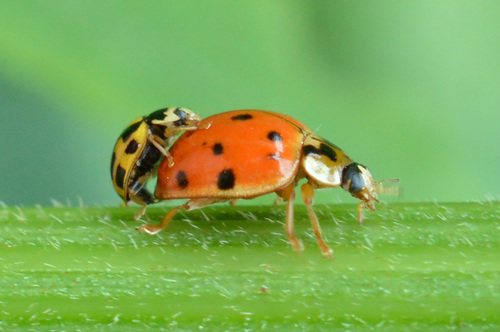
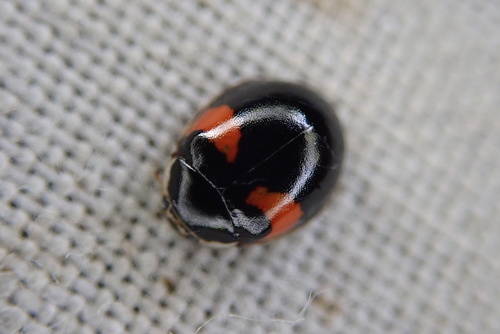
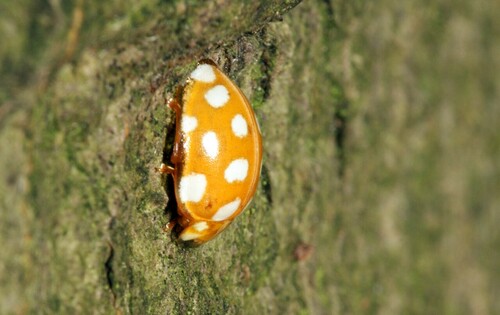
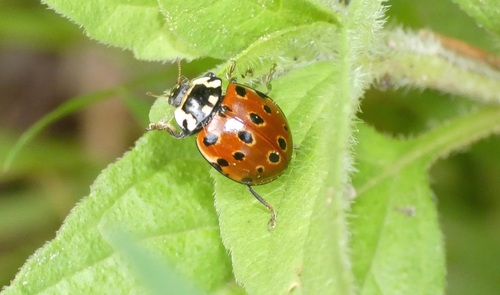
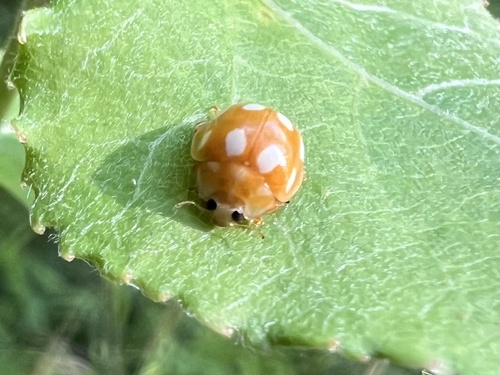
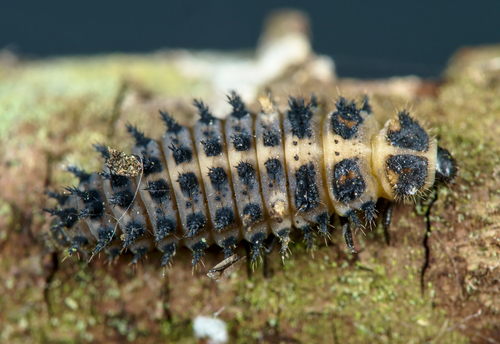
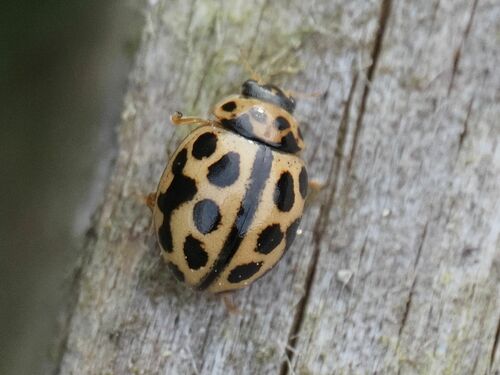
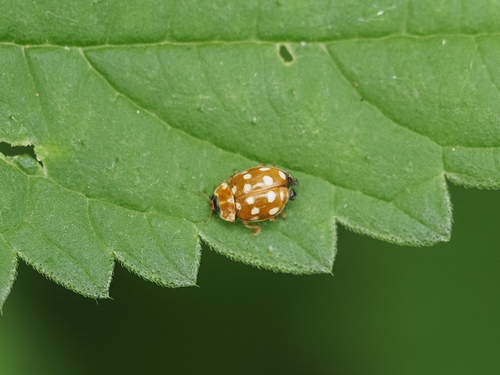
Oenopia conglobata, the poplar ladybird, is a species of ladybird beetle (Coccinellidae) native to continental Europe, Asia and Africa. The adult beetles are 3.5 to 5 mm long and have oval, slightly curved bodies. The elytra are light pink (more rarely red to pale yellow) with a black streak on the inner edges of the elytra, bearing eight square black spots varying in size and sometimes flowing into each other. There are also completely black specimens. The pronotum is light beige and bears seven black, symmetrically arranged spots. The head is black and white. The antennae are yellow, but slightly darker coloured at the end; the legs are yellow brown.

Oenopia conglobata is found in mainland Europe except in the North, North Africa and the temperate regions of Asia. In Great Britain, it is a rare vagrant, with just four records to date, at Flamborough Head in Yorkshire in 2014, Lennoxtown near Glasgow in 2020, Ponteland in Northumberland in 2024, and Great Dunmow, Essex, in 2025. The origin of these records, being so widely spread, suggests at least some are accidental human introductions, rather than natural colonisation; the Lennoxtown record was... Wikipedia →

Global Distribution

Parks Where Found

# Park Country Daily sighting probability
1 Bavarian Forest National Park 🇩🇪 Germany
<5%

More parks will be added in future updates.

Cities Where Found

# City Country Daily sighting probability
1 Bishkek 🇰🇬 Kyrgyzstan
~30%
2 Bucharest 🇷🇴 Romania
~10%
3 Almaty 🇰🇿 Kazakhstan
~10%
4 Tehran 🇮🇷 Iran
~10%
5 Beijing 🇨🇳 China
~10%
6 Tel Aviv 🇮🇱 Israel
~10%
7 Berlin 🇩🇪 Germany
~10%
8 Nizhny Novgorod 🇷🇺 Russia
~10%
9 Kharkiv 🇺🇦 Ukraine
~10%
10 Minsk 🇧🇾 Belarus
~10%

Before you go

What are the chances of seeing a Poplar Ladybird Beetle in Bavarian Forest National Park?

Rare

Under 5% of wildlife watchers report a Poplar Ladybird Beetle sighting in Bavarian Forest National Park on a given day, based on 6 verified sightings from GBIF citizen-science data from 2019 to 2026. It is the 822nd most-seen of the 1115 insects we can rate there. Over three days the chance rises to about 10%, and over a week to about 30%, if each day is a fresh chance.

When is the best time to see a Poplar Ladybird Beetle in Bavarian Forest National Park?

December and January

In those months about 20% of wildlife watchers report a Poplar Ladybird Beetle in Bavarian Forest National Park on a given day, against under 5% in February–August and November, the lowest months.

What time of day is best to see a Poplar Ladybird Beetle?

Between 1 and 4 pm

Across all the parks we cover, that three-hour window holds the most Poplar Ladybird Beetle sightings with a recorded time, and about 7 in 10 of them come between 6 am and 6 pm: it is seen both by day and at night.

Where else can you see a Poplar Ladybird Beetle?

Only Bavarian Forest National Park, in our data

Bavarian Forest National Park is the only park on Wallace's Line with enough records to rate Poplar Ladybird Beetle sightings: under 5% of wildlife watchers there report one on a given day.

Which relatives of the Poplar Ladybird Beetle live in Bavarian Forest National Park?

Same family: Coccinellidae

The closest relatives of the Poplar Ladybird Beetle that you can see in Bavarian Forest National Park (family Coccinellidae, Lady Beetles) are Asian Lady Beetle (about 30%), Seven-Spotted Lady Beetle (about 20%) and 22-Spot Ladybird (about 10%), with each one's daily chance of a sighting.

Where does the Poplar Ladybird Beetle sighting chance come from?

GBIF citizen-science records

It is estimated from how often the Poplar Ladybird Beetle is recorded against all the insects logged in Bavarian Forest National Park (6 verified sightings from 2019 to 2026), calibrated against known sighting rates. Figures are rounded to the nearest 10% because citizen-science data supports honest approximations, not decimals, and months with records from fewer than five people show "—". How it works.

← Back to Bavarian Forest National Park