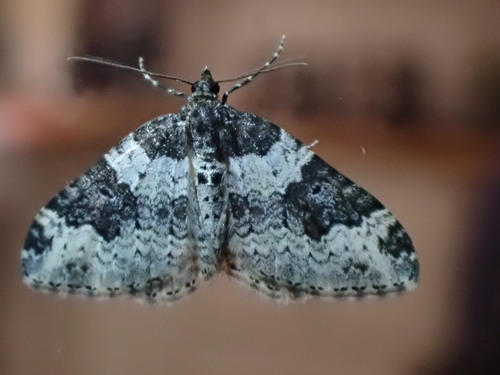
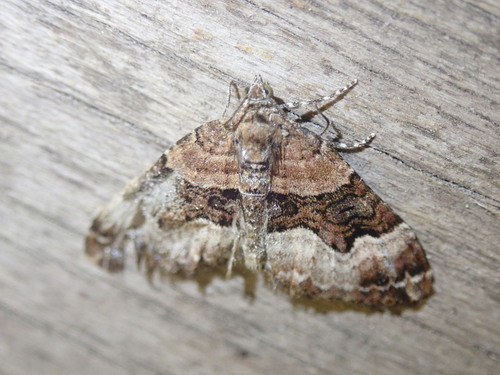
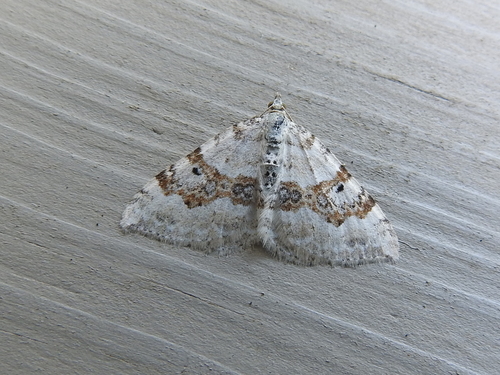
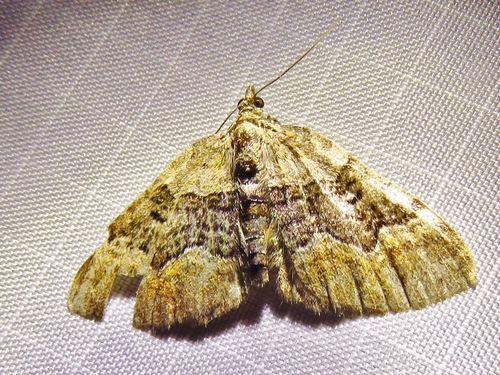
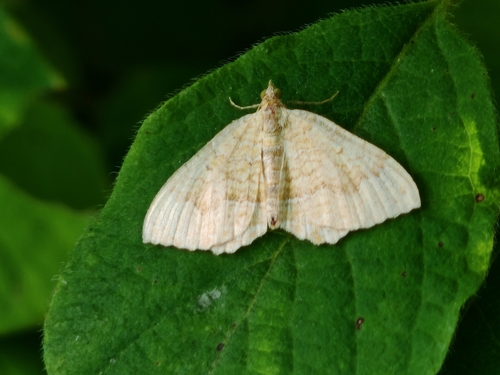
Red Twin-Spot Carpet

Red Twin-Spot Carpet

Xanthorhoe spadicearia

Daily sighting probability <5% · Rare
at Bavarian Forest National Park

In 3 days ~10% in a week ~30%

8 Verified sightings at Bavarian Forest National Park From 2019 to 2026
41 In all 3 parks
August Best month
🌙 Nocturnal When it's spotted

About the Red Twin-Spot Carpet

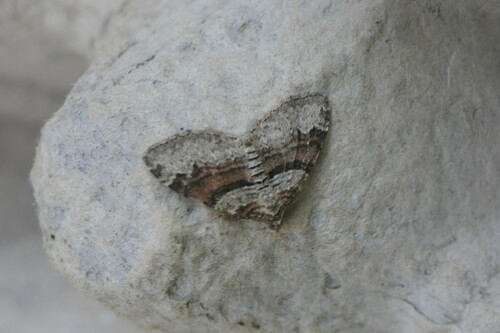
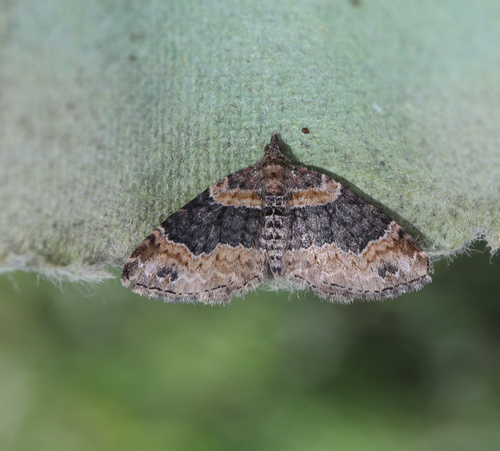
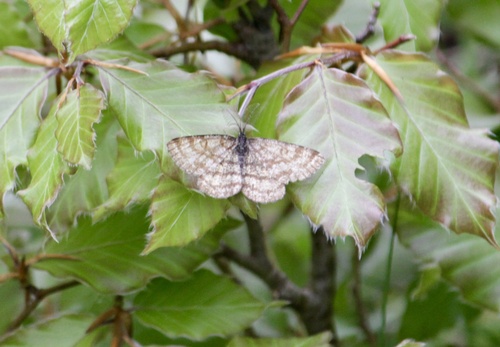
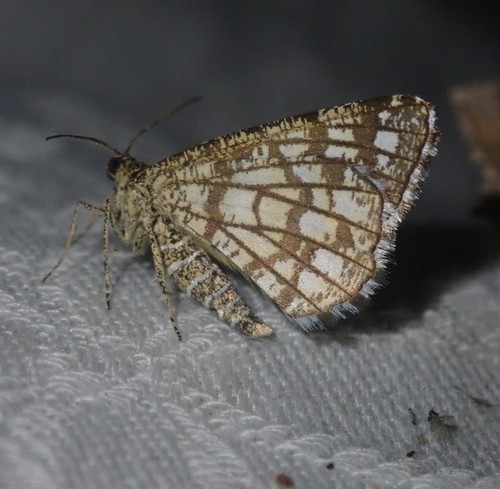
Xanthorhoe spadicearia, the red twin-spot carpet, is a moth of the genus Xanthorhoe in the family Geometridae. The species was first described by Michael Denis and Ignaz Schiffermüller in 1775. It has a Palearctic range from Ireland through northern Europe then east to southern Siberia.It colonizes a variety of very different biotopes and occurs in both dry and humid and urban habitats. In the Alps, it rises to heights of 2100 metres.

The forewing is strongly marked with lines, much mixed with ferruginous ochreous in the distal area or at least in the vicinity of the geminate dark spots, the median band differently shaped, often of a brighter or lighter red (less purplish), never black, the hindwing darker distally than proximally the under surface strongly mixed with ochreous. It is very variable. - ab. confixaria H.-Sch. has the median band narrowed and the distal area somewhat weakly marked, rather uniformly ochreous. - livinaria Lah. is probably, as Staudinger indicates, a very extreme aberration with threadlike median band and broadly darkened distal area— ab. georgi Meissl is an extraordinary, dark brown aberration with the median band only... Wikipedia →
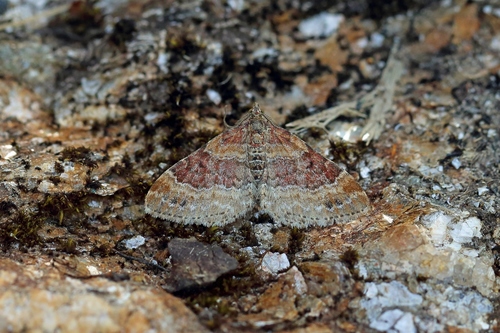
Global Distribution

Parks Where Found

# Park Country Daily sighting probability
1 Snowdonia National Park 🇬🇧 United Kingdom
~10%
2 Wadden Sea National Park 🇩🇪 Germany
~10%
3 Bavarian Forest National Park 🇩🇪 Germany
<5%

Cities Where Found

# City Country Daily sighting probability
1 London 🇬🇧 United Kingdom
<5%
2 Moscow 🇷🇺 Russia
<5%

Before you go

What are the chances of seeing a Red Twin-Spot Carpet in Bavarian Forest National Park?

Rare

Under 5% of wildlife watchers report a Red Twin-Spot Carpet sighting in Bavarian Forest National Park on a given day, based on 8 verified sightings from GBIF citizen-science data from 2019 to 2026. It is the 822nd most-seen of the 1115 insects we can rate there. Over three days the chance rises to about 10%, and over a week to about 30%, if each day is a fresh chance.

When is the best time to see a Red Twin-Spot Carpet in Bavarian Forest National Park?

May and August

In those months about 10% of wildlife watchers report a Red Twin-Spot Carpet in Bavarian Forest National Park on a given day, against under 5% in June–July and September–April, the lowest months.

What time of day is best to see a Red Twin-Spot Carpet?

Between 11 pm and 2 am

Across all the parks we cover, that three-hour window holds the most Red Twin-Spot Carpet sightings with a recorded time, and about 7 in 10 of them come between 6 pm and 6 am: it is mostly seen at night.

Is Bavarian Forest National Park the best place to see a Red Twin-Spot Carpet?

3rd of 3

Of the 3 parks where we can rate Red Twin-Spot Carpet sightings, Bavarian Forest National Park ranks 3rd at under 5%. The best odds are in Snowdonia National Park (United Kingdom, about 10%) and Wadden Sea National Park (Germany, about 10%).

Which relatives of the Red Twin-Spot Carpet live in Bavarian Forest National Park?

Same genus: Xanthorhoe

The closest relatives of the Red Twin-Spot Carpet that you can see in Bavarian Forest National Park (genus Xanthorhoe) are Garden Carpet (about 10%), Balsam Carpet (about 10%) and Silver-Ground Carpet (about 10%), with each one's daily chance of a sighting.

Where does the Red Twin-Spot Carpet sighting chance come from?

GBIF citizen-science records

It is estimated from how often the Red Twin-Spot Carpet is recorded against all the insects logged in Bavarian Forest National Park (8 verified sightings from 2019 to 2026), calibrated against known sighting rates. Figures are rounded to the nearest 10% because citizen-science data supports honest approximations, not decimals, and months with records from fewer than five people show "—". How it works.

← Back to Bavarian Forest National Park