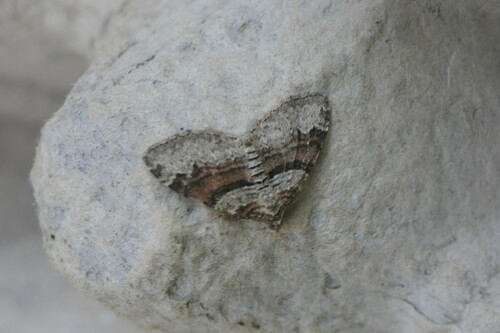
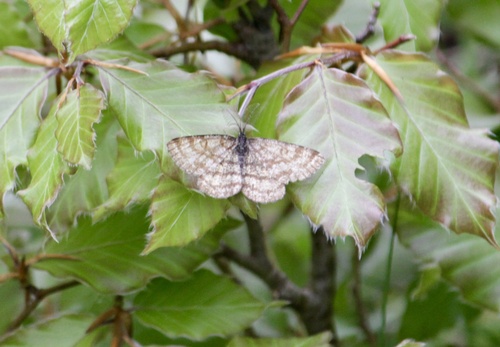
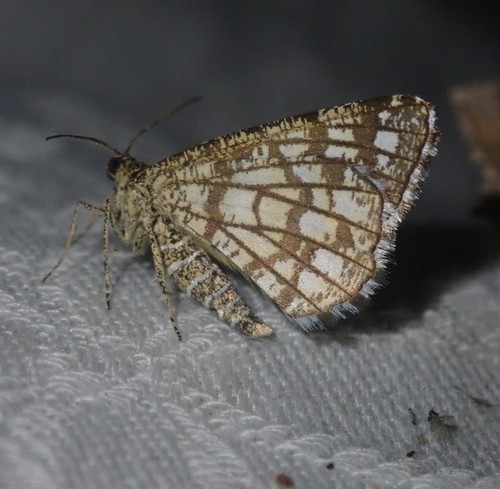
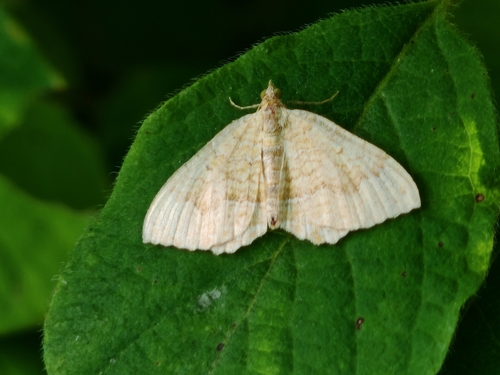
Dark-Barred Twin-Spot Carpet

Dark-Barred Twin-Spot Carpet

Xanthorhoe ferrugata

Daily sighting probability <5% · Rare
at Bavarian Forest National Park

In 3 days ~10% in a week ~30%

5 Verified sightings at Bavarian Forest National Park From 2019 to 2026
63 In all 4 parks
July Best month
☀️🌙 Day & Night When it's spotted

About the Dark-Barred Twin-Spot Carpet

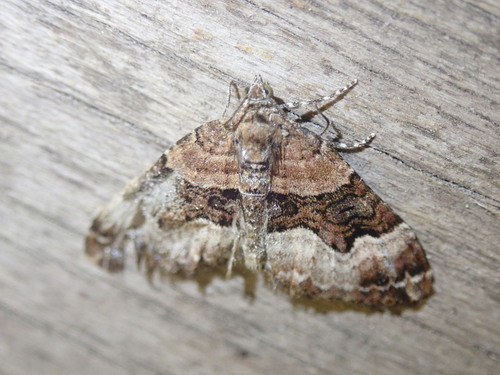
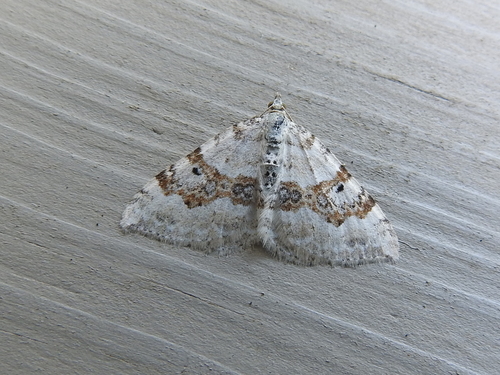
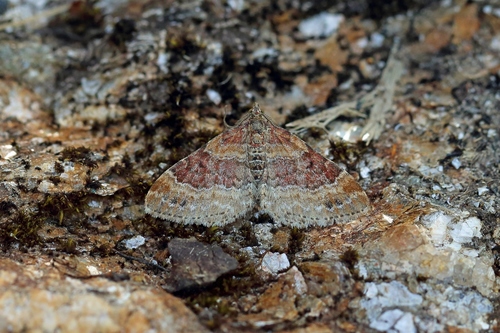
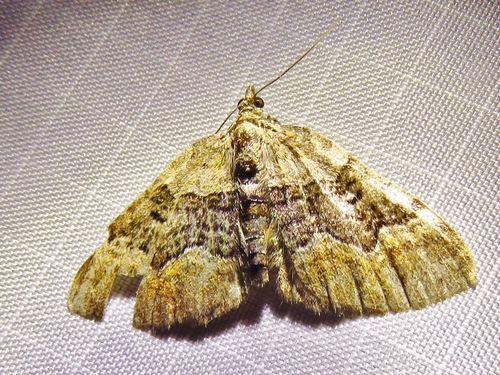
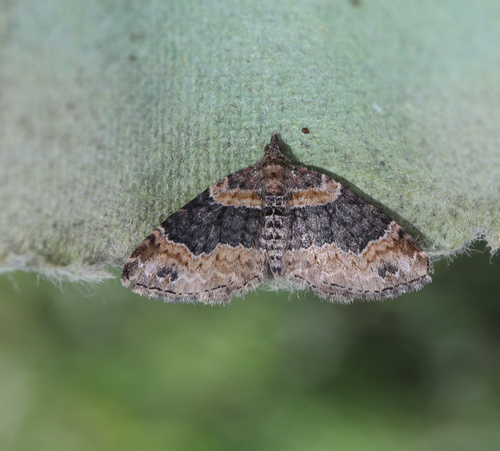
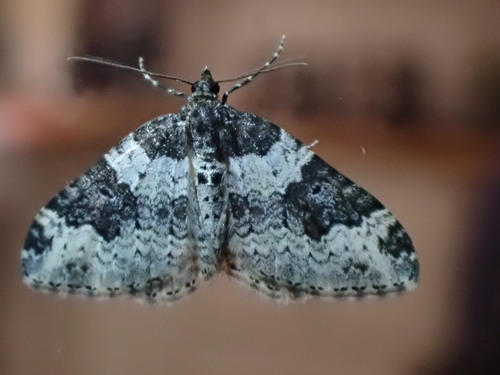
Xanthorhoe ferrugata, the dark-barred twin-spot carpet, is a moth of the genus Xanthorhoe in the family Geometridae. It was first described by Carl Alexander Clerck in 1759 and has a Holarctic distribution. It is found in Europe and east to the Russian Far East, Siberia, Tibet and China, south to the Caucasus and Turkey. Also in North America (Alaska to Newfoundland and south to North Carolina and California).

The name-typical form of ferrugata as figured by Clerck and well described by Linné, has the median band reddish or purplish, the distal area very weakly marked (except the costal patch and two dark spots between the radials) often almost entirely white or whitish. An aberration, ab. unidentaria Haw. is a very common and very interesting aberration which has been proved, by my very extensive breeding experiments and those of Dr. Draudt, to be an almost perfect Mendelian "recessive". It differs in having the median band black, not reddish. — ab. coarctata Prout has the median band greatly narrowed, only 1–2 mm. in width; the rest of the markings often in part obsolete. - bilbainensis Fuchs, from Bilbao, said to be a local race, is described... Wikipedia →
Global Distribution

Parks Where Found

# Park Country Daily sighting probability
1 Snowdonia National Park 🇬🇧 United Kingdom
~10%
2 Pyrénées National Park 🇫🇷 France
~10%
3 Wadden Sea National Park 🇩🇪 Germany
~10%
4 Bavarian Forest National Park 🇩🇪 Germany
<5%

Cities Where Found

# City Country Daily sighting probability
1 Porto 🇵🇹 Portugal
~10%
2 Detroit 🇺🇸 United States
~10%
3 Helsinki 🇫🇮 Finland
~10%
4 Liverpool 🇬🇧 United Kingdom
~10%
5 Boston 🇺🇸 United States
<5%
6 Edmonton 🇨🇦 Canada
<5%
7 Montreal 🇨🇦 Canada
<5%
8 Berlin 🇩🇪 Germany
<5%
9 Minneapolis [Saint Paul] 🇺🇸 United States
<5%
10 Toronto 🇨🇦 Canada
<5%

Before you go

What are the chances of seeing a Dark-Barred Twin-Spot Carpet in Bavarian Forest National Park?

Rare

Under 5% of wildlife watchers report a Dark-Barred Twin-Spot Carpet sighting in Bavarian Forest National Park on a given day, based on 5 verified sightings from GBIF citizen-science data from 2019 to 2026. It is the 964th most-seen of the 1115 insects we can rate there. Over three days the chance rises to about 10%, and over a week to about 30%, if each day is a fresh chance.

When is the best time to see a Dark-Barred Twin-Spot Carpet in Bavarian Forest National Park?

May and July

In those months about 10% of wildlife watchers report a Dark-Barred Twin-Spot Carpet in Bavarian Forest National Park on a given day, against under 5% in June and August–April, the lowest months.

What time of day is best to see a Dark-Barred Twin-Spot Carpet?

Between 9 pm and midnight

Across all the parks we cover, that three-hour window holds the most Dark-Barred Twin-Spot Carpet sightings with a recorded time, and about 6 in 10 of them come between 6 pm and 6 am: it is seen both by day and at night.

Is Bavarian Forest National Park the best place to see a Dark-Barred Twin-Spot Carpet?

4th of 4

Of the 4 parks where we can rate Dark-Barred Twin-Spot Carpet sightings, Bavarian Forest National Park ranks 4th at under 5%. The best odds are in Snowdonia National Park (United Kingdom, about 10%), Pyrénées National Park (France, about 10%) and Wadden Sea National Park (Germany, about 10%).

Which relatives of the Dark-Barred Twin-Spot Carpet live in Bavarian Forest National Park?

Same genus: Xanthorhoe

The closest relatives of the Dark-Barred Twin-Spot Carpet that you can see in Bavarian Forest National Park (genus Xanthorhoe) are Garden Carpet (about 10%), Balsam Carpet (about 10%) and Silver-Ground Carpet (about 10%), with each one's daily chance of a sighting.

Where does the Dark-Barred Twin-Spot Carpet sighting chance come from?

GBIF citizen-science records

It is estimated from how often the Dark-Barred Twin-Spot Carpet is recorded against all the insects logged in Bavarian Forest National Park (5 verified sightings from 2019 to 2026), calibrated against known sighting rates. Figures are rounded to the nearest 10% because citizen-science data supports honest approximations, not decimals, and months with records from fewer than five people show "—". How it works.

← Back to Bavarian Forest National Park