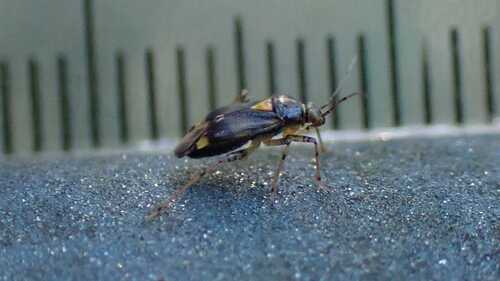
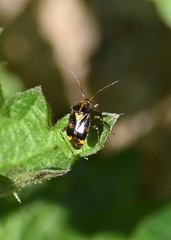
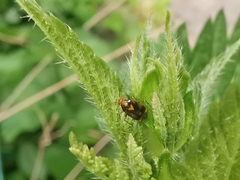
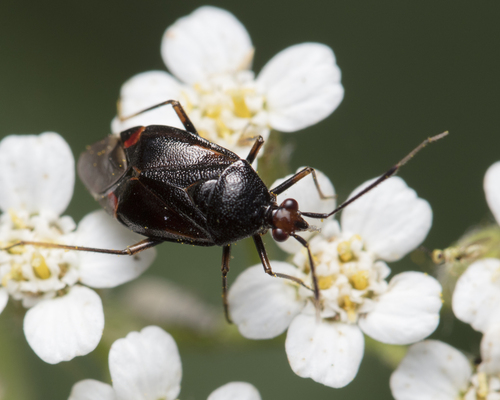
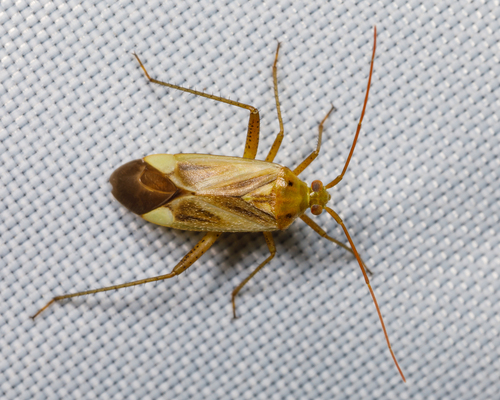
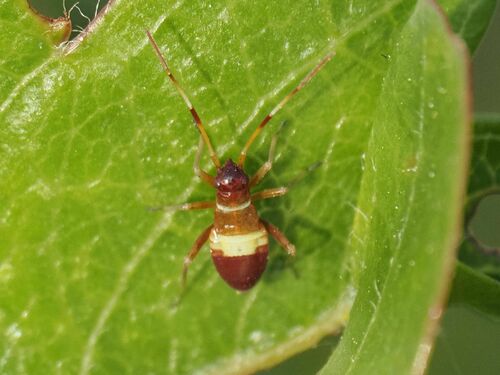
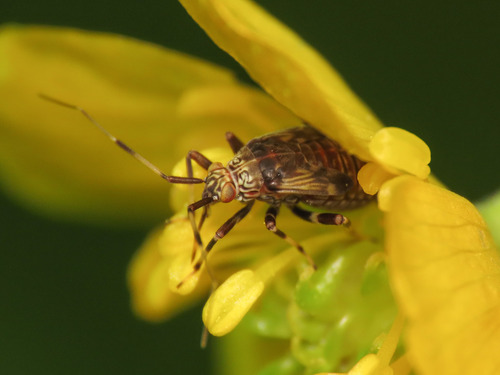
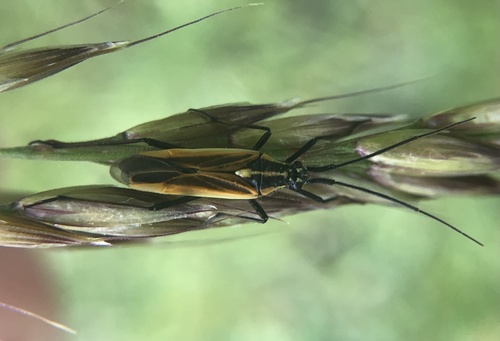
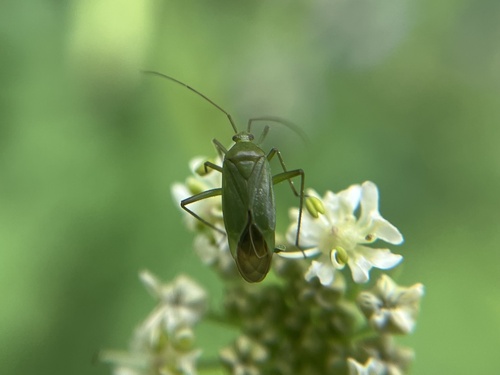
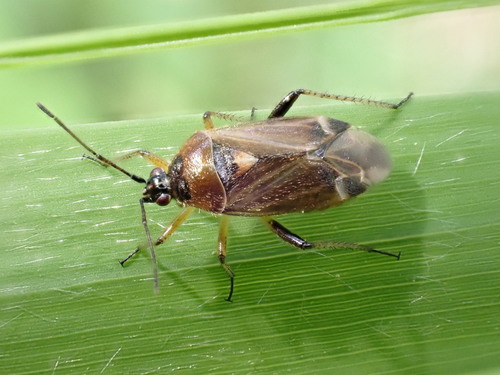
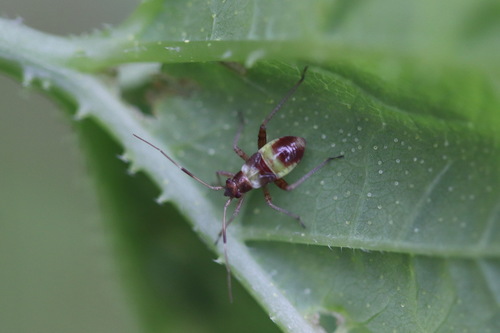
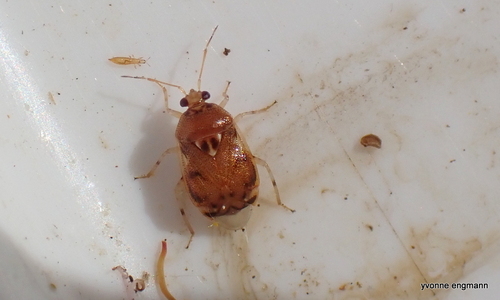
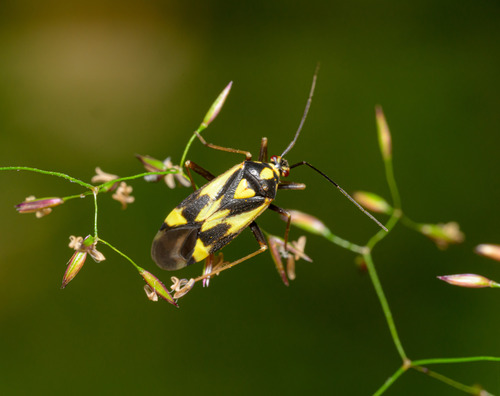
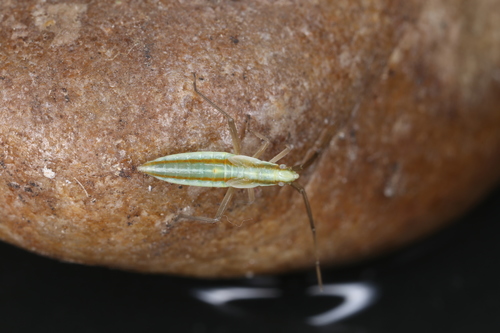
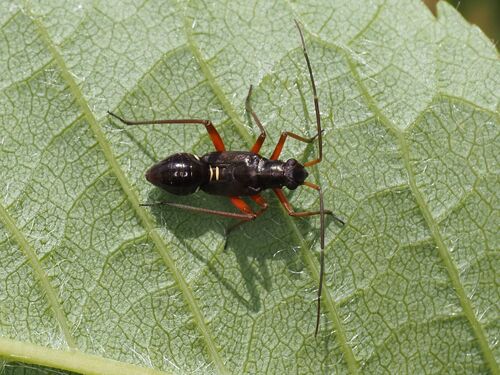
Three Spotted Nettle Bug

Three Spotted Nettle Bug

Liocoris tripustulatus

Daily sighting probability <5% · Rare
at Bavarian Forest National Park

In 3 days ~10% in a week ~30%

5 Verified sightings at Bavarian Forest National Park From 2019 to 2026
32 In all 3 parks
November Best month
☀️ Diurnal When it's spotted

About the Three Spotted Nettle Bug

Liocoris tripustulatus or the common nettle bug is a species of plant bug belonging to the family Miridae, subfamily Mirinae. The species was first described by Johan Christian Fabricius in 1781. This species can be found in most of Europe.

These plant bugs are generally found on low vegetation. Adults are normally 4 to 5 mm long, darker brown with cream-coloured to yellow highlights. The scutellum shows a heart shaped marking, while in the wings there are two spots. Across the body is present a more or less visible clear band. This species is quite variable in colour. In springs the basic colour is darker, while the cuneus is bright orange-yellow. The new generation of adults is commonly paler and markings are less pronounced. Head width is about 1/2 of the width of the pronotum. Legs are pale yellowish, striped with black rings. Tibiae show short dark spines.

Adults can be found all year. Following mating, females may survive until mid-summer, when the adults of the new generation appear. The primary food of these bugs in all stages of development is nettles. Hudec K., Kolibáč J., Laštůvka Z., Peňáz... Wikipedia →

Global Distribution

Parks Where Found

# Park Country Daily sighting probability
1 Wadden Sea National Park 🇩🇪 Germany
~10%
2 Pyrénées National Park 🇫🇷 France
<5%
3 Bavarian Forest National Park 🇩🇪 Germany
<5%

Cities Where Found

# City Country Daily sighting probability
1 Berlin 🇩🇪 Germany
~10%
2 Birmingham 🇬🇧 United Kingdom
~10%
3 Hamburg 🇩🇪 Germany
~10%
4 Brussels 🇧🇪 Belgium
~10%
5 London 🇬🇧 United Kingdom
~10%
6 Leeds 🇬🇧 United Kingdom
~10%
7 Paris 🇫🇷 France
~10%
8 Helsinki 🇫🇮 Finland
~10%
9 Warsaw 🇵🇱 Poland
~10%
10 Amsterdam 🇳🇱 Netherlands
~10%

Before you go

What are the chances of seeing a Three Spotted Nettle Bug in Bavarian Forest National Park?

Rare

Under 5% of wildlife watchers report a Three Spotted Nettle Bug sighting in Bavarian Forest National Park on a given day, based on 5 verified sightings from GBIF citizen-science data from 2019 to 2026. It is the 964th most-seen of the 1115 insects we can rate there. Over three days the chance rises to about 10%, and over a week to about 30%, if each day is a fresh chance.

When is the best time to see a Three Spotted Nettle Bug in Bavarian Forest National Park?

April–May and November

In those months about 10% of wildlife watchers report a Three Spotted Nettle Bug in Bavarian Forest National Park on a given day, against under 5% in June–October and December–March, the lowest months.

What time of day is best to see a Three Spotted Nettle Bug?

Between 2 and 5 pm

Across all the parks we cover, that three-hour window holds the most Three Spotted Nettle Bug sightings with a recorded time, and about 9 in 10 of them come between 6 am and 6 pm: it is a daytime animal.

Is Bavarian Forest National Park the best place to see a Three Spotted Nettle Bug?

3rd of 3

Of the 3 parks where we can rate Three Spotted Nettle Bug sightings, Bavarian Forest National Park ranks 3rd at under 5%. The best odds are in Wadden Sea National Park (Germany, about 10%) and Pyrénées National Park (France, under 5%).

Which relatives of the Three Spotted Nettle Bug live in Bavarian Forest National Park?

Same family: Miridae

The closest relatives of the Three Spotted Nettle Bug that you can see in Bavarian Forest National Park (family Miridae, Plant Bugs) are Red-Spotted Plant Bug (about 10%), Alfalfa Plant Bug (about 10%) and Closterotomus biclavatus (about 10%), with each one's daily chance of a sighting.

Where does the Three Spotted Nettle Bug sighting chance come from?

GBIF citizen-science records

It is estimated from how often the Three Spotted Nettle Bug is recorded against all the insects logged in Bavarian Forest National Park (5 verified sightings from 2019 to 2026), calibrated against known sighting rates. Figures are rounded to the nearest 10% because citizen-science data supports honest approximations, not decimals, and months with records from fewer than five people show "—". How it works.

← Back to Bavarian Forest National Park