Crevice Spiny Lizard

Crevice Spiny Lizard

Sceloporus poinsettii

Silhouette: SeismicShrimp · PhyloPic

LCLeast ConcernNTVUENCR
Daily sighting probability ~30% · Possible
at Big Bend National Park

In 3 days ~70% in a week ~90%

112 Verified sightings at Big Bend National Park From 2019 to 2026
178 In all 2 parks
October Best month
☀️ Diurnal When it's spotted

About the Crevice Spiny Lizard

Sceloporus poinsettii, the crevice spiny lizard, is a species of small, phrynosomatid lizard. The epithet, poinsettii, is in honor of American physician, botanist, and statesman, Joel Roberts Poinsett. In the United States, Sceloporus poinsettii occurs in the Chihuahua Desert and Edwards Plateau regions of Texas and New Mexico. In Mexico it occurs in the border states from the Sierra Madre Occidental of Sonora, eastward through Chihuahua, Coahuila, and Nuevo Leon. Southward its distribution is less well established, although it is known to occur throughout of the state of Durango, parts of Zacatecas, with additional records from San Luis Potosi in the southeast, and the Pacific slopes of the Sierra Madre Occidental of northern Jalisco in the southwest.

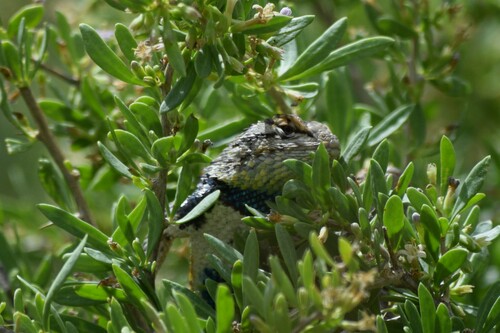
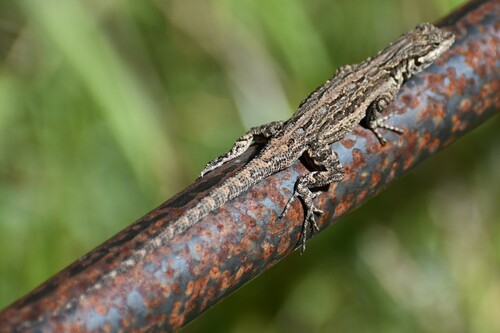
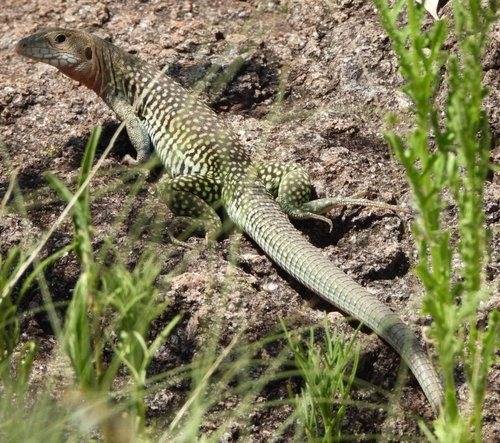
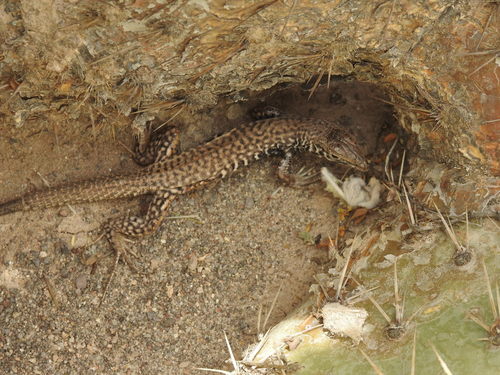
The crevice spiny lizard is typically grey in color, but sometimes can have a ruddy red-brown appearance with a black and white collar around the neck region. The underside is typically light grey, but males often have blue patches on either side of their bellies. The tail typically has black banding. Their scales have a distinctly spiny texture. They can grow to 11.8 cm (4.6 in... Wikipedia →

Global Distribution

Parks Where Found

# Park Country Daily sighting probability
1 Guadalupe Mountains National Park 🇺🇸 United States
~50%
2 Big Bend National Park 🇺🇸 United States
~30%

Zoos & Centres Where Found

# Zoo / Centre Country
1 Berlin Zoological Garden 🇩🇪 Germany In captivity
2 Houston Zoo 🇺🇸 United States In captivity
3 Chattanooga Zoo at Warner Park 🇺🇸 United States In captivity
4 Aquarium Berlin 🇩🇪 Germany In captivity

Before you go

What are the chances of seeing a Crevice Spiny Lizard in Big Bend National Park?

Possible

About 30% of wildlife watchers report a Crevice Spiny Lizard sighting in Big Bend National Park on a given day, based on 112 verified sightings from GBIF citizen-science data from 2019 to 2026. It is the 7th most-seen of the 48 reptiles we can rate there. Over three days the chance rises to about 70%, and over a week to about 90%, if each day is a fresh chance.

When is the best time to see a Crevice Spiny Lizard in Big Bend National Park?

October

In that month about 50% of wildlife watchers report a Crevice Spiny Lizard in Big Bend National Park on a given day, against under 5% in February, the lowest month.

What time of day is best to see a Crevice Spiny Lizard?

Between 11 am and 2 pm

Across all the parks we cover, that three-hour window holds the most Crevice Spiny Lizard sightings with a recorded time, and about 8 in 10 of them come between 6 am and 6 pm: it is a daytime animal.

Is Big Bend National Park the best place to see a Crevice Spiny Lizard?

2nd of 2

Of the 2 parks where we can rate Crevice Spiny Lizard sightings, Big Bend National Park ranks 2nd at about 30%. The best odds are in Guadalupe Mountains National Park (United States, about 50%).

Which relatives of the Crevice Spiny Lizard live in Big Bend National Park?

Same genus: Sceloporus

The closest relatives of the Crevice Spiny Lizard that you can see in Big Bend National Park (genus Sceloporus, Spiny Lizards) are Canyon Lizard (about 30%), Southwestern Fence Lizard (about 20%) and Twin-spotted Spiny Lizard (about 20%), with each one's daily chance of a sighting.

Where does the Crevice Spiny Lizard sighting chance come from?

GBIF citizen-science records

It is estimated from how often the Crevice Spiny Lizard is recorded against all the reptiles logged in Big Bend National Park (112 verified sightings from 2019 to 2026), calibrated against known sighting rates. Figures are rounded to the nearest 10% because citizen-science data supports honest approximations, not decimals, and months with records from fewer than five people show "—". How it works.

← Back to Big Bend National Park