Familiar Bluet

Familiar Bluet

Enallagma civile

Daily sighting probability ~10% · With luck
at Big Bend National Park

In 3 days ~40% in a week ~70%

49 Verified sightings at Big Bend National Park From 2019 to 2026
127 In all 5 parks
September Best month
☀️ Diurnal When it's spotted

About the Familiar Bluet

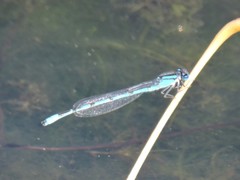
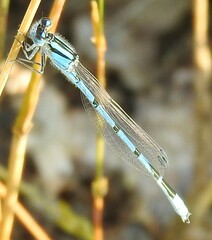
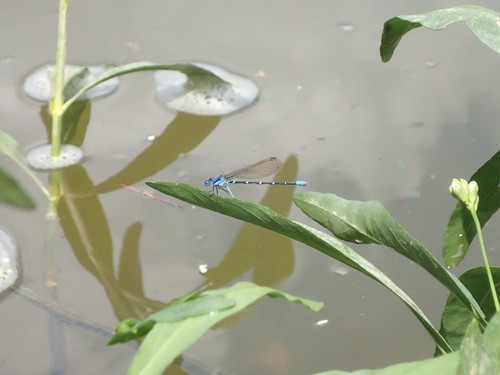
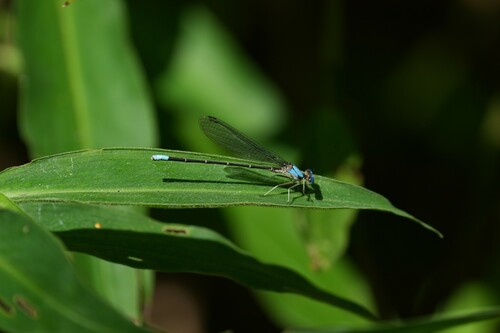
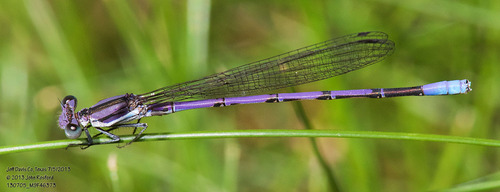
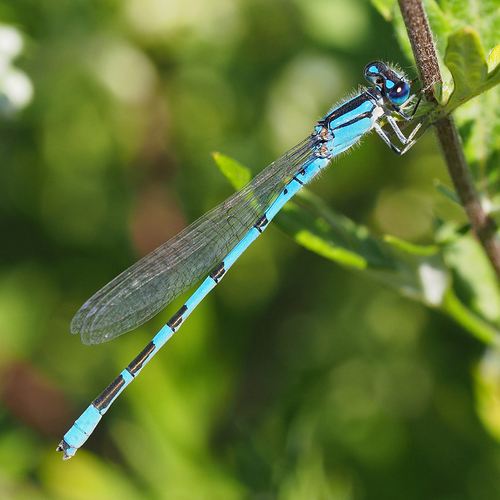
The familiar bluet (Enallagma civile) is a narrow-winged damselfly of the family Coenagrionidae, which is native to much of the United States and southern Canada. In a broader sense, it is a part of the order Odonata. It is an order that consists of predatory flying insects, such as dragonflies and damselflies. Damselflies are structurally similar to dragonflies, except damselflies have a slimmer body and they have widely-separated eyes; whereas dragonflies have larger eyes that nearly touch.

The familiar bluet have been found to reside in natural or artificially-made ponds, or simply places where bodies of non-polluted freshwater and vegetation are located: lakes, ponds, or slow streams. The familiar bluet is generally less tolerant of significant chemical imbalances, thus helping to indicate pure water quality. It has a torpedo-shaped thorax that tapers into a slender abdomen, separated by an average of 10 segments, and it is on average 30-39 mm in length. The familiar bluet has a striking resemblance to the tule bluet, bearing the same sky-blue and black bodies, but differs due to the less heavy black coloration on the abdomen and thorax.

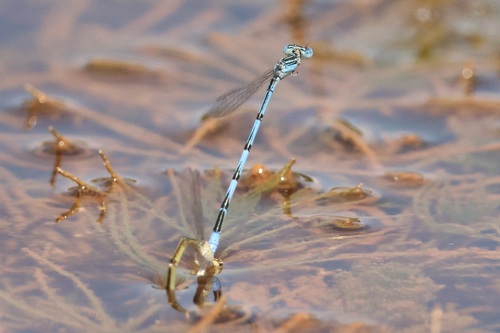
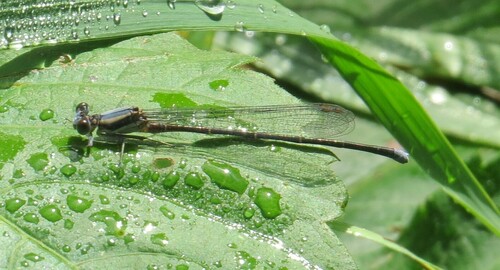
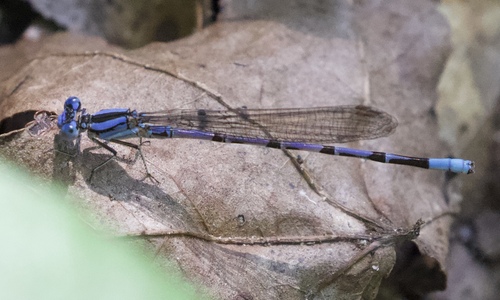
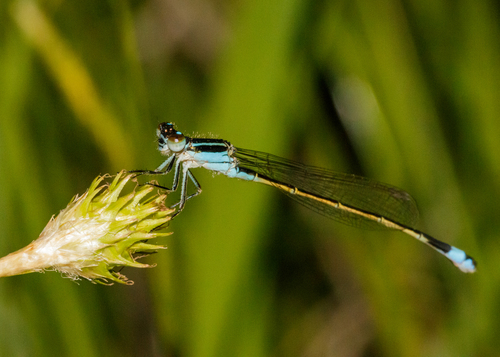
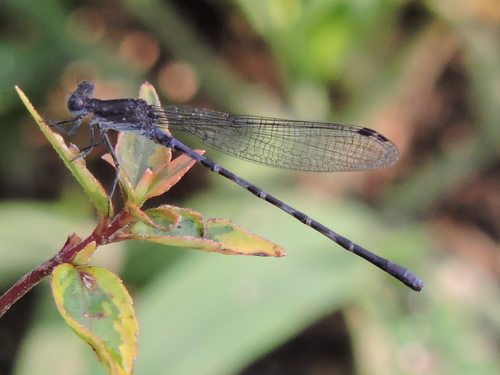
Familiar bluets display sexual dimorphism. Male familiar bluets have a distinct bright, blue color that covers the majority of its head and body and has jet-black spots that cover the dorsal portion of its eyes, segments and upper abdomen. Females are polymorphic; they may appear in nature as a pale blue or an olive-tan color.

The life cycle of damselflies is an incomplete metamorphosis. Once the familiar bluets hatch from their eggs, they are in their nymphal stage, where they will spend the majority of the lifetime molting and developing important adult anatomical structures. Wikipedia →
Global Distribution

Parks Where Found

# Park Country Daily sighting probability
1 Big Bend National Park 🇺🇸 United States
~10%
2 Padre Island National Seashore 🇺🇸 United States
~10%
3 Saguaro National Park 🇺🇸 United States
~10%
4 Point Pelee National Park 🇨🇦 Canada
~10%
5 Acadia National Park 🇺🇸 United States
~10%

Cities Where Found

# City Country Daily sighting probability
1 Austin 🇺🇸 United States
~10%
2 Dallas 🇺🇸 United States
~10%
3 Denver 🇺🇸 United States
~10%
4 Sacramento 🇺🇸 United States
~10%
5 Phoenix 🇺🇸 United States
~10%
6 San Antonio 🇺🇸 United States
~10%
7 Toronto 🇨🇦 Canada
~10%
8 Washington 🇺🇸 United States
~10%
9 Mesa 🇺🇸 United States
~10%
10 Las Vegas 🇺🇸 United States
~10%

Before you go

What are the chances of seeing a Familiar Bluet in Big Bend National Park?

With luck

About 10% of wildlife watchers report a Familiar Bluet sighting in Big Bend National Park on a given day, based on 49 verified sightings from GBIF citizen-science data from 2019 to 2026. It is the 52nd most-seen of the 329 insects we can rate there. Over three days the chance rises to about 40%, and over a week to about 70%, if each day is a fresh chance.

When is the best time to see a Familiar Bluet in Big Bend National Park?

September

In that month about 30% of wildlife watchers report a Familiar Bluet in Big Bend National Park on a given day, against under 5% in July and December–January, the lowest months. That is one of Big Bend National Park's wettest months, with about 50 mm of rain against 10 mm in April.

What time of day is best to see a Familiar Bluet?

Between noon and 3 pm

Across all the parks we cover, that three-hour window holds the most Familiar Bluet sightings with a recorded time, and about 9 in 10 of them come between 6 am and 6 pm: it is a daytime animal.

Is Big Bend National Park the best place to see a Familiar Bluet?

Yes

Of the 5 parks where we can rate Familiar Bluet sightings, Big Bend National Park has the highest daily chance: about 10%. Next come Padre Island National Seashore (United States, about 10%) and Saguaro National Park (United States, about 10%).

Where does the Familiar Bluet sighting chance come from?

GBIF citizen-science records

It is estimated from how often the Familiar Bluet is recorded against all the insects logged in Big Bend National Park (49 verified sightings from 2019 to 2026), calibrated against known sighting rates. Figures are rounded to the nearest 10% because citizen-science data supports honest approximations, not decimals, and months with records from fewer than five people show "—". How it works.

← Back to Big Bend National Park