
Mexican Whip-poor-will

Mexican Whip-poor-will

Antrostomus arizonae

Silhouette: Sheatherius · PhyloPic

LCLeast ConcernNTVUENCR
Daily sighting probability ~10% · With luck
at Big Bend National Park

In 3 days ~20% in a week ~40%

323 Verified sightings at Big Bend National Park From 2019 to 2026
437 In all 4 parks
June Best month
🌅 Crepuscular When it's spotted

About the Mexican Whip-poor-will

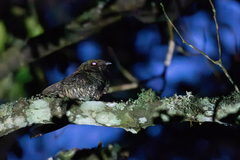
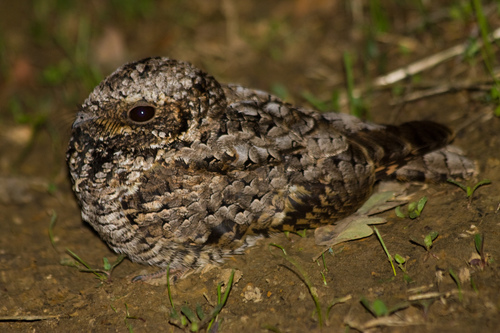
The Mexican whip-poor-will, (Antrostomus arizonae), is a medium-sized nightjar of the southwestern United States, Mexico, and northern Central America. Until 2010 the Mexican whip-poor-will and what is now the eastern whip-poor-will (Antrostomus vociferus) were considered conspecific under the name whip-poor-will. They were separated based on differences in their genetics, morphology, and vocalizations. The two remain sister species and with the Puerto Rican nightjar (A. noctitherus) form a superspecies. The Mexican whip-poor-will has these five subspecies:

In general its upperparts are grayish brown with blackish brown streaks; the crown has wide blackish brown stripes. The throat and breast are blackish with a thin white band on the lower throat between them. The belly is buff with brown bars. The male's outermost three pairs of tail feathers have broad white tips; the... Wikipedia →

Sounds

Song0:14

Guatemala · 2024

© Brendan Sloan · XC917659 · CC BY-NC-ND 4.0

Recording0:31

Mexico · 2022

© Francisco A. Ortiz Navarro · XC731960 · CC BY-NC-SA 4.0

Call0:48

United States · 2020

© Richard E. Webster · XC700906 · CC BY-NC-SA 4.0

Global Distribution

Parks Where Found

# Park Country Daily sighting probability
1 Big Bend National Park 🇺🇸 United States
~10%
2 Cumbres de Monterrey National Park 🇲🇽 Mexico
~10%
3 El Triunfo 🇲🇽 Mexico
<5%
4 Guadalupe Mountains National Park 🇺🇸 United States
<5%

Cities Where Found

# City Country Daily sighting probability
1 Mexico City 🇲🇽 México
<5%

Before you go

What are the chances of seeing a Mexican Whip-poor-will in Big Bend National Park?

With luck

About 10% of wildlife watchers report a Mexican Whip-poor-will sighting in Big Bend National Park on a given day, based on 323 verified sightings from GBIF citizen-science data from 2019 to 2026. It is the 108th most-seen of the 270 birds we can rate there. Over three days the chance rises to about 20%, and over a week to about 40%, if each day is a fresh chance.

When is the best time to see a Mexican Whip-poor-will in Big Bend National Park?

June

In that month about 20% of wildlife watchers report a Mexican Whip-poor-will in Big Bend National Park on a given day, against under 5% in September to March, the lowest months.

What time of day is best to see a Mexican Whip-poor-will?

Between 6 and 9 pm

Across all the parks we cover, that three-hour window holds the most Mexican Whip-poor-will sightings with a recorded time, and about 6 in 10 of them come between 6 pm and 6 am: it is most active around dawn and dusk.

Is Big Bend National Park the best place to see a Mexican Whip-poor-will?

Yes

Of the 4 parks where we can rate Mexican Whip-poor-will sightings, Big Bend National Park has the highest daily chance: about 10%. Next come Cumbres de Monterrey National Park (Mexico, about 10%) and El Triunfo (Mexico, under 5%).

Which relatives of the Mexican Whip-poor-will live in Big Bend National Park?

Same family: Caprimulgidae

The closest relatives of the Mexican Whip-poor-will that you can see in Big Bend National Park (family Caprimulgidae, Nightjars and Allies) are Lesser Nighthawk (about 10%) and Common Poorwill (about 10%), with each one's daily chance of a sighting.

Where does the Mexican Whip-poor-will sighting chance come from?

GBIF citizen-science records

It is estimated from how often the Mexican Whip-poor-will is recorded against all the birds logged in Big Bend National Park (323 verified sightings from 2019 to 2026), calibrated against known sighting rates. Figures are rounded to the nearest 10% because citizen-science data supports honest approximations, not decimals, and months with records from fewer than five people show "—". How it works.

← Back to Big Bend National Park