Antillean Nighthawk

Antillean Nighthawk

Chordeiles gundlachii

Silhouette: Ferran Sayol · PhyloPic

LCLeast ConcernNTVUENCR
Daily sighting probability <5% · Rare
at Blue and John Crow Mountains National Park

In 3 days <5%

5 Verified sightings at Blue and John Crow Mountains National Park From 2019 to 2026
45 In all 3 parks
April Best month
🌅 Crepuscular When it's spotted

About the Antillean Nighthawk

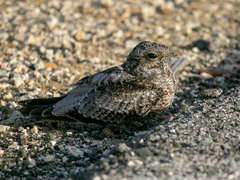
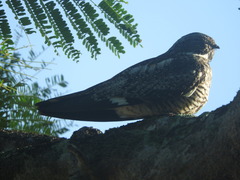
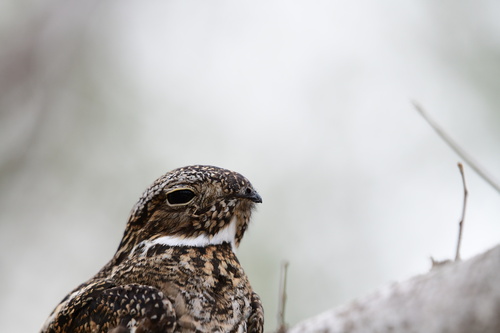
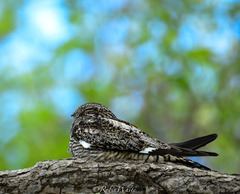
The Antillean nighthawk (Chordeiles gundlachii) is a nightjar native to the Caribbean, The Bahamas, and Florida Keys. Its specific epithet, gundlachii, is in honor of Cuban naturalist Juan Gundlach. The adults are dark with brown, grey and white patterning on the upperparts and breast; the long wings are black and show a white bar in flight. The tail is dark with white barring; the underparts are white with black bars. The adult male has a white throat; the female has a light brown throat. The most distinguishing characteristic to determine its identity from its closest relative the common nighthawk are the contrasting pale tertials near the back of the wings of a sitting bird. There are two color morphs, a gray and a rufous type. Like other nighthawks, this bird will display by flying upward with a distinctive call note, then diving, pulling out of the dive only a few feet from the ground. This creates a rush of air and distinctive sound.

Their breeding habitat is open country of the Greater Antilles, the Lesser Antilles, the Bahamas, and the Florida Keys in the United States. They usually nest on bare ground, sometimes in raised locations... Wikipedia →
Sounds

Song0:10

Cuba · 2025

© FREDERIC Lionel · XC994747 · CC BY-NC-SA 4.0

Distraction display0:44

Bahamas · 2016

© Andrew Spencer · XC331764 · CC BY-NC-ND 4.0

Call1:02

Dominican Republic · 2022

© Daniel Parker · XC726823 · CC BY-NC-SA 4.0

Global Distribution

Parks Where Found

# Park Country Daily sighting probability
1 Ciénaga de Zapata 🇨🇺 Cuba
<5%
2 Blue and John Crow Mountains National Park 🇯🇲 Jamaica
<5%
3 Everglades National Park 🇺🇸 United States
<5%

Cities Where Found

# City Country Daily sighting probability
1 Santo Domingo 🇩🇴 Dominican Republic
~10%
2 Havana 🇨🇺 Cuba
<5%

Closest Relatives at Blue and John Crow Mountains National Park

No species of the same family or order lives in Blue and John Crow Mountains National Park, so these are its closest relatives here: other birds.

Before you go

What are the chances of seeing an Antillean Nighthawk in Blue and John Crow Mountains National Park?

Rare

Under 5% of wildlife watchers report an Antillean Nighthawk sighting in Blue and John Crow Mountains National Park on a given day, based on 5 verified sightings from GBIF citizen-science data from 2019 to 2026. It is the 90th most-seen of the 91 birds we can rate there. Over three days the chance rises to under 5%, if each day is a fresh chance.

When is the best time to see an Antillean Nighthawk in Blue and John Crow Mountains National Park?

April

In that month about 10% of wildlife watchers report an Antillean Nighthawk in Blue and John Crow Mountains National Park on a given day, against under 5% in May and July–March, the lowest months. June has too few records to rate.

What time of day is best to see an Antillean Nighthawk?

Between 6 and 9 pm

Across all the parks we cover, that three-hour window holds the most Antillean Nighthawk sightings with a recorded time, and about 6 in 10 of them come between 6 pm and 6 am: it is most active around dawn and dusk.

Is Blue and John Crow Mountains National Park the best place to see an Antillean Nighthawk?

Among the best

Of the 3 parks where we can rate Antillean Nighthawk sightings, Blue and John Crow Mountains National Park ranks 2nd at under 5%, level with the leaders once rounded. The best odds are in Ciénaga de Zapata (Cuba, under 5%).

Where does the Antillean Nighthawk sighting chance come from?

GBIF citizen-science records

It is estimated from how often the Antillean Nighthawk is recorded against all the birds logged in Blue and John Crow Mountains National Park (5 verified sightings from 2019 to 2026), calibrated against known sighting rates. Figures are rounded to the nearest 10% because citizen-science data supports honest approximations, not decimals, and months with records from fewer than five people show "—". How it works.

← Back to Blue and John Crow Mountains National Park