Banksia Bee

Banksia Bee

Hylaeus alcyoneus

Daily sighting probability ~10% · With luck
at Blue Mountains National Park

In 3 days ~20% in a week ~40%

19 Verified sightings at Blue Mountains National Park From 2019 to 2026
19 In 1 park
May Best month
☀️ Diurnal When it's spotted

About the Banksia Bee

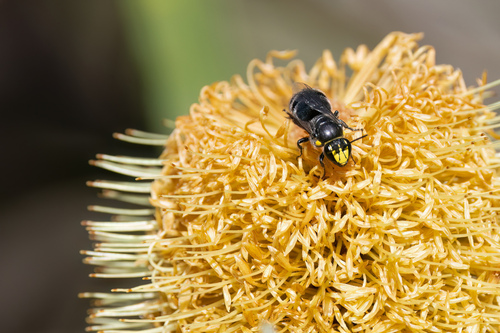
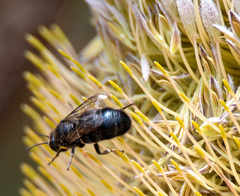
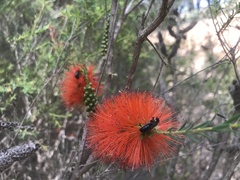
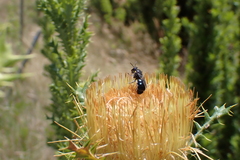
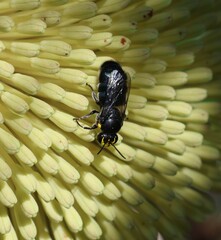
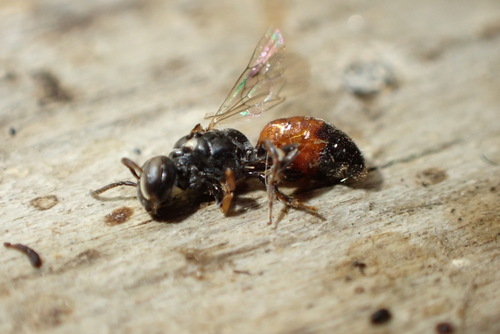
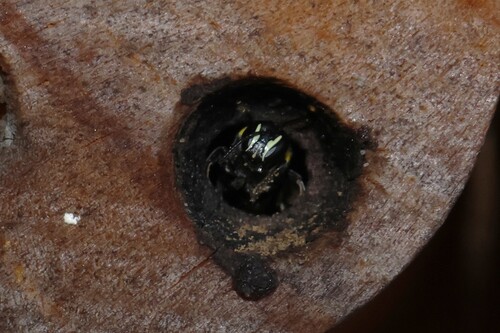
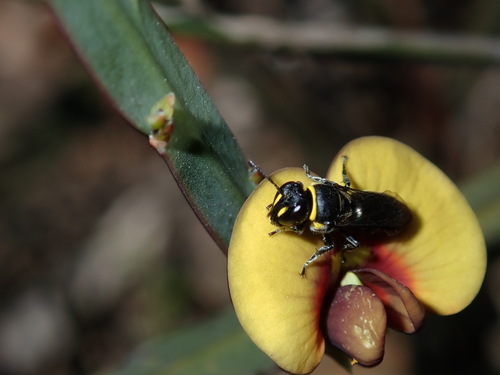
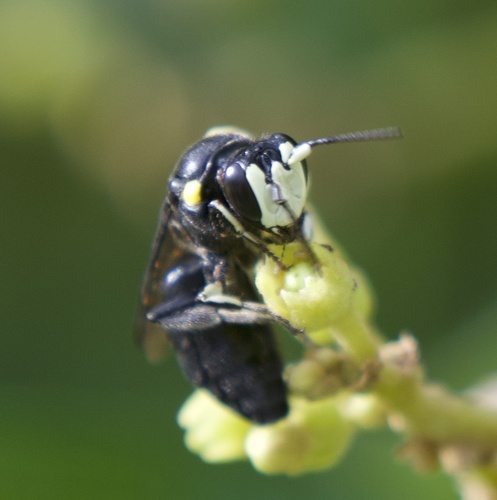
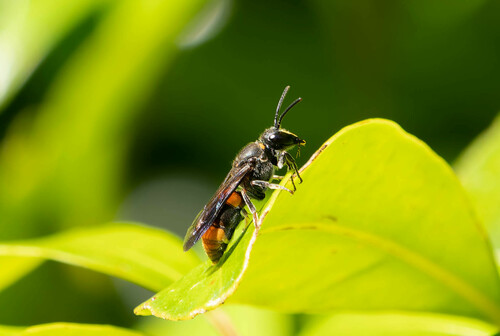
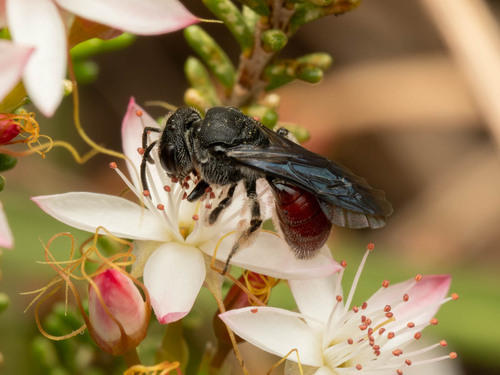
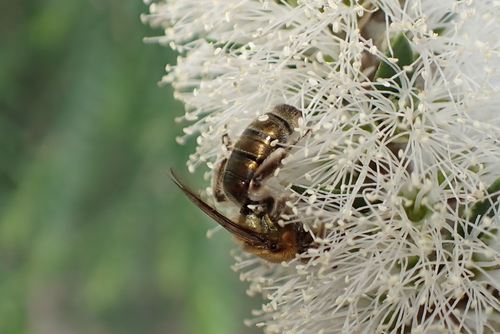
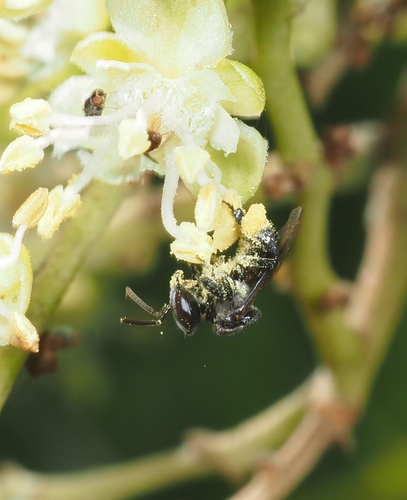
Hylaeus alcyoneus, commonly known as the banksia bee, is a species of solitary bee in the family Colletidae. It is common in coastal regions of southern Australia. Both sexes are mostly black with a metallic blue abdomen. It is usually found on or near Banksia flowers, but it will visit other flowering species in eastern Australia. In areas with high honeybee densities, the banksia bee produces less nests due to competition for floral resources.

The banksia bee was originally described by German entomologist Wilhelm Ferdinand Erichson in 1842. Its specific epithet is derived from the Ancient Greek halcyon (meaning “kingfisher”), relating to the kingfisher-blue colour of the abdomen. The common name refers to the species’ particular fondness for visiting banksia flowers. It is the only species in the subgenus Macrohylaeus, as proposed by Charles Michener in 1965.

This is a relatively large and robustly-built species of bee, measuring 8.5-12mm in length. On average, males are significantly larger than females, which is unusual amongst hymenopterans. Both sexes have a black head and thorax, black legs and a metallic blue abdomen. Females have three vertical... Wikipedia →

Global Distribution

Parks Where Found

# Park Country Daily sighting probability
1 Blue Mountains National Park 🇦🇺 Australia
~10%

More parks will be added in future updates.

Cities Where Found

# City Country Daily sighting probability
1 Perth 🇦🇺 Australia
~10%
2 Sydney 🇦🇺 Australia
<5%

Before you go

What are the chances of seeing a Banksia Bee in Blue Mountains National Park?

With luck

About 10% of wildlife watchers report a Banksia Bee sighting in Blue Mountains National Park on a given day, based on 19 verified sightings from GBIF citizen-science data from 2019 to 2026. It is the 258th most-seen of the 789 insects we can rate there. Over three days the chance rises to about 20%, and over a week to about 40%, if each day is a fresh chance.

When is the best time to see a Banksia Bee in Blue Mountains National Park?

May

In that month about 20% of wildlife watchers report a Banksia Bee in Blue Mountains National Park on a given day, against under 5% in January–February and June–September, the lowest months. That is one of Blue Mountains National Park's driest months, with about 40 mm of rain against 150 mm in March.

What time of day is best to see a Banksia Bee?

Between 11 am and 2 pm

Across all the parks we cover, that three-hour window holds the most Banksia Bee sightings with a recorded time, and about 9 in 10 of them come between 6 am and 6 pm: it is a daytime animal.

Where else can you see a Banksia Bee?

Only Blue Mountains National Park, in our data

Blue Mountains National Park is the only park on Wallace's Line with enough records to rate Banksia Bee sightings: about 10% of wildlife watchers there report one on a given day.

Where does the Banksia Bee sighting chance come from?

GBIF citizen-science records

It is estimated from how often the Banksia Bee is recorded against all the insects logged in Blue Mountains National Park (19 verified sightings from 2019 to 2026), calibrated against known sighting rates. Figures are rounded to the nearest 10% because citizen-science data supports honest approximations, not decimals, and months with records from fewer than five people show "—". How it works.

← Back to Blue Mountains National Park