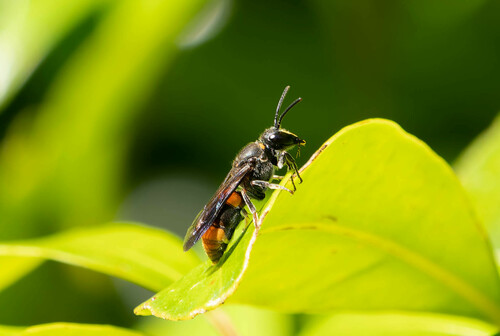
Common Wasp-Mimic Bee

Common Wasp-Mimic Bee

Hyleoides concinna

Daily sighting probability <5% · Rare
at Blue Mountains National Park

In 3 days ~10% in a week ~30%

6 Verified sightings at Blue Mountains National Park From 2019 to 2026
6 In 1 park
March Best month
☀️ Diurnal When it's spotted

About the Common Wasp-Mimic Bee

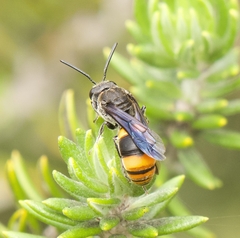
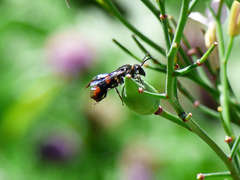
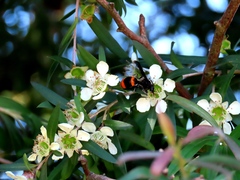
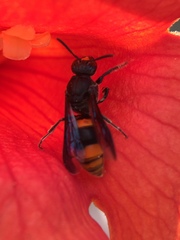
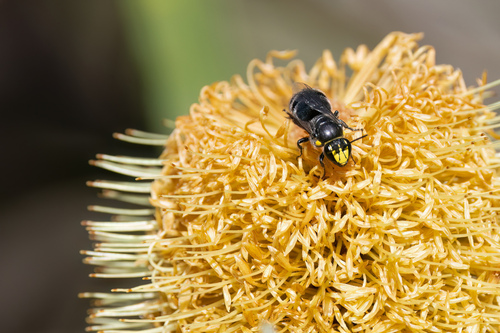
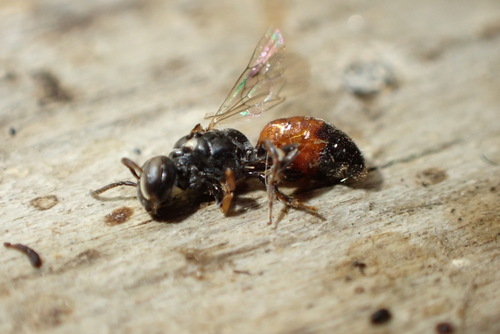
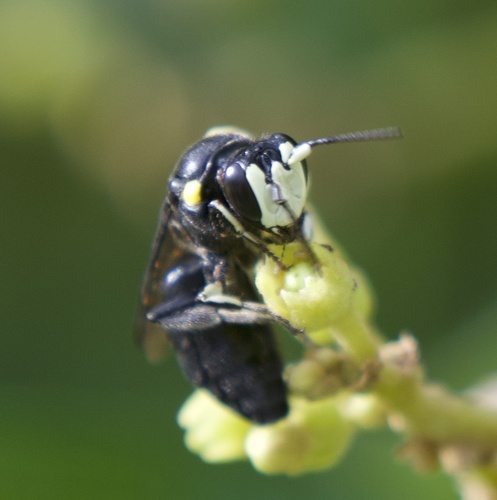
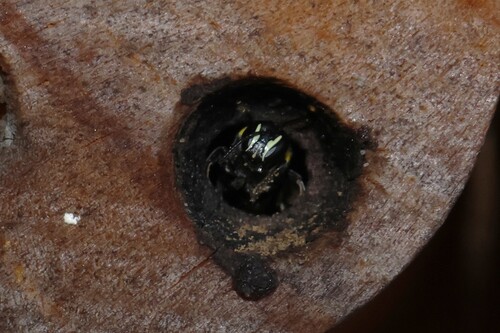
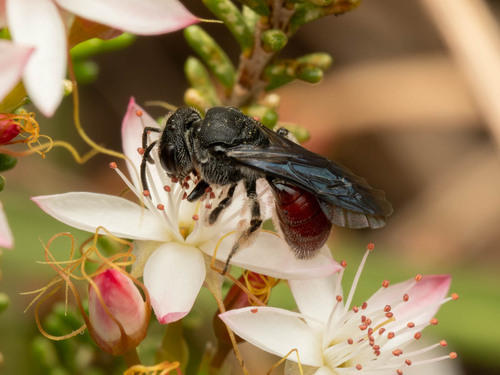
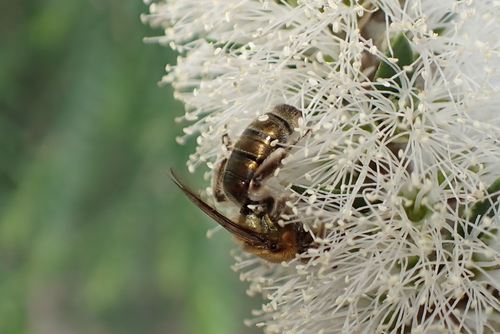
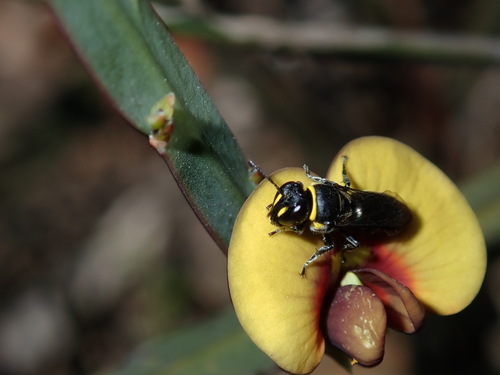
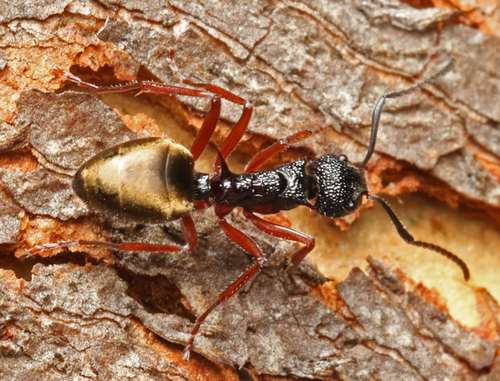
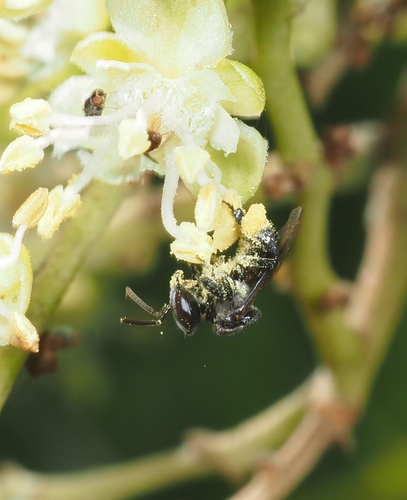
Hyleoides concinna, the common wasp-mimic bee, is a species of solitary bee in the family Colletidae. It was first described in 1775 by Johan Christian Fabricius, who mistook it for a wasp. It is native to south-eastern Australia, and has accidentally been introduced to New Zealand. The abdomen is orange and black on top, with a yellow band underneath. Nests are constructed in pre-existing cavities in wood, such as the tunnels produced by longhorn beetle larvae. It collects nectar and pollen from a wide range of flowering plant species.

The common wasp-mimic bee was first described by Danish zoologist Johan Christian Fabricius, who (believing it to be a wasp) named it Vespa concinna in 1775. The specific name (concinna) is a Latin word meaning "beautiful". The holotype specimen is a female, which is stored in the Natural History Museum, London. It was collected by Joseph Banks during the first voyage of James Cook. This expedition was the first time Europeans had visited the eastern coastline of Australia.

The common wasp-mimic bee has evolved several features that make it look like a potter wasp. These features include a bold colour pattern, partly... Wikipedia →

Global Distribution

Parks Where Found

# Park Country Daily sighting probability
1 Blue Mountains National Park 🇦🇺 Australia
<5%

More parks will be added in future updates.

Cities Where Found

# City Country Daily sighting probability
1 Auckland 🇳🇿 New Zealand
<5%
2 Melbourne 🇦🇺 Australia
<5%
3 Sydney 🇦🇺 Australia
<5%

Before you go

What are the chances of seeing a Common Wasp-Mimic Bee in Blue Mountains National Park?

Rare

Under 5% of wildlife watchers report a Common Wasp-Mimic Bee sighting in Blue Mountains National Park on a given day, based on 6 verified sightings from GBIF citizen-science data from 2019 to 2026. It is the 611th most-seen of the 789 insects we can rate there. Over three days the chance rises to about 10%, and over a week to about 30%, if each day is a fresh chance.

When is the best time to see a Common Wasp-Mimic Bee in Blue Mountains National Park?

March and October–November

In those months about 10% of wildlife watchers report a Common Wasp-Mimic Bee in Blue Mountains National Park on a given day, against under 5% in April–September and December–February, the lowest months.

What time of day is best to see a Common Wasp-Mimic Bee?

Between 9 am and noon

Across all the parks we cover, that three-hour window holds the most Common Wasp-Mimic Bee sightings with a recorded time, and nearly all of them come between 6 am and 6 pm: it is a daytime animal.

Where else can you see a Common Wasp-Mimic Bee?

Only Blue Mountains National Park, in our data

Blue Mountains National Park is the only park on Wallace's Line with enough records to rate Common Wasp-Mimic Bee sightings: under 5% of wildlife watchers there report one on a given day.

Which relatives of the Common Wasp-Mimic Bee live in Blue Mountains National Park?

Same family: Colletidae

The closest relatives of the Common Wasp-Mimic Bee that you can see in Blue Mountains National Park (family Colletidae, Plasterer Bees) are Banksia Bee (about 10%), Littler's Masked Bee (about 10%) and Capricious Dimorphic-Masked Bee (about 10%), with each one's daily chance of a sighting.

Where does the Common Wasp-Mimic Bee sighting chance come from?

GBIF citizen-science records

It is estimated from how often the Common Wasp-Mimic Bee is recorded against all the insects logged in Blue Mountains National Park (6 verified sightings from 2019 to 2026), calibrated against known sighting rates. Figures are rounded to the nearest 10% because citizen-science data supports honest approximations, not decimals, and months with records from fewer than five people show "—". How it works.

← Back to Blue Mountains National Park