
Boatman Fly

Boatman Fly

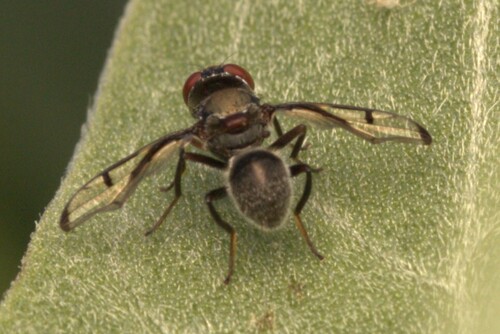
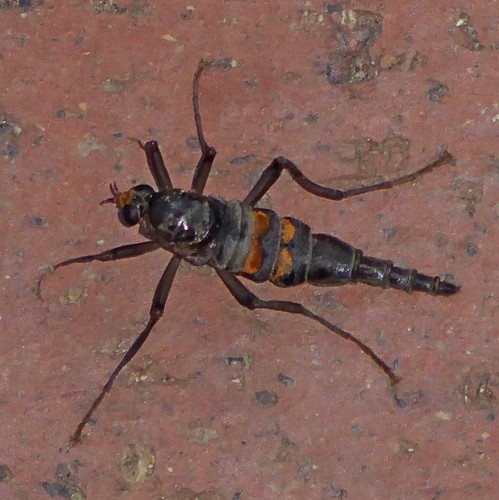
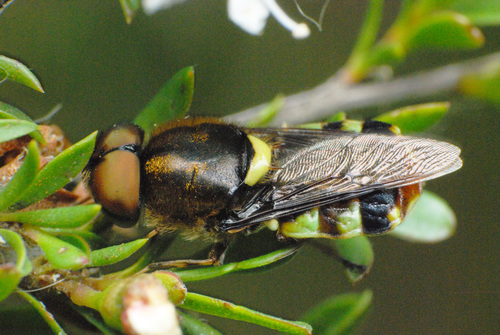
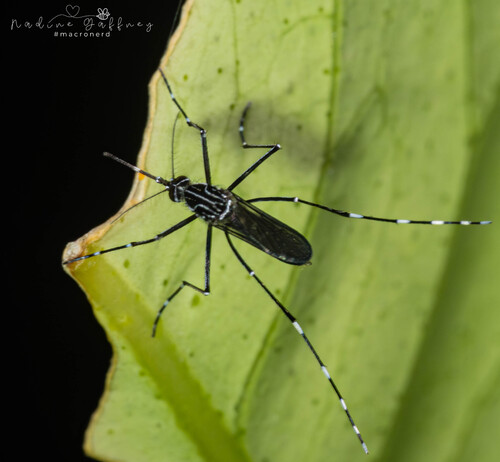
Pogonortalis doclea

Daily sighting probability ~10% · With luck
at Blue Mountains National Park

In 3 days ~20% in a week ~40%

17 Verified sightings at Blue Mountains National Park From 2019 to 2026
29 In all 3 parks
March Best month
☀️ Diurnal When it's spotted

About the Boatman Fly

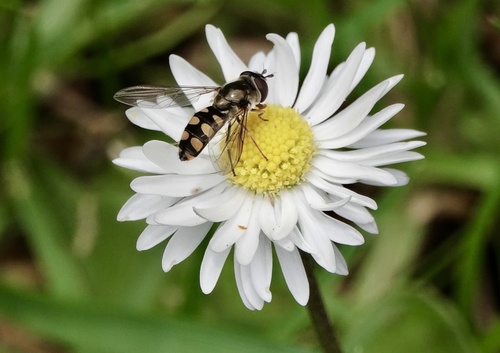
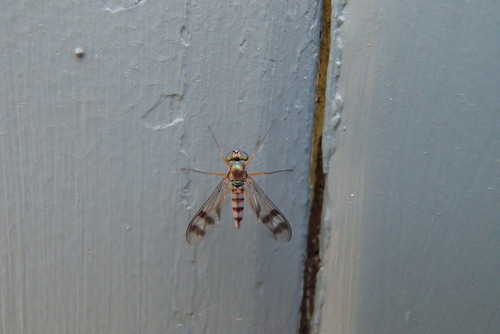
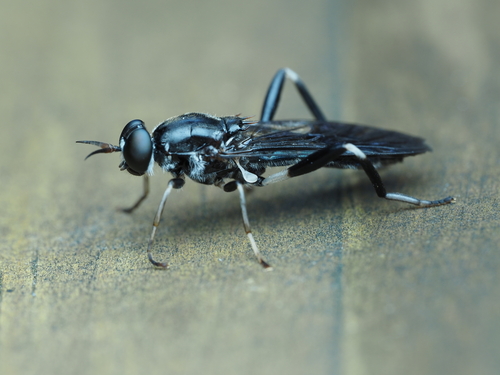
Pogonortalis doclea, the boatman fly, is a species of signal fly (family Platystomatidae). It is native to Australia and has been introduced to California in the United States. Characteristics of P. doclea are: the cheek immediately below the eye being less than a tenth the height of the eye; the hind femur having an anteroventral keel at the distal third; and the anterior crossvein of the wing meeting vein 4 before the mid-length of the discal cell.

P. doclea is sexually dimorphic. Males have a bundle of long curved bristles on each cheek of the head. In this location, females have a single shorter bristle among small hairs. Larger males also have the head ventrally widened.

This species waves its wings like the rowing of oars on a boat, thus the common name "boatman fly". A slow approach to other flies with the wings held at a depressed slant, extended forwards, indicated cautious investigation.

Pogonortalis doclea is commonly found in Australian gardens. Adults are attracted to and feed on the fresh dung of mammals. Males are territorial, engaging in face-to-face pushing contests, using the bundle of long, curved bristles on either cheek. In such... Wikipedia →

Global Distribution

Parks Where Found

# Park Country Daily sighting probability
1 Blue Mountains National Park 🇦🇺 Australia
~10%
2 Springbrook National Park 🇦🇺 Australia
~10%
3 Lamington National Park 🇦🇺 Australia
~10%

Cities Where Found

# City Country Daily sighting probability
1 Melbourne 🇦🇺 Australia
~10%
2 Sydney 🇦🇺 Australia
~10%
3 Brisbane 🇦🇺 Australia
~10%
4 Perth 🇦🇺 Australia
~10%
5 Los Angeles 🇺🇸 United States
<5%
6 San Diego 🇺🇸 United States
<5%
7 San Francisco 🇺🇸 United States
<5%

Before you go

What are the chances of seeing a Boatman Fly in Blue Mountains National Park?

With luck

About 10% of wildlife watchers report a Boatman Fly sighting in Blue Mountains National Park on a given day, based on 17 verified sightings from GBIF citizen-science data from 2019 to 2026. It is the 258th most-seen of the 789 insects we can rate there. Over three days the chance rises to about 20%, and over a week to about 40%, if each day is a fresh chance.

When is the best time to see a Boatman Fly in Blue Mountains National Park?

March–May and October–January

In those months about 10% of wildlife watchers report a Boatman Fly in Blue Mountains National Park on a given day, against under 5% in February and June–September, the lowest months.

What time of day is best to see a Boatman Fly?

Between 10 am and 1 pm

Across all the parks we cover, that three-hour window holds the most Boatman Fly sightings with a recorded time, and nearly all of them come between 6 am and 6 pm: it is a daytime animal.

Is Blue Mountains National Park the best place to see a Boatman Fly?

Yes

Of the 3 parks where we can rate Boatman Fly sightings, Blue Mountains National Park has the highest daily chance: about 10%. Next come Springbrook National Park (Australia, about 10%) and Lamington National Park (Australia, about 10%).

Where does the Boatman Fly sighting chance come from?

GBIF citizen-science records

It is estimated from how often the Boatman Fly is recorded against all the insects logged in Blue Mountains National Park (17 verified sightings from 2019 to 2026), calibrated against known sighting rates. Figures are rounded to the nearest 10% because citizen-science data supports honest approximations, not decimals, and months with records from fewer than five people show "—". How it works.

← Back to Blue Mountains National Park